
How do I know the price of S355MC steel company?
Discover the factors influencing S355MC steel prices. This guide covers mechanical properties, processing advantages, and industry applications to help you evaluate supplier quotes effectively.
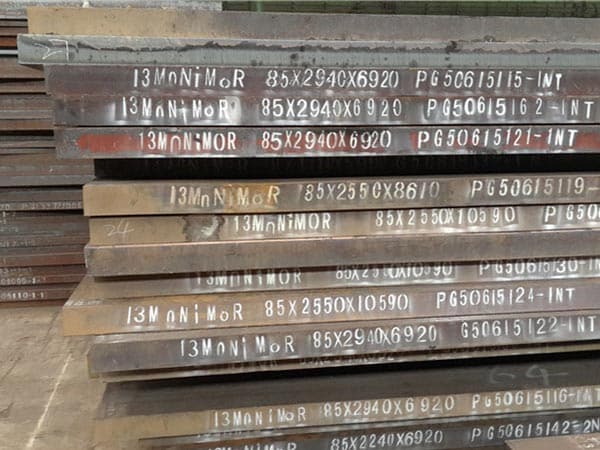
Decoding the Value: How do I know the price of S355MC steel company?
Navigating the global steel market requires more than just looking at a price per ton. When asking "How do I know the price of S355MC steel company?", you must delve into the technical specifications, market dynamics, and the specific processing capabilities of the supplier. S355MC is a thermomechanically rolled, high-yield strength steel designed for cold forming, governed by the EN 10149-2 standard. Its price is a reflection of its sophisticated metallurgical design and the efficiency it brings to manufacturing pipelines.
Technical Fundamentals Driving S355MC Pricing
The price of S355MC is fundamentally linked to its chemical composition and mechanical integrity. Unlike standard structural steels like s355jr, S355MC (where 'M' stands for thermomechanically rolled and 'C' for cold forming) undergoes a controlled rolling process that refines its grain structure. This process requires advanced rolling mills, which is a primary reason for the price delta between S355MC and lower-tier structural grades.
Chemical Composition and Micro-alloying
S355MC utilizes micro-alloying elements such as Niobium (Nb), Vanadium (V), and Titanium (Ti). These elements are added in precise, minute quantities to increase strength without sacrificing weldability or toughness. The cost of these ferro-alloys fluctuates, directly impacting the mill's base price. Furthermore, the extremely low carbon content (typically ≤ 0.12%) ensures superior weldability, a feature that saves downstream costs in fabrication.
| Element | C (%) | Mn (%) | Si (%) | P (%) | S (%) | Al (%) |
|---|---|---|---|---|---|---|
| S355MC Max | 0.12 | 1.50 | 0.50 | 0.025 | 0.020 | 0.015 |
Mechanical Performance: Why You Pay for S355MC
When evaluating a quote from a steel company, you are paying for guaranteed performance. S355MC offers a minimum yield strength of 355 MPa. However, its true value lies in its elongation and bendability. Because it is a cold-forming steel, it can be bent to tight radii without cracking, which is critical for complex automotive and structural components.
- Yield Strength: Min 355 MPa (for thicknesses ≤ 16mm).
- Tensile Strength: 430–550 MPa.
- Elongation (A80): Minimum 19% for thicknesses under 3mm, ensuring high ductility.
- Impact Toughness: While not always mandatory for MC grades, many high-end suppliers provide impact testing at -20°C or -40°C, which adds a premium to the price.
The Economic Impact of Weight Reduction
A professional assessment of S355MC price must include the Strength-to-Weight Ratio. Because S355MC is significantly stronger than standard S235 steel, engineers can use thinner gauges to achieve the same structural integrity. For example, replacing a 5mm S235 plate with a 3mm S355MC plate reduces weight by approximately 40%. Even if the price per kilogram of S355MC is higher, the total project cost often decreases due to reduced material volume, lower shipping costs, and faster welding times.
Market Variables Influencing Supplier Quotes
To accurately gauge the price from a steel company, you must account for the following market variables:
1. Thickness and Width Extras
Steel mills charge "extras" based on the dimensions. Extremely thin gauges (e.g., 1.5mm to 2.0mm) often carry a higher premium because they require more passes through the rolling mill. Conversely, very wide coils may also attract higher prices due to limited production capacity on specific mill lines.
2. Surface Quality and Treatment
S355MC is typically supplied in a "black" (as-rolled) or pickled and oiled (P&O) state. Pickling removes the mill scale, providing a clean surface ready for painting or galvanizing. Choosing P&O S355MC will increase the price per ton but eliminates the need for shot-blasting in your own facility, representing a net gain in process efficiency.
3. Certification and Traceability
A reputable steel company will provide EN 10204 3.1 or 3.2 material test certificates (MTC). These documents verify the chemical and mechanical properties of the specific heat. Prices from "trading houses" without full traceability might be lower, but they carry significant risk for structural applications where safety and compliance are paramount.
Processing Performance and Cost Savings
The price of S355MC is justified by its behavior during secondary operations. High-quality S355MC from a premium company will have consistent internal stress levels. This is vital for laser cutting. If the steel has high residual stress, it will "bow" or "spring" during cutting, leading to machine downtime and wasted material. Suppliers who offer "laser-flat" S355MC often charge more, but the reduction in scrap rates and the ability to run automated cutting lines 24/7 far outweigh the initial cost.
Weldability Benefits
The low carbon equivalent (CEV) of S355MC means it does not require pre-heating for most thicknesses. This speeds up production cycles and reduces energy consumption. When comparing prices between companies, ask about the CEV values; a lower CEV indicates a more refined product that will be easier to work with in the shop.
Application Industries: Where S355MC Dominates
The demand in specific sectors often dictates the local price of S355MC. If the automotive or heavy machinery sectors are booming, supply may tighten, driving up costs.
- Automotive Industry: Used for chassis frames, cross members, and suspension components where high strength and low weight are critical.
- Heavy Machinery: Ideal for crane booms, excavator buckets, and agricultural equipment that must withstand high stress and fatigue.
- Storage Systems: High-bay racking systems utilize S355MC for its ability to be roll-formed into complex, high-load-bearing profiles.
- Transportation: Truck trailers and containers benefit from the weight savings, allowing for higher payloads.
How to Effectively Compare Quotes from Steel Companies
To truly know if a price is fair, you should request a breakdown that includes:
Logistics and Packaging: Is the price Ex-Works (EXW), FOB, or DDP? S355MC is often transported in large coils or bundles; specialized moisture-proof packaging is necessary to prevent rust, especially for P&O material.
Quantity Discounts: Steel pricing is highly sensitive to volume. Purchasing a full heat (typically 20-25 tons) will yield a significantly lower price than buying small quantities from a stockholder.
Tolerances: Does the company adhere to standard tolerances (EN 10051) or can they provide precision tolerances? Tighter thickness tolerances can lead to more predictable part weights and better fit-up during assembly.
Environmental Adaptability and Sustainability
Modern steel companies are increasingly incorporating "Green Steel" surcharges into their pricing. S355MC produced via Electric Arc Furnace (EAF) using scrap metal has a lower carbon footprint than Blast Furnace (BF) production. Furthermore, the longevity and recyclability of high-strength steel like S355MC contribute to a circular economy, a factor that is becoming a procurement requirement for many large-scale infrastructure projects.
In summary, determining the price of S355MC involves a holistic view of the material's lifecycle. By focusing on the yield strength, cold-forming capabilities, and the processing efficiencies it provides, you can move beyond simple price-per-ton comparisons and make a strategic procurement decision that enhances your product's quality and your company's bottom line.
Leave a message