
S315MC steel properties chemical elements composition
Explore the technical specifications of S315MC steel. This guide covers chemical elements, mechanical properties, welding capabilities, and practical applications in automotive and heavy machinery industries.
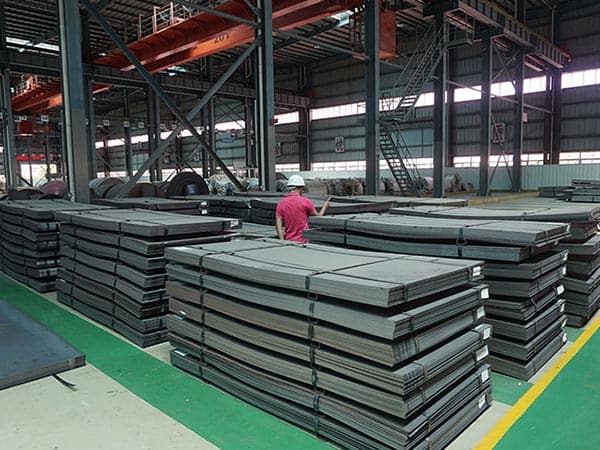
Introduction to S315MC High-Yield Strength Steel
Modern engineering demands materials that balance high strength with exceptional formability. S315MC steel, governed by the EN 10149-2 standard, represents a pinnacle of high-yield strength, cold-forming steels produced through thermomechanical rolling. Unlike traditional hot-rolled steels, S315MC is engineered to provide a minimum yield strength of 315 MPa while maintaining the ductility required for complex shaping and bending. This material is a cornerstone for manufacturers seeking to reduce structural weight without compromising safety or durability.
Chemical Composition and Micro-Alloying Science
The performance of S315MC is rooted in its precise chemical makeup. By utilizing a low-carbon design and incorporating specific micro-alloying elements, the steel achieves a fine-grained structure that is both tough and weldable. The absence of high carbon content ensures that the material does not become brittle during rapid cooling or welding processes.
| Element | Maximum Percentage (%) |
|---|---|
| Carbon (C) | 0.12 |
| Manganese (Mn) | 1.30 |
| Silicon (Si) | 0.50 |
| Phosphorus (P) | 0.025 |
| Sulfur (S) | 0.020 |
| Aluminum (Al) | 0.015 (min) |
| Niobium (Nb) | 0.09 |
| Vanadium (V) | 0.20 |
| Titanium (Ti) | 0.15 |
The combination of Niobium (Nb), Vanadium (V), and Titanium (Ti) is critical. These elements act as grain refiners during the thermomechanical rolling process (TMCP). They inhibit grain growth at high temperatures, resulting in a microscopic structure that resists crack propagation and enhances yield strength. This metallurgical strategy allows S315MC to outperform standard structural steels like S235JR in load-bearing efficiency.
Mechanical Properties and Structural Integrity
Engineers specify S315MC primarily for its predictable mechanical behavior. The "MC" designation indicates that the steel is thermomechanically rolled (M) and intended for cold forming (C). This processing route ensures that the mechanical properties are consistent across the entire length of the coil or plate.
| Property | Value Range |
|---|---|
| Yield Strength (ReH) | Min 315 MPa |
| Tensile Strength (Rm) | 390 - 510 MPa |
| Elongation (A80mm, t < 3mm) | Min 20% |
| Elongation (A5, t ≥ 3mm) | Min 24% |
The high elongation values signify that despite its strength, the material can undergo significant deformation before failure. This is vital for safety-critical components in the automotive industry, where energy absorption during an impact is a primary design requirement. Furthermore, the narrow range of tensile strength (390-510 MPa) allows for high precision in automated manufacturing environments, reducing the need for constant machine recalibration.
Superior Processing Performance: Bending and Welding
One of the standout features of S315MC is its cold forming capability. Because of its fine-grained structure, it can be bent to tight radii without surface cracking or orange-peel effects. For thicknesses up to 3mm, a minimum bending radius of 0.25 times the thickness is often achievable, making it ideal for complex bracketry and chassis members.
- Weldability: With a low carbon equivalent (CEV), S315MC is compatible with all standard welding methods, including MAG, TIG, and laser welding. It does not require preheating under normal conditions, which significantly reduces production cycle times.
- Cutting: The material exhibits excellent response to fiber laser and plasma cutting. The low impurity levels (low S and P) result in clean edges with minimal dross, facilitating immediate downstream processing.
- Surface Quality: Thermomechanical rolling produces a tight mill scale that is easier to remove through pickling, providing a superior substrate for painting, galvanizing, or powder coating.
Environmental Adaptability and Fatigue Resistance
S315MC is designed to perform in demanding environments. While it is not a dedicated weathering steel, its refined microstructure provides better resistance to atmospheric corrosion than standard carbon steels when properly coated. More importantly, its fatigue resistance is exceptional. In applications involving cyclic loading, such as truck frames or crane arms, the fine grain structure delays the initiation of fatigue cracks, extending the service life of the equipment.
Operating in low-temperature environments is another area where S315MC excels. Unlike many structural steels that become brittle in cold climates, S315MC maintains its toughness, making it suitable for transport vehicles operating in diverse geographical regions. The material's consistency ensures that structural integrity is maintained from -20°C to standard operating temperatures.
Diverse Applications Across Modern Industry
The versatility of S315MC makes it a preferred choice across several high-growth sectors. Its ability to reduce weight while maintaining strength directly contributes to fuel efficiency and increased payload capacity in the transportation sector.
- Automotive Manufacturing: Used extensively for chassis parts, longitudinal beams, cross members, and cold-pressed structural components. It allows for thinner gauges to be used without sacrificing the vehicle's crashworthiness.
- Heavy Machinery: Essential for the construction of cranes, excavators, and agricultural equipment where high strength-to-weight ratios are critical for mobility and performance.
- Storage and Logistics: Utilized in high-load racking systems and container frames where structural stability and ease of fabrication are paramount.
- Energy Sector: Applied in the structural frames of solar tracking systems and wind turbine components that require precise forming and long-term durability.
Strategic Advantages of Choosing S315MC
Adopting S315MC steel offers a clear competitive edge. By replacing standard S235 or S275 grades with S315MC, designers can often reduce the thickness of components by 15-25%. This mass reduction leads to lower material costs, reduced shipping expenses, and improved environmental footprints for the end product. Furthermore, the ease of processing ensures that labor costs associated with welding and forming are kept to a minimum.
The reliability of the EN 10149-2 standard means that global supply chains can source S315MC with confidence, knowing that the material will meet strict international benchmarks. Whether for high-volume automotive production or specialized industrial machinery, S315MC remains a benchmark for high-strength, cold-forming steel technology.
Leave a message