
What is the notice of preheating before S420MC cold forming cutting
A technical deep dive into S420MC high-strength low-alloy steel, covering preheating protocols for thermal cutting, cold forming mechanics, and industrial application optimization.
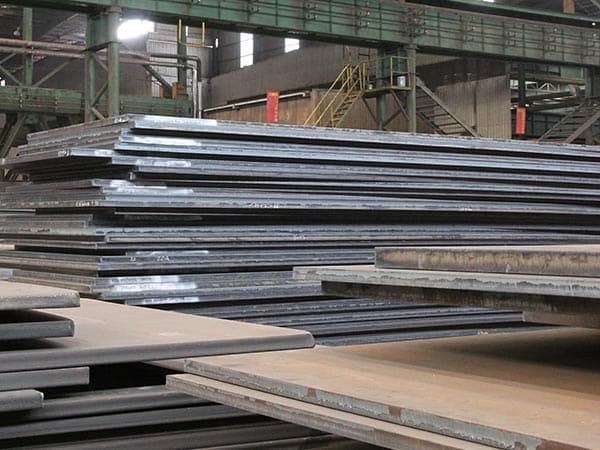
The Metallurgical Profile of S420MC High-Strength Steel
S420MC is a thermomechanically rolled, high-strength low-alloy (HSLA) steel designed for cold forming. Its designation according to EN 10149-2 highlights a minimum yield strength of 420 MPa. Unlike traditional carbon steels, S420MC achieves its superior mechanical properties through a precise combination of micro-alloying elements like niobium (Nb), vanadium (V), and titanium (Ti), coupled with controlled cooling during the rolling process. This results in a fine-grained microstructure that offers an exceptional balance between strength and ductility.
Understanding the internal structure is vital before addressing processing questions. The low carbon equivalent (CEV) of S420MC ensures excellent weldability and reduces the risk of cold cracking. However, when engineers discuss preheating before cutting or cold forming, they are often navigating the delicate balance between maintaining the steel's tempered state and preventing localized hardening at the edges.
The Role of Preheating in Thermal Cutting Operations
While S420MC is technically a "cold forming" steel, the preparation of blanks often involves thermal cutting methods such as laser, plasma, or oxy-fuel. The question of preheating is most pertinent when dealing with thick plates or when the environment is significantly below room temperature. Preheating serves to slow down the cooling rate of the Heat Affected Zone (HAZ), which prevents the formation of brittle martensitic structures at the cut edge.
For S420MC, preheating is typically recommended if the ambient temperature is below 5°C or if the plate thickness exceeds 20mm, although S420MC is rarely used in thicknesses where heavy preheating is mandatory. The primary notice of preheating involves maintaining a consistent temperature between 100°C and 150°C. Overheating must be avoided, as temperatures exceeding 250°C can trigger grain growth or alter the thermomechanical properties, effectively softening the material and reducing its load-bearing capacity.
Impact of Cutting Edges on Subsequent Cold Forming
The quality of the cut edge is a decisive factor in the success of cold forming. If a thermal cut is performed without proper speed or temperature control, the edge becomes hardened. During subsequent bending or stretching, these hardened zones act as stress concentrators, leading to micro-cracks that can propagate through the entire component. This is why the "preheating notice" is often linked to the subsequent forming steps.
- Laser Cutting: Generally produces the smallest HAZ and may not require preheating for S420MC, provided the nitrogen or oxygen pressure is optimized.
- Plasma Cutting: Offers a balance of speed and quality, but requires monitoring of the edge hardness to ensure it does not exceed 350-400 HV.
- Oxy-fuel Cutting: Requires the most attention to preheating due to the high heat input and slower cutting speeds, which can broaden the HAZ.
Mechanical Properties and Material Standards
To implement the correct processing strategy, one must refer to the standard mechanical values. S420MC is prized for its high yield-to-tensile ratio, which requires robust machinery for cold forming compared to standard S235 or S355 grades.
| Property | Value (Minimum/Range) | Unit |
|---|---|---|
| Yield Strength (ReH) | 420 | MPa |
| Tensile Strength (Rm) | 480 - 620 | MPa |
| Elongation (A80mm) | 13 - 16 (depending on thickness) | % |
| Minimum Bending Radius (90°) | 0.5t to 1.5t | mm |
Technical Notices for Cold Forming S420MC
Cold forming S420MC requires an understanding of springback and bending direction. Because of its high yield strength, the material stores more elastic energy than mild steel. Consequently, the springback angle is significantly larger. Operators must compensate for this by over-bending the part or using CNC-controlled press brakes with integrated angle measurement systems.
Another critical notice is the orientation of the bend relative to the rolling direction. While S420MC is designed to be isotropic, bending transverse to the rolling direction typically allows for a tighter radius than bending parallel to it. Surface integrity is also paramount; any scratches or heavy scale on the surface can act as initiation points for cracks during the stretching phase of the bend.
Environmental Adaptability and Long-term Durability
S420MC exhibits good atmospheric corrosion resistance compared to standard carbon steels, though it is not a weathering steel like Corten. In industrial environments, its fine-grained structure provides a slight advantage in fatigue resistance. When components are subjected to cyclic loading—such as in truck chassis or crane arms—the smooth transition of the cold-formed radius is essential. Preheating the cut edges ensures that there are no brittle zones that could fail prematurely under vibration or dynamic stress.
Chemical Composition and Its Influence on Processing
The chemical composition of S420MC is strictly controlled to ensure consistency. The low carbon content (typically <0.12%) is the reason why preheating requirements are less stringent than for high-carbon alloys. However, the presence of micro-alloying elements means the steel is sensitive to the cooling rate after any thermal process.
| Element | Maximum Content (%) |
|---|---|
| Carbon (C) | 0.12 |
| Manganese (Mn) | 1.60 |
| Silicon (Si) | 0.50 |
| Phosphorus (P) | 0.025 |
| Sulfur (S) | 0.015 |
| Aluminium (Al) | 0.015 (min) |
Expanding Applications: From Automotive to Heavy Machinery
The versatility of S420MC has led to its widespread adoption across various demanding sectors. In the automotive industry, it is used for structural components where weight reduction is critical without sacrificing safety. Chassis frames, cross members, and reinforcement brackets benefit from the high strength-to-weight ratio. By using S420MC, manufacturers can use thinner gauges than would be possible with S355, leading to lighter vehicles and improved fuel efficiency.
In the heavy machinery sector, S420MC is utilized for telescopic booms, agricultural equipment, and cold-pressed profiles. The ability to form complex shapes through cold bending makes it a cost-effective alternative to welded assemblies. However, in these applications, the preheating of edges before welding or after heavy thermal cutting is a standard quality control measure to ensure the longevity of the equipment under harsh operating conditions.
Optimizing the Cutting and Forming Workflow
To achieve the best results with S420MC, a holistic approach to the production chain is necessary. This begins with the storage of the steel—keeping it in a dry, temperature-controlled environment to prevent hydrogen pickup. During the cutting phase, using high-definition plasma or fiber laser cutting can often eliminate the need for preheating due to the localized and rapid nature of the heat input.
If mechanical cutting (shearing) is used, preheating is never required, but the shear blades must be sharp and the clearance correctly set for high-strength material. Dull blades can cause work-hardening of the edge, which is just as detrimental as thermal hardening for subsequent cold forming. For companies aiming for zero-defect production, grinding the cut edges to remove the HAZ or the shear-affected zone is a highly recommended practice, especially for parts undergoing severe deformation.
Final Technical Considerations for Engineers
When specifying S420MC, engineers should always consider the "forming limit curve" of the material. While it is highly ductile for its strength class, it does have limits. If the design requires a radius tighter than the recommended minimums, a slight warming of the workpiece (warm forming at 200°C-300°C) might be considered, though this is technically moving outside the realm of standard cold forming and must be validated through testing to ensure the yield strength remains within specification.
Effective processing of S420MC relies on the synergy between metallurgical knowledge and practical workshop experience. By adhering to the notices regarding edge preparation, temperature control, and bending parameters, manufacturers can fully leverage the advantages of this high-performance HSLA steel, ensuring both structural integrity and manufacturing efficiency.
Leave a message