
What is the most important characteristic of S315MC factory direct sales
Discover the critical characteristics of S315MC steel through factory direct sales. This guide covers mechanical properties, processing advantages, and industrial applications of this high-strength cold-forming steel.
The Essence of S315MC: More Than Just a Steel Grade
When sourcing high-strength low-alloy (HSLA) steels, S315MC stands out as a benchmark for versatility and reliability. Classified under the EN 10149-2 standard, S315MC is a thermomechanically rolled steel specifically engineered for cold forming. But when we ask about the most important characteristic of S315MC factory direct sales, the answer isn't a single data point; it is the synergy between material consistency and supply chain transparency. Factory direct sales eliminate the ambiguity often found in secondary markets, ensuring that every coil or sheet meets the precise micro-alloying requirements necessary for complex industrial fabrication.
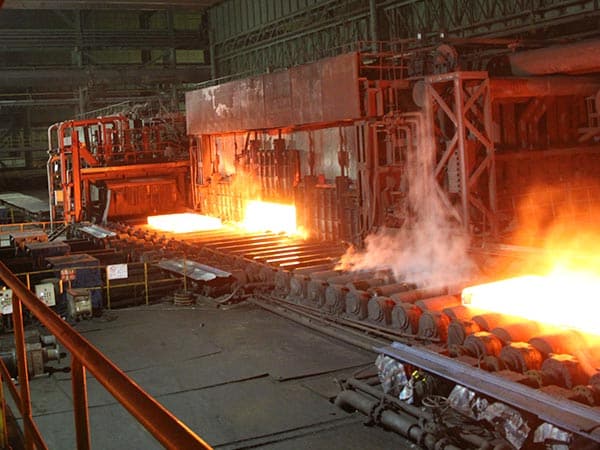
S315MC is defined by its minimum yield strength of 315 MPa. While this might seem modest compared to ultra-high-strength grades like S700MC, its unique balance of strength and ductility makes it the "sweet spot" for structural components that require significant shaping. Direct factory procurement ensures that the thermomechanical rolling process—which refines the grain structure—is strictly controlled, resulting in a product that behaves predictably during high-speed stamping and bending operations.
Mechanical Integrity and Chemical Composition
The technical superiority of S315MC begins at the atomic level. Unlike traditional hot-rolled steels, S315MC utilizes a fine-grain structure achieved through precise temperature control during the rolling process and the addition of micro-alloying elements such as Niobium (Nb), Vanadium (V), and Titanium (Ti). These elements allow for a reduction in carbon content, which significantly enhances weldability without sacrificing strength.
| Element | Carbon (C) % | Manganese (Mn) % | Silicon (Si) % | Phosphorus (P) % | Sulfur (S) % |
|---|---|---|---|---|---|
| S315MC Max | 0.12 | 1.30 | 0.50 | 0.025 | 0.020 |
The low carbon equivalent (CEV) is a primary reason why engineers prefer S315MC for welded structures. In a factory direct sales model, customers receive Mill Test Certificates (MTC) that provide the exact heat analysis. This transparency allows for the optimization of welding parameters, reducing the risk of cold cracking in the heat-affected zone (HAZ). The mechanical properties are equally impressive, offering a robust foundation for diverse engineering tasks.
| Property | Yield Strength (MPa) | Tensile Strength (MPa) | Elongation (A5, %) |
|---|---|---|---|
| S315MC Values | Min 315 | 390 - 510 | Min 20 - 24 (depending on thickness) |
Cold Forming Excellence: The Fabricator's Advantage
The standout physical trait of S315MC is its exceptional cold-forming capability. For manufacturers involved in bending, flanging, or cold-folding, the consistency of the steel's springback and ductility is paramount. S315MC is designed to be bent at tight radii without cracking, a feat that traditional carbon steels of similar strength struggle to achieve. When purchasing directly from the factory, the material's internal cleanliness is guaranteed, meaning fewer non-metallic inclusions that could lead to failure during severe deformation.
- Minimum Bending Radius: For thicknesses less than 3mm, the recommended 90-degree bending radius is nearly zero, though practical application usually suggests 0.25x thickness.
- Edge Quality: Factory direct S315MC often features superior edge conditions, which is critical for preventing edge cracking during expansion or flanging.
- Surface Finish: The thermomechanical process results in a thin, tightly adherent scale or a pickled and oiled surface that protects the steel during transport and simplifies post-processing.
Environmental Resilience and Weight Reduction
In the modern industrial landscape, the drive toward "lightweighting" is relentless. S315MC allows designers to reduce the thickness of components without compromising structural integrity. By replacing standard S235JR with S315MC, a manufacturer can achieve a weight reduction of approximately 15-25% in specific applications. This reduction directly translates to lower fuel consumption in transport vehicles and reduced material costs per unit.
Furthermore, the environmental adaptability of S315MC is noteworthy. Its fine-grain structure provides better resistance to brittle fracture at lower temperatures compared to standard structural steels. While it is not a dedicated "weathering steel," its chemical homogeneity ensures that protective coatings, such as galvanizing or powder coating, adhere more uniformly, extending the service life of the final product in humid or mildly corrosive environments.
Expanding Industry Applications
The versatility of S315MC makes it a staple across numerous high-demand sectors. Through factory direct channels, industries can request specific tolerances or coil weights that suit their automated production lines. The following sectors rely heavily on this grade:
- Automotive Manufacturing: Used for chassis components, cross members, and seat frames where weight saving and crash safety are critical.
- Agricultural Machinery: Ideal for plow frames, harvester components, and trailer chassis that must withstand dynamic loads and rough terrain.
- Heavy Equipment: Employed in the construction of crane booms, forklift masts, and earthmoving equipment parts.
- Storage Systems: High-load racking and shelving systems benefit from the strength-to-weight ratio of S315MC.
The Strategic Value of Factory Direct Sales
Procuring S315MC directly from the source offers more than just a lower price point. It provides a direct line to technical expertise. When a factory sells directly, they provide traceability—every batch can be traced back to the specific furnace heat. This is vital for industries with strict quality management systems like IATF 16949.
Another critical factor is the customization of dimensions. Factory direct orders allow for non-standard widths and precise slit-to-size coils, which minimizes scrap rates during production. For large-scale projects, the stability of supply provided by a direct factory partnership mitigates the risks of market fluctuations and stock shortages. The technical support team at the mill can also assist in "downgrading" or "upgrading" specifications based on the actual stress requirements of the part, potentially saving the client significant overhead costs.
The most important characteristic of S315MC factory direct sales is the assurance of performance. In an era where material substitution and substandard imports are common, the direct link between the manufacturer and the end-user ensures that the steel will perform exactly as the data sheet promises, every single time. This reliability is the foundation of efficient manufacturing and long-term structural safety.
Leave a message