
What is the production process of carbon plate S355MC
Explore the sophisticated production process of S355MC carbon steel plate. This guide details the TMCP manufacturing technique, chemical composition, mechanical properties, and industrial applications of this high-yield, cold-forming steel standard.
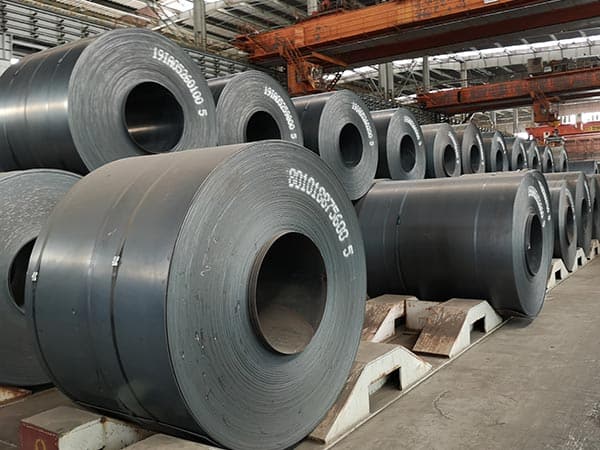
Introduction to S355MC High-Yield Steel
S355MC is a high-strength, low-alloy (HSLA) structural steel specifically designed for cold forming. According to the EN 10149-2 standard, the "S" stands for structural steel, "355" represents the minimum yield strength of 355 MPa, and "MC" indicates that the material is thermomechanically rolled (M) and suitable for cold forming (C). Unlike traditional hot-rolled plates, S355MC offers a unique balance of high strength, excellent ductility, and superior weldability, making it a cornerstone material in modern automotive and heavy machinery engineering.
The Core Production Process: Thermomechanical Control Process (TMCP)
The manufacturing of S355MC is not a simple heating and rolling sequence. It relies on Thermomechanical Control Process (TMCP), a sophisticated metallurgical technique that integrates thermal treatment and mechanical deformation into a single continuous process. This process is essential for achieving the fine-grained microstructure that gives S355MC its signature properties.
1. Smelting and Secondary Refining
The process begins in an Electric Arc Furnace (EAF) or a Basic Oxygen Furnace (BOF). To achieve the high purity required for S355MC, the molten steel undergoes secondary refining in a Ladle Furnace (LF) and Vacuum Degassing (RH/VD). During this stage, impurities like phosphorus (P) and sulfur (S) are reduced to extremely low levels (typically S ≤ 0.015%). Precise amounts of micro-alloying elements—Niobium (Nb), Vanadium (V), and Titanium (Ti)—are added. These elements are critical for grain refinement and precipitation hardening later in the process.
2. Continuous Casting
The refined molten steel is cast into slabs using a continuous casting machine. Controlled cooling during casting prevents the formation of coarse grains and internal cracks, ensuring a homogenous chemical distribution across the slab.
3. Reheating and Controlled Rolling
The slabs are reheated to a specific temperature (usually between 1100°C and 1250°C) to dissolve micro-alloying elements into the austenite matrix. The rolling process is then divided into two critical phases:
- Rough Rolling: The slab is reduced in thickness at high temperatures where recrystallization occurs easily.
- Finish Rolling (The "M" Phase): This occurs at lower temperatures, specifically in the non-recrystallization zone of austenite. By deforming the steel at these lower temperatures, the grains are flattened and elongated, creating a high density of nucleation sites for the subsequent phase transformation.
4. Accelerated Cooling (ACC)
Immediately after the final rolling pass, the plate undergoes accelerated cooling using water sprays. This rapid temperature drop prevents grain growth and forces the austenite to transform into an ultra-fine ferrite and pearlite (or sometimes bainite) structure. This fine grain size is the primary reason why S355MC achieves high strength without needing high carbon content, which preserves its weldability.
Chemical Composition Strategy
The chemical design of S355MC is focused on maintaining a low carbon equivalent (Cev) to enhance weldability while using micro-alloys for strength. Below is a typical breakdown of the chemical requirements according to EN 10149-2:
| Element | Max Content (%) | Role in S355MC |
|---|---|---|
| Carbon (C) | 0.12 | Ensures strength while maintaining excellent weldability and ductility. |
| Manganese (Mn) | 1.50 | Provides solid solution strengthening and improves hardenability. | 0.50 | Deoxidizer and contributes to strength. |
| Niobium (Nb) | 0.09 | Refines grain size and provides precipitation hardening. |
| Titanium (Ti) | 0.15 | Stabilizes nitrogen and prevents grain growth at high temperatures. |
| Sulfur (S) | 0.015 | Kept low to improve toughness and prevent lamellar tearing. |
Mechanical Performance and Material Properties
The TMCP process ensures that S355MC meets stringent mechanical requirements. Its performance is characterized by high yield strength and high elongation, which is a rare combination for structural steels.
- Yield Strength: Minimum 355 MPa. This allows engineers to design lighter structures by using thinner plates without sacrificing load-bearing capacity.
- Tensile Strength: Ranging from 430 to 550 MPa. This provides a safety margin against sudden catastrophic failure.
- Elongation: Typically ≥ 19% (for thicknesses < 3mm) or higher for thicker plates, ensuring the material can undergo significant deformation during cold forming.
- Impact Toughness: While S355MC is primarily focused on forming, it maintains good impact resistance at low temperatures, making it suitable for outdoor structural use in various climates.
Processing Performance: Cold Forming and Bending
The "C" in S355MC signifies its optimized capability for cold forming. Because of its fine-grained structure and low impurity levels, the material exhibits isotropic properties, meaning it behaves consistently whether bent parallel or perpendicular to the rolling direction.
Bending Radius: S355MC allows for very tight bending radii (often 0.5t to 1.5t depending on thickness) without cracking. This is vital for complex automotive components like chassis frames and cross-members. Springback is also more predictable compared to traditional high-strength steels, which simplifies the design of stamping dies and press brakes.
Superior Weldability
One of the greatest advantages of the S355MC production process is the resulting low Carbon Equivalent (Cev). Standard welding techniques, including MIG/MAG, TIG, and submerged arc welding, can be applied without the need for preheating in most thickness ranges. The Heat Affected Zone (HAZ) remains relatively stable, though care must be taken not to exceed high heat inputs that could coarsen the fine grains produced during the TMCP process.
Industrial Applications
The unique properties of S355MC have led to its widespread adoption across several demanding industries:
- Automotive Industry: Truck chassis, longitudinal beams, cross-members, and cold-pressed parts where weight reduction is critical for fuel efficiency.
- Heavy Machinery: Crane booms, excavator arms, and agricultural equipment frames that require high strength and fatigue resistance.
- Structural Engineering: Cold-formed sections, profiles, and steel pipes used in construction and infrastructure.
- Transportation: Railway wagon components and container frames that must withstand dynamic loads.
Environmental Adaptability and Longevity
S355MC is designed to perform in diverse environments. Its low sulfur content and clean steel chemistry improve its resistance to atmospheric corrosion compared to lower-grade carbon steels. Furthermore, the grain refinement provided by the Niobium and Titanium additions ensures that the material remains ductile even in cold weather conditions, preventing brittle fractures in structural components used in northern latitudes.
Key Differences Between S355MC and s355jr
It is important to distinguish S355MC from S355JR (a common structural steel). While both have a yield strength of 355 MPa, S355JR is typically hot-rolled without the strict thermomechanical controls of S355MC. S355MC has a much lower carbon content, better cold-forming properties, and a much finer grain structure. If a project requires complex bending or weight-saving through precision engineering, S355MC is the superior choice.
Conclusion on Production Excellence
The production of S355MC carbon plate represents the pinnacle of modern thermomechanical rolling technology. By carefully controlling the chemistry and the temperature-deformation path during rolling, manufacturers produce a steel that is strong, light, and incredibly versatile. As industries continue to push for higher efficiency and lower carbon footprints, the role of high-performance steels like S355MC will only become more prominent in global manufacturing.
Leave a message