
What is the price of B750L steel for automobile components per ton in Shanghai, China
Explore the current price trends of B750L steel in Shanghai, China. This comprehensive guide covers its technical specifications, automotive applications, and the factors influencing its market value per ton.
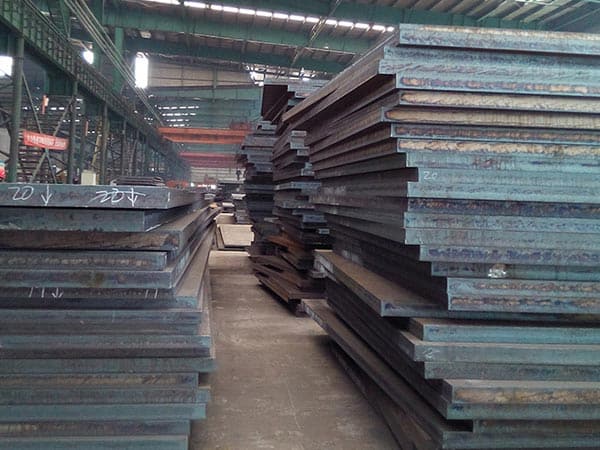
Understanding the B750L Steel Market Dynamics in Shanghai
Navigating the steel market in Shanghai requires a deep understanding of both economic fluctuations and technical specifications. B750L, a high-strength low-alloy (HSLA) steel specifically designed for cold forming, has become a cornerstone for the automotive industry, particularly in the manufacturing of structural components for heavy-duty trucks and passenger vehicles. As of the current fiscal quarter, the price of B750L steel in Shanghai typically ranges between 5,200 CNY and 6,800 CNY per ton, depending on the thickness, surface treatment (such as pickled and oiled vs. hot-rolled black coil), and the specific mill of origin, such as Baosteel or Shougang.
Shanghai serves as the primary distribution hub for automotive steel in China. The proximity to Baoshan Iron and Steel (Baosteel) and the extensive logistics network of the Yangtze River Delta mean that prices in this region often set the benchmark for the rest of the country. However, the 'per ton' price is never static. It is influenced by the cost of iron ore, the 'Dual Carbon' policy constraints on production, and the immediate demand from major automotive OEMs located in the Jiading and Pudong districts.
Technical Specifications and Chemical Composition of B750L
To understand why B750L commands a premium over standard structural steels, one must examine its metallurgical makeup. B750L is engineered to provide an exceptional strength-to-weight ratio, which is vital for the modern push toward vehicle lightweighting. The '750' in its designation refers to its minimum yield strength of 750 MPa, a characteristic achieved through precise micro-alloying.
| Element | Content (%) Max | Purpose in B750L |
|---|---|---|
| Carbon (C) | 0.12 | Ensures weldability while maintaining strength. |
| Manganese (Mn) | 2.00 | Increases hardenability and tensile strength. |
| Silicon (Si) | 0.50 | Acts as a deoxidizer and strengthens the ferrite. |
| Phosphorus (P) | 0.025 | Kept low to prevent cold shortness and improve toughness. |
| Sulfur (S) | 0.015 | Minimized to reduce inclusions and improve ductility. |
| Nb + V + Ti | 0.22 | Micro-alloying elements for grain refinement and precipitation hardening. |
The inclusion of Niobium (Nb), Vanadium (V), and Titanium (Ti) is what distinguishes B750L from lower grades like B510L or B600L. These elements promote grain refinement during the rolling process, which significantly enhances the material's yield strength without sacrificing the elongation necessary for complex stamping and bending operations.
Mechanical Performance: The Core of Automotive Structural Integrity
The mechanical properties of B750L are the primary reason for its adoption in truck frames, cross members, and other load-bearing components. When engineers in Shanghai design a chassis, they rely on the consistency of these values to ensure safety and durability under extreme conditions.
- Yield Strength (ReH): Minimum 750 MPa. This ensures that the frame can withstand high loads without permanent deformation.
- Tensile Strength (Rm): 800–950 MPa. This range provides a safety margin against catastrophic failure.
- Elongation (A80mm): Minimum 12%. Despite its high strength, B750L retains enough plasticity to be formed into complex shapes without cracking.
- Cold Bending: The material can typically be bent 180 degrees over a mandrel with a diameter 3 to 5 times the thickness of the plate, depending on the specific thickness.
This balance of properties allows for the reduction of material thickness. By replacing a 10mm B510L plate with an 8mm B750L plate, manufacturers can reduce the weight of a truck frame by up to 20%, directly translating to better fuel efficiency and higher payload capacity. This is a significant driver for the high demand in the Shanghai automotive cluster.
Processing Performance and Environmental Adaptability
From a manufacturing perspective, B750L offers excellent weldability. Because of its low carbon equivalent (Ceq), it can be welded using standard Gas Metal Arc Welding (GMAW) or Laser Welding without the need for extensive pre-heating. This is crucial for high-volume production lines where cycle time is a key performance indicator. The heat-affected zone (HAZ) of B750L remains stable, maintaining a high percentage of the base metal's strength, which is often a concern with other high-strength materials.
In terms of environmental adaptability, B750L is frequently supplied in a Pickled and Oiled (P&O) state. This process removes the dark oxide scale formed during hot rolling, providing a clean surface that is ready for painting or coating. For components exposed to the elements, such as the undercarriage of a commercial vehicle, the uniform surface of B750L allows for superior adhesion of E-coatings and powder paints, providing long-term corrosion resistance in the humid and saline environments often found in coastal cities like Shanghai.
Factors Influencing the Price per Ton in the Shanghai Market
Why does the price of B750L fluctuate so much? Several regional and global factors play a role. First is the raw material cost. As an HSLA steel, B750L is sensitive to the prices of ferro-alloys like Niobium and Vanadium. When global supply chains for these rare metals tighten, the surcharge on B750L increases compared to carbon steel.
Second is the Baosteel Monthly Pricing Policy. As the dominant producer in the region, Baosteel releases a monthly price guide that influences all secondary traders in Shanghai. If Baosteel decides to shift production capacity toward silicon steel for electric vehicle motors, the supply of B750L may tighten, driving up the spot price in warehouses across Baoshan and Jiading.
Third is inventory levels in Shanghai. The Shanghai steel market operates on a high-turnover model. When inventories at major trading hubs like the Wusong area are low, even a small uptick in demand from heavy truck manufacturers can cause a sharp price spike. Conversely, during the off-season for construction and logistics, prices may soften as traders look to liquidate stock.
Strategic Procurement for Automotive Components
For procurement managers, buying B750L in Shanghai involves more than just finding the lowest price. Quality assurance is paramount. Genuine B750L should always come with a Mill Test Certificate (MTC) that matches the heat number stamped on the coil or sheet. This certificate verifies the chemical heat analysis and the mechanical test results.
Furthermore, the choice between 'Hot Rolled' and 'Pickled' can affect the total cost of ownership. While hot-rolled black coil is cheaper per ton, the cost of in-house pickling or the risk of tool wear during stamping due to the hard scale often makes the more expensive Pickled and Oiled (P&O) version more cost-effective in the long run. In the competitive Shanghai manufacturing landscape, optimizing these processing steps is essential for maintaining margins.
The shift toward green manufacturing is also beginning to impact pricing. 'Green Steel' initiatives, which utilize hydrogen reduction or scrap-based electric arc furnaces to reduce carbon footprints, are introducing a new tier of B750L. While currently more expensive, these sustainable options are increasingly demanded by international automotive brands operating in China who must meet strict ESG targets.
Future Outlook for B750L in the Yangtze River Delta
Looking ahead, the demand for B750L in Shanghai is expected to remain robust. The transition to New Energy Vehicles (NEVs) is not limited to passenger cars; electric and hydrogen-powered trucks require even lighter and stronger frames to compensate for the weight of battery packs and fuel cells. B750L is perfectly positioned to meet this need.
As manufacturing technology evolves, we may see the introduction of B800L or even higher grades, but B750L currently represents the 'sweet spot' of performance, weldability, and cost. For those looking to source this material in Shanghai, staying informed on the daily price indices and maintaining strong relationships with Tier-1 distributors is the best strategy for navigating this vital segment of the steel industry.
Leave a message