
What is the S960MC automobile wheels steel cold bending
A comprehensive technical analysis of S960MC high-strength steel cold bending properties, mechanical performance, and its critical role in automotive wheel manufacturing and lightweighting.
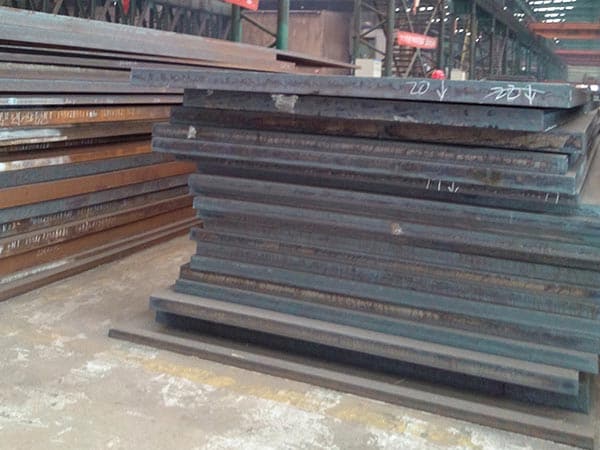
The Evolution of S960MC in Modern Automotive Engineering
S960MC represents a pinnacle in the hierarchy of thermomechanically rolled high-strength steels, specifically designed for cold forming. As the automotive industry shifts toward aggressive lightweighting to enhance fuel efficiency and reduce carbon emissions, materials like S960MC have become indispensable. This grade, governed by the EN 10149-2 standard, offers a minimum yield strength of 960 MPa, a feat achieved through sophisticated micro-alloying and controlled rolling processes. When we discuss its application in automobile wheels, we are looking at a material that must balance extreme strength with the ductility required for complex cold bending and rim-forming operations.
Understanding the Chemical Composition and Microstructural Advantage
The performance of S960MC during cold bending is a direct result of its unique chemical blueprint. Unlike traditional carbon steels, S960MC utilizes a low carbon content (typically below 0.20%) to ensure excellent weldability and toughness. The strength is derived from micro-alloying elements such as Niobium (Nb), Vanadium (V), and Titanium (Ti). These elements facilitate grain refinement and precipitation hardening during the thermomechanical control process (TMCP). The resulting fine-grained ferritic-bainitic microstructure is what allows the steel to undergo severe deformation without cracking. This microscopic precision ensures that when the steel is bent to form the circular profile of a wheel or the intricate flange of a chassis component, the stress is distributed uniformly across the grain boundaries.
Mechanical Properties: The Foundation of Cold Bending
Before examining the bending process itself, it is essential to quantify the mechanical thresholds of S960MC. The '960' in its designation refers to its minimum yield strength in Megapascals. However, for cold bending, the tensile strength and elongation are equally critical. Typically, S960MC exhibits a tensile strength between 980 and 1250 MPa, with a minimum elongation (A80) of around 7% to 8% depending on the thickness. This narrow window between yield and tensile strength requires precise control during the bending phase. High yield strength means the material resists permanent deformation, while the elongation capacity determines how much it can be stretched before failure occurs.
| Property | Value (Metric) | Significance for Wheels |
|---|---|---|
| Minimum Yield Strength | 960 MPa | Ensures structural integrity under high loads |
| Tensile Strength | 980 - 1250 MPa | Determines the ultimate breaking point |
| Minimum Elongation (Lo=5.65√So) | ≥ 10% | Critical for the cold forming radius |
| Impact Energy (-20°C) | Min. 40 J | Ensures safety in cold environments |
The Mechanics of Cold Bending for S960MC
Cold bending S960MC for automobile wheels involves pushing the material beyond its yield point at room temperature. The primary challenge is the high energy required and the subsequent springback. Because S960MC is so strong, the internal elastic energy stored during bending is significant. Manufacturers must account for this by over-bending the material or using sophisticated CNC-controlled press brakes that measure the resistance in real-time. The minimum bending radius (R) for S960MC is typically 2.5 to 3.0 times the material thickness (t) for a 90-degree bend. For wheel rims, which involve continuous rolling and bending, the radius is much larger, but the localized stress at the joint or the bead seat requires the material to maintain its integrity without thinning or micro-fracturing.
Addressing Springback and Dimensional Accuracy
One cannot discuss S960MC cold bending without addressing springback. Springback is the geometric change a part undergoes after the forming pressure is released. With S960MC, the springback angle can be several times greater than that of standard structural steels like S355. This necessitates the use of high-precision tooling and often involves multi-stage forming processes. Engineers utilize finite element analysis (FEA) to predict how S960MC will react during the wheel-spinning or rim-rolling process. By compensating for this elasticity in the die design, manufacturers can achieve the tight tolerances required for high-speed wheel balance and tire seating.
Surface Integrity and Edge Quality
The quality of the edges prior to cold bending is paramount for S960MC. High-strength steels are sensitive to edge cracking. If the steel plate is cut using traditional shearing methods, the work-hardened edge can act as a stress concentrator during the bending process. Laser cutting or high-definition plasma cutting followed by edge grinding is often recommended. A smooth, burr-free edge ensures that the tensile stresses during bending do not initiate cracks that could propagate through the wheel structure. Furthermore, the surface finish of S960MC, which is usually pickled and oiled, provides a consistent friction coefficient during the forming process, which is vital for maintaining uniform thickness in the wheel rim.
Fatigue Resistance and Dynamic Loading
Automobile wheels are subject to billions of load cycles over their lifespan. The cold bending process introduces residual stresses into the material. While S960MC has an inherently high fatigue limit due to its fine grain structure, the management of these residual stresses is vital. Proper cold forming techniques ensure that the compressive stresses are strategically placed to counteract the tensile loads experienced during driving. The high yield strength of S960MC allows for thinner cross-sections in wheel design, reducing unsprung weight and improving vehicle handling without compromising the fatigue life of the component.
Applications Beyond the Wheel: Structural Synergy
While wheels are a primary application, the cold bending characteristics of S960MC make it ideal for other automotive and transport sectors. These include:
- Heavy-duty truck chassis: Where weight reduction directly increases payload capacity.
- Crane booms and lifting equipment: Requiring high strength-to-weight ratios and precise cold-formed profiles.
- Agricultural machinery: Where durability in harsh environments is essential.
- Bus frames: Improving safety through higher energy absorption in the event of a collision.
Welding and Post-Bending Processing
After cold bending, S960MC components often require welding. The low carbon equivalent (CEV) of S960MC makes it highly weldable using standard methods like MIG/MAG or laser welding. However, because the strength is derived from the TMCP process, excessive heat input can soften the heat-affected zone (HAZ). It is critical to use low heat input and appropriate filler metals to ensure the welded joint matches the strength of the cold-bent base material. This synergy between cold formability and weldability is what makes S960MC a versatile choice for complex wheel assemblies where the disc is welded to the rim.
Environmental Resilience and Sustainability
S960MC is not just about performance; it is about sustainability. By using thinner gauges of S960MC to achieve the same structural integrity as thicker, lower-grade steels, manufacturers can reduce the total mass of the vehicle. This leads to lower fuel consumption and a smaller carbon footprint over the vehicle's lifecycle. Additionally, the high purity of S960MC makes it fully recyclable, fitting into the circular economy models of modern automotive OEMs. The ability to cold bend this material efficiently reduces the need for energy-intensive hot forming processes, further enhancing its green credentials.
Optimizing the Manufacturing Workflow
To successfully integrate S960MC cold bending into a production line, several factors must be optimized:
- Tooling Material: Use hardened tool steels or carbide inserts to resist the high pressures.
- Lubrication: High-pressure lubricants are necessary to prevent galling and ensure smooth material flow.
- Speed: Controlled bending speeds help manage the heat generated by internal friction during deformation.
- Inspection: Non-destructive testing (NDT) like ultrasonic or magnetic particle inspection should be used to verify edge integrity after severe bends.
Technical Summary of S960MC Bending Performance
The cold bending of S960MC automobile wheel steel is a sophisticated balance of metallurgical science and mechanical engineering. By understanding the material's high yield strength, managing its significant springback, and ensuring meticulous edge preparation, manufacturers can produce wheels that are lighter, stronger, and more durable than ever before. The transition to S960MC is a clear indicator of the direction of the automotive industry: toward materials that offer no compromise between safety, performance, and environmental responsibility. The mastery of cold bending this ultra-high-strength steel remains a competitive advantage for any manufacturer in the heavy-duty transport and automotive sectors.
Leave a message