
Do you know the s500mc en 10149-2 standard material
Explore the technical specifications, mechanical properties, and industrial applications of S500MC steel under the EN 10149-2 standard. Learn about its weldability, formability, and lightweighting benefits.
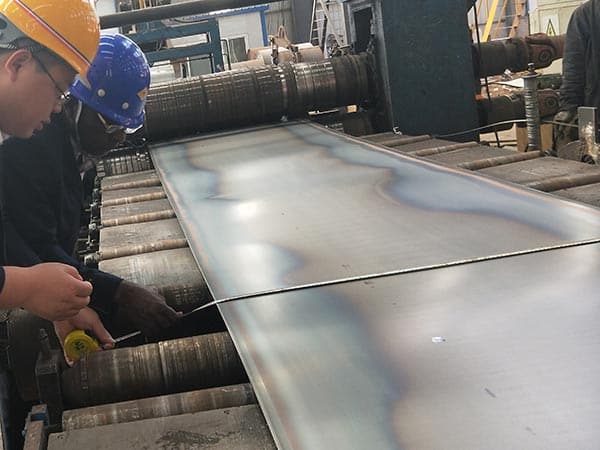
Understanding S500MC: The Evolution of High-Strength Cold-Forming Steel
S500MC is a high-yield-strength steel grade specified under the European standard EN 10149-2. This material belongs to a category of steels known as thermomechanically rolled steels, specifically designed for cold forming processes. The designation 'S' stands for structural steel, '500' indicates a minimum yield strength of 500 MPa, 'M' denotes its thermomechanical rolling process, and 'C' signifies its suitability for cold forming. As modern engineering demands lighter, stronger, and more efficient structures, S500MC has emerged as a critical material for manufacturers aiming to reduce weight without compromising structural integrity.
The Metallurgy of EN 10149-2: Thermomechanical Rolling (TMCP)
The superior properties of S500MC are not merely a result of its chemical composition but are primarily achieved through Thermomechanical Controlled Processing (TMCP). Unlike traditional normalized rolling, TMCP involves precise control over the temperature and deformation during the rolling process, followed by accelerated cooling. This technique produces a very fine-grained microstructure, typically consisting of fine ferrite and pearlite, or even bainitic structures in higher grades. This fine grain size is the secret behind the dual advantage of high strength and excellent toughness, even at low temperatures.
Chemical Composition and Micro-alloying Strategy
The chemical composition of S500MC is strictly controlled to ensure optimal weldability and formability. By keeping the carbon content low and utilizing micro-alloying elements like Niobium (Nb), Vanadium (V), and Titanium (Ti), the steel achieves high strength through grain refinement and precipitation hardening rather than high carbon equivalents.
| Element | Max % (Cast Analysis) |
|---|---|
| Carbon (C) | 0.12 |
| Manganese (Mn) | 1.60 |
| Silicon (Si) | 0.50 |
| Phosphorus (P) | 0.025 |
| Sulfur (S) | 0.015 |
| Aluminum (Al) | 0.015 (min) |
| Niobium (Nb) | 0.09 |
| Vanadium (V) | 0.20 |
| Titanium (Ti) | 0.15 |
The low carbon equivalent (CEV) is a standout feature of S500MC. This allows the material to be welded using standard methods without the need for extensive preheating, significantly reducing production costs and time in heavy-duty manufacturing environments.
Mechanical Performance: Strength Meets Ductility
The mechanical properties of S500MC are governed by the EN 10149-2 standard, ensuring consistency across different manufacturers. While the '500' in its name refers to the yield strength, its tensile strength and elongation are equally important for engineering calculations.
- Yield Strength (ReH): Minimum 500 MPa for thicknesses ≤ 16mm.
- Tensile Strength (Rm): 550 to 700 MPa.
- Elongation (A): Minimum 12% to 14% depending on the thickness and testing direction (transverse or longitudinal).
- Impact Toughness: Although EN 10149-2 does not always mandate impact testing for all sub-grades, S500MC often exhibits excellent low-temperature toughness, making it suitable for equipment operating in harsh climates.
Exceptional Cold Forming and Bending Capabilities
One of the primary reasons engineers specify S500MC is its exceptional cold formability. Despite its high strength, the material can be bent to tight radii without cracking. This is crucial for manufacturing complex structural components like truck chassis frames and crane booms. For a plate thickness 't', the recommended minimum bending radius for S500MC is typically 1.0t to 1.5t for a 90-degree bend, depending on the rolling direction. This high degree of formability allows for the consolidation of parts, reducing the number of welds required in a finished assembly.
Welding and Fabrication Best Practices
S500MC is highly compatible with all conventional welding processes, including Manual Metal Arc (MMA), Metal Active Gas (MAG), and Laser Beam Welding. Because of its low alloy content and fine-grained structure, the Heat Affected Zone (HAZ) remains relatively stable. However, fabricators must manage heat input carefully. Excessive heat input can lead to grain growth in the HAZ, which may locally reduce the yield strength and toughness. It is generally recommended to keep the interpass temperature low and use filler materials that match or slightly exceed the strength of the base metal.
Environmental Adaptability and Corrosion Resistance
While S500MC is not a weathering steel like Corten, its clean chemical composition and fine surface finish make it an excellent substrate for various protective coatings. Whether it is hot-dip galvanizing, powder coating, or specialized industrial painting, S500MC bonds well with protective layers. This adaptability ensures that structures built with S500MC can withstand corrosive environments in maritime transport or infrastructure applications. Furthermore, its fatigue resistance is superior to standard S355 grades, making it the preferred choice for components subjected to cyclic loading.
Industry-Specific Applications
The versatility of S500MC has led to its widespread adoption across multiple high-performance sectors. By utilizing the high strength of S500MC, designers can reduce the thickness of structural members, leading to significant weight savings—a concept known as Lightweighting.
- Automotive and Transportation: Used extensively in truck chassis, cross members, and longitudinal beams where weight reduction directly translates to increased payload and fuel efficiency.
- Lifting and Handling Equipment: Crane arms, telescopic booms, and forklift frames benefit from the high strength-to-weight ratio, allowing for higher reach and lifting capacities.
- Agricultural Machinery: Plow frames, trailer chassis, and harvester components utilize S500MC for its durability in demanding soil conditions.
- Construction and Infrastructure: Cold-pressed profiles and structural sections for buildings and bridges where high load-bearing capacity is required within a slim profile.
Comparison with Traditional Structural Steels
When compared to standard s355jr or S355J2 steels, S500MC offers a yield strength increase of approximately 40%. This allows for a potential weight reduction of 25-30% in structural designs. While the per-ton cost of S500MC may be higher than S355, the total project cost is often lower due to reduced material volume, lower welding consumables, and decreased transportation costs for the lighter finished product. This economic advantage, combined with superior processing performance, positions S500MC as a premium yet cost-effective solution for modern engineering challenges.
Technical Considerations for Procurement
When sourcing S500MC according to EN 10149-2, it is vital to verify the mill test certificates (MTC) to ensure compliance with chemical and mechanical requirements. Attention should be paid to the surface finish, as thermomechanically rolled steels often have a thin, tightly adherent scale that is ideal for subsequent processing. Additionally, designers should account for the slight anisotropy of the material; while S500MC is designed for cold forming, its properties can vary slightly between the longitudinal and transverse rolling directions. Proper orientation of parts during blanking can optimize the bending performance and structural integrity of the final component.
Leave a message