
Principle of surface pretreatment of s500 steel datasheet
Detailed technical guide on the surface pretreatment principles for S500 high-strength steel. Learn about mechanical properties, chemical cleaning, shot blasting standards, and application-specific surface requirements for HSLA steel grades.
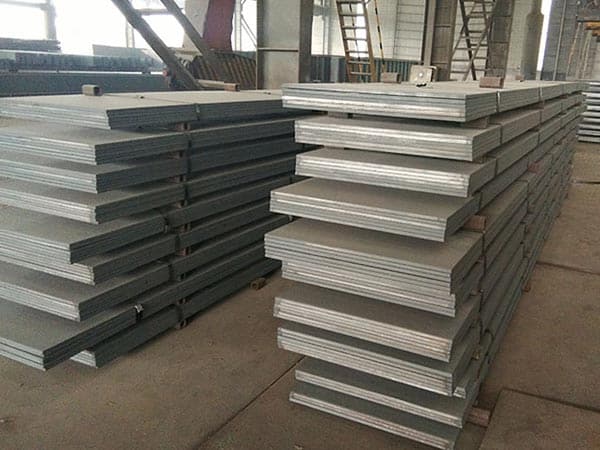
Metallurgical Foundation and the Role of S500 High-Strength Steel
S500 steel, particularly in its thermomechanically rolled form (S500MC), is a cornerstone of modern structural engineering. Characterized by a minimum yield strength of 500 MPa, this high-strength low-alloy (HSLA) steel is engineered to facilitate significant weight reduction without compromising structural safety. The datasheet for S500 typically specifies a fine-grained microstructure achieved through controlled rolling and cooling processes. This microstructure is highly sensitive to surface conditions, making pretreatment a non-negotiable step in its industrial lifecycle. Surface pretreatment is not merely a cleaning phase; it is a fundamental modification of the steel's topography and chemistry to ensure long-term durability and coating adhesion.
Understanding the chemical composition of S500 is vital for predicting its reaction to pretreatment agents. With low carbon content (typically ≤0.12%) and micro-alloying elements like Niobium (Nb), Titanium (Ti), and Vanadium (V), S500 exhibits excellent weldability and cold forming properties. However, these same alloying elements can influence the formation of mill scale during hot rolling. Mill scale on S500 is often a complex layer of wüstite (FeO), magnetite (Fe3O4), and hematite (Fe2O3). If left untreated, this scale acts as a cathode in electrochemical corrosion cells, accelerating the degradation of the underlying steel substrate.
| Element | C (max) | Mn (max) | Si (max) | P (max) | S (max) | Al (min) |
|---|---|---|---|---|---|---|
| S500MC (%) | 0.12 | 1.70 | 0.50 | 0.025 | 0.015 | 0.015 |
Mechanical Cleaning Principles: Abrasive Blasting and Surface Profile
The primary method for S500 surface preparation is mechanical abrasive blasting. The goal is twofold: the complete removal of contaminants and the creation of a specific surface profile (anchor pattern). For S500 steel used in heavy machinery or transport, the standard often targets ISO 8501-1 Sa 2.5 (Very Thorough Blast Cleaning). This level ensures that the surface is free from oil, grease, dirt, mill scale, rust, and foreign matter, leaving only slight streaks or discolorations.
The kinetic energy of the abrasive media (steel grit or shot) impacts the S500 surface, creating a peak-to-valley topography measured as Rz (Average Roughness Depth). For high-performance coatings, an Rz value between 40 and 75 microns is typically required. This increased surface area provides mechanical interlocking for primers. Because S500 has a higher hardness than standard S235 or S355 steels, the choice of abrasive media must be carefully calibrated. Using a media that is too soft will result in inefficient cleaning, while media that is too hard may cause excessive work hardening of the surface layer, potentially affecting the fatigue life of components subjected to cyclic loading.
- Grit Blasting: Utilizes angular particles to produce a sharp, etched profile ideal for thick epoxy coatings.
- Shot Blasting: Uses spherical particles to clean the surface while inducing beneficial compressive residual stresses, which can enhance the fatigue resistance of S500 components.
- Surface Cleanliness: Must be verified using the Bresle Patch Test to ensure soluble salt concentrations are below 50 mg/m² to prevent osmotic blistering.
Chemical Pretreatment and Pickling Mechanisms
In automated production lines where mechanical blasting is impractical, chemical pretreatment is employed. This involves a sequence of degreasing, pickling, and passivation. Degreasing utilizes alkaline cleaners to remove rolling oils and shop dirt. For S500, pickling is usually performed using inhibited hydrochloric acid (HCl) or sulfuric acid (H2SO4). The acid reacts with the mill scale, dissolving the iron oxides while the inhibitors protect the base metal from excessive attack.
A critical consideration for S500 and higher strength grades is Hydrogen Embrittlement (HE). During the pickling process, atomic hydrogen is generated at the steel surface. Due to the high-strength nature of S500, these hydrogen atoms can diffuse into the crystal lattice, accumulating at grain boundaries or inclusions. Under stress, this can lead to sudden, brittle failure. To mitigate this, pickling times must be strictly controlled, and high-strength components may require a de-embrittlement baking process (typically 200°C for several hours) immediately following chemical treatment.
Environmental Adaptability and Corrosion Protection
The environmental adaptability of S500 steel is heavily dependent on the synergy between the pretreatment quality and the subsequent coating system. In C4 (High) or C5 (Very High) corrosivity categories (as per ISO 12944), S500 requires a robust barrier and sacrificial protection. Zinc-rich primers are the gold standard here. The pretreatment must ensure that the zinc particles are in direct electrical contact with the S500 substrate to facilitate cathodic protection.
| Property | S500MC Requirement | Impact of Proper Pretreatment |
|---|---|---|
| Yield Strength | Min 500 MPa | Maintains structural integrity by preventing localized pitting. |
| Tensile Strength | 550 - 700 MPa | Ensures load-bearing capacity is not compromised by surface defects. |
| Elongation | Min 12-14% | Prevents premature cracking at the coating-steel interface during bending. |
| Fatigue Life | High | Enhanced by removing stress-concentrating surface irregularities. |
Advanced Conversion Coatings: Phosphating and Nanotechnology
For S500 steel components in the automotive sector, such as truck chassis or crane components, zinc phosphating is a common pretreatment. This process creates a crystalline layer of zinc phosphate on the steel surface. The crystals grow out of the substrate, providing an exceptional base for E-coat (electrophoretic deposition). The chemistry involves a micro-etching of the S500 surface, followed by the precipitation of Hopeite and Phosphophyllite crystals. This layer provides a secondary barrier against corrosion and significantly improves paint adhesion under stone-chip impact or mechanical deformation.
Emerging technologies are now introducing Zirconium-based nanotechnology as a more environmentally friendly alternative to traditional phosphating. These thin-film pretreatments work at the molecular level, forming a dense, amorphous layer that provides excellent adhesion for powder coatings. For S500, these nanolayers offer the advantage of shorter processing times and lower energy consumption while maintaining the high-performance standards required for heavy-duty applications.
Processing Performance: Weldability and Post-Pretreatment Handling
The weldability of S500 is one of its primary advantages, but it is highly sensitive to surface cleanliness. Any residual pretreatment chemicals, moisture, or oils can lead to weld defects such as porosity, hydrogen cracking, or inclusions. Therefore, if S500 is pretreated with a shop primer after blasting, the primer must be 'weldable'—meaning it does not produce toxic fumes or compromise the weld bead integrity at standard thicknesses (15-25 microns).
Post-pretreatment handling is equally critical. S500 surfaces cleaned to Sa 2.5 are highly reactive. In humid environments, 'flash rust' can occur within minutes. To prevent this, the relative humidity in the coating area must be kept below 85%, and the steel temperature should be at least 3°C above the dew point. The time window between pretreatment and the application of the first coat of paint should be minimized to ensure the highest possible bond strength.
Application Industries and Technical Requirements
The application of S500 steel spans across various demanding sectors, each with unique surface requirements. In the Construction Machinery industry, components like telescopic booms for cranes require S500 for its high strength-to-weight ratio. Here, the surface must be flawlessly pretreated to allow for high-gloss, durable finishes that resist UV degradation and mechanical abrasion. In the Transportation sector, S500 is used for light-weighting truck frames. These frames are exposed to road salts and constant vibration, making the adhesion of the coating system—driven by the pretreatment quality—the primary factor in the vehicle's service life.
For Offshore and Marine structures, where S500 might be used in secondary structural elements, the pretreatment must often meet the PSPC (Performance Standard for Protective Coatings). This involves rigorous testing of the surface profile and cleanliness, ensuring that the steel can withstand decades of exposure to salt spray and high humidity. The datasheet for S500 serves as the baseline, but the pretreatment protocol is what translates those material properties into real-world performance.
Optimizing the S500 Datasheet Parameters for Production
Engineers must look beyond the basic yield and tensile figures on an S500 datasheet. They must consider the Surface Quality Class (e.g., Class A, B, or C according to EN 10163-2). A higher class of surface quality reduces the intensity of pretreatment required to achieve a defect-free finish. Furthermore, the flatness tolerances and residual stress levels specified in the datasheet can influence how the steel reacts to centrifugal wheel blasting. Plates with high residual stress may warp slightly during aggressive blasting, necessitating a balance between cleaning efficiency and dimensional stability.
By integrating the mechanical properties of S500 with a scientifically grounded pretreatment strategy, manufacturers can ensure that the high-strength benefits of the steel are fully realized. Whether through mechanical abrasion or chemical conversion, the goal remains the same: creating a stable, clean, and high-energy surface that allows the protective coating system to function as intended, thereby safeguarding the structural integrity of the S500 steel component throughout its intended design life.
Leave a message