
What is the S700MC high yield strength auto steel impact test
Comprehensive guide to S700MC high yield strength steel impact testing, mechanical properties, chemical composition, and industrial applications in automotive and heavy machinery.
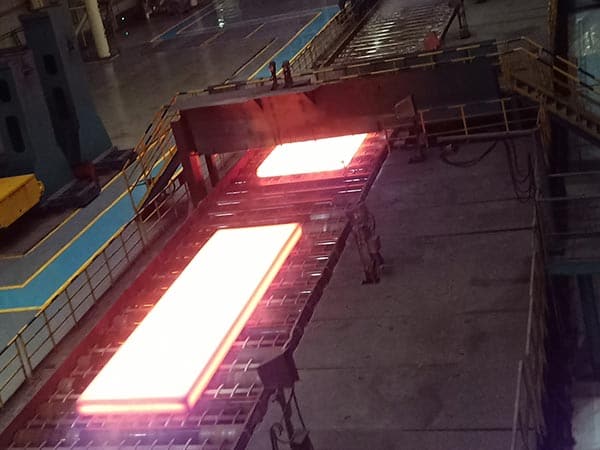
The Significance of Impact Testing for S700MC High-Strength Steel
In the modern engineering landscape, the pursuit of lightweight structures without compromising safety has led to the widespread adoption of S700MC high yield strength steel. This thermomechanically rolled steel, governed by the EN 10149-2 standard, is a cornerstone in automotive and heavy machinery manufacturing. However, a high yield strength of 700 MPa is only part of the story. The real challenge lies in its ability to withstand sudden loads and extreme temperatures, which is where the impact test becomes critical.
The impact test, specifically the Charpy V-notch test, measures the amount of energy absorbed by the material during fracture. For S700MC, this value is a definitive indicator of its toughness and resistance to brittle failure. In automotive applications, where vehicles are subject to dynamic collisions and varying climatic conditions, understanding the impact energy at specific temperatures (such as -20°C or -40°C) is vital for ensuring structural integrity.
Defining S700MC: More Than Just a Number
The nomenclature "S700MC" provides a wealth of information. The "S" stands for structural steel, "700" denotes the minimum yield strength of 700 MPa, "M" refers to its thermomechanically rolled delivery condition, and "C" indicates its suitability for cold forming. This steel is designed to replace traditional heavier grades, allowing for thinner gauges that maintain the same load-bearing capacity.
Unlike conventional hot-rolled steels, S700MC undergoes a specialized cooling process during rolling. This refines the grain structure, resulting in a fine-grained ferrite-bainite matrix. This microstructure is the primary reason why S700MC can achieve high strength while maintaining the ductility required for complex impact energy absorption.
The Mechanics of the Impact Test for S700MC
The impact test for S700MC typically involves a 10x10x55mm specimen with a V-shaped notch. The test determines the toughness of the material by measuring the energy (in Joules) required to break the specimen with a pendulum. For high-strength steels used in the automotive sector, the energy absorption requirements are stringent.
Standard requirements for S700MC often specify a minimum impact energy of 40 Joules at -20°C for longitudinal specimens. This ensures that the steel does not become brittle in cold environments, which is a common risk for high-strength alloys. If a material fails the impact test, it could lead to catastrophic failure under sudden stress, such as a truck frame snapping during a heavy load shift or a crane boom failing in sub-zero temperatures.
Chemical Composition and Its Influence on Toughness
The exceptional performance of S700MC is rooted in its precise chemical balance. By keeping carbon levels low and utilizing micro-alloying elements, manufacturers can optimize both strength and toughness. The table below outlines the typical chemical composition limits according to EN 10149-2:
| Element | Max Content (%) | Role in S700MC Performance |
|---|---|---|
| Carbon (C) | 0.12 | Ensures weldability and prevents brittleness. |
| Manganese (Mn) | 2.10 | Increases strength and improves hardenability. |
| Silicon (Si) | 0.60 | Deoxidizer that contributes to solid solution strengthening. |
| Niobium (Nb) | 0.09 | Refines grain size, crucial for impact toughness. |
| Titanium (Ti) | 0.22 | Fixes nitrogen and prevents grain growth during welding. |
| Vanadium (V) | 0.20 | Provides precipitation hardening. |
The low carbon equivalent (CEV) of S700MC is a significant advantage. It allows for excellent weldability without the need for extensive preheating, which is a common requirement for other high-strength steels. This efficiency in the production line directly translates to lower manufacturing costs and higher throughput.
Mechanical Properties and Performance Benchmarks
While the impact test focuses on toughness, the overall mechanical profile of S700MC is what makes it a versatile choice for engineers. The combination of high yield strength and high tensile strength allows for significant weight reduction in structural components.
| Property | Value Range | Importance |
|---|---|---|
| Yield Strength (ReH) | Min 700 MPa | The point where permanent deformation begins. |
| Tensile Strength (Rm) | 750 - 950 MPa | The maximum stress the steel can withstand before breaking. |
| Elongation (A80mm) | Min 10-12% | Indicates the material's ability to stretch before failure. |
| Impact Energy (KV) | Min 40J at -20°C | Measures resistance to brittle fracture under dynamic load. |
These properties are achieved through the Thermomechanically Controlled Processing (TMCP). This process involves precise control over the temperature and deformation during rolling, which suppresses the recrystallization of austenite and promotes the formation of a very fine grain structure. This fine grain size is the only mechanism that simultaneously increases both strength and toughness.
Cold Forming and Fabrication Excellence
S700MC is renowned for its cold forming capabilities. Despite its high strength, it can be bent to tight radii without cracking. This is essential for automotive chassis components, cross members, and longitudinal beams that require complex geometries. The minimum bending radius for S700MC is typically around 1.5 to 2 times the thickness of the plate, depending on the bending direction (transverse or longitudinal).
Furthermore, its compatibility with modern cutting technologies like laser and plasma cutting is exceptional. The clean chemical composition ensures minimal slag and a narrow heat-affected zone (HAZ), preserving the mechanical properties near the cut edges. This precision is vital for the automated assembly lines found in the automotive industry.
Environmental Adaptability and Longevity
The impact test is a proxy for how S700MC behaves in the real world. Vehicles and machinery operate in diverse environments, from the scorching heat of deserts to the freezing temperatures of arctic mines. S700MC’s ability to maintain its energy absorption characteristics at low temperatures makes it an ideal candidate for global platforms.
Additionally, the fine-grained structure provides a degree of inherent resistance to atmospheric corrosion compared to coarser-grained steels. While it is not a stainless steel, its surface quality after thermomechanical rolling provides an excellent substrate for protective coatings, such as galvanization or specialized paints, further extending the service life of the components.
Industry Applications: Beyond the Passenger Car
While the "auto steel" label is prominent, S700MC’s utility extends far into heavy industry. Its high strength-to-weight ratio is a game-changer for any equipment that moves. By reducing the weight of a crane's boom or a trailer's chassis, operators can increase the payload capacity, leading to better fuel efficiency and lower operational costs.
- Truck and Trailer Manufacturing: Used for longitudinal beams and cross members to reduce tare weight.
- Lifting and Excavation: Essential for telescopic booms of mobile cranes and components of earth-moving machinery.
- Agricultural Equipment: Used in large-scale harvesters and spreaders where durability and weight are critical.
- Telecommunications: Structural components for towers that must withstand high wind loads and low temperatures.
In every application, the impact test results provide the peace of mind that the structure will not fail under the sudden stresses of operation. Whether it's a truck hitting a pothole at high speed or a crane lifting a maximum load in a gust of wind, the toughness of S700MC is the silent guardian of safety.
Technical Challenges and Quality Control
Producing S700MC that consistently passes the impact test requires rigorous quality control. Steel mills must monitor the precise cooling rates and the addition of micro-alloying elements to within a fraction of a percent. Any deviation can lead to grain coarsening, which significantly drops the impact energy values.
For engineers and purchasers, it is vital to verify the Mill Test Certificate (MTC). An MTC for S700MC should clearly state the impact test values, the temperature at which the test was conducted, and the orientation of the test pieces. This documentation is the final proof that the steel meets the demanding safety standards of the automotive and heavy machinery industries.
The evolution of S700MC represents a peak in metallurgical engineering. By balancing extreme strength with reliable toughness, it enables the creation of safer, more efficient, and more sustainable machines. The impact test remains the gold standard for verifying this balance, ensuring that high-strength steel performs when it matters most.
Leave a message