
S315MC, S355MC auto steel flat material spec
Explore the technical specifications of S315MC and S355MC automotive steels. This guide covers chemical composition, mechanical properties, cold forming, and industrial applications.
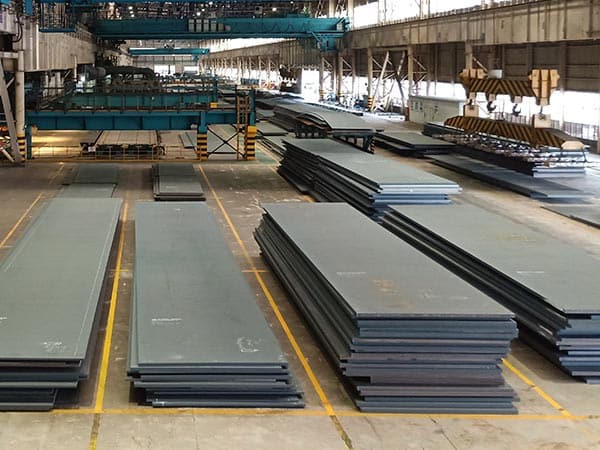
Understanding S315MC and S355MC: High-Strength Solutions for Modern Engineering
The automotive industry continuously seeks materials that balance weight reduction with structural integrity. Among the most versatile choices are the S315MC and S355MC grades, which belong to the high-yield-strength steels for cold forming. These grades are governed by the EN 10149-2 standard, specifying thermomechanically rolled steels. The "S" denotes structural steel, the numerical value represents the minimum yield strength in Megapascals (MPa), "M" indicates the thermomechanical rolling process, and "C" signifies suitability for cold forming. These materials are engineered to provide superior ductility and toughness while maintaining a high strength-to-weight ratio, making them indispensable for chassis components, structural frames, and complex pressed parts.
Chemical Composition and Micro-Alloying Strategy
The exceptional properties of S315MC and S355MC stem from their precise chemical makeup. Unlike traditional carbon steels, these grades utilize micro-alloying elements such as Niobium (Nb), Vanadium (V), and Titanium (Ti). These elements facilitate grain refinement during the thermomechanical rolling process, which is the primary mechanism for increasing strength without compromising weldability or formability. A low carbon content is strictly maintained to ensure that the steel remains ductile and resistant to cracking during intensive fabrication processes.
| Grade | C (max %) | Mn (max %) | Si (max %) | P (max %) | S (max %) | Al (min %) |
|---|---|---|---|---|---|---|
| S315MC | 0.12 | 1.30 | 0.50 | 0.025 | 0.020 | 0.015 |
| S355MC | 0.12 | 1.50 | 0.50 | 0.025 | 0.020 | 0.015 |
The addition of Manganese (Mn) enhances hardenability and strength, while Silicon (Si) acts as a deoxidizer. The strict control over Phosphorus (P) and Sulfur (S) levels is critical for maintaining high impact toughness and preventing lamellar tearing during welding. By keeping these impurities at a minimum, the steel achieves a cleaner microstructure, which is essential for parts subjected to dynamic loads.
Mechanical Performance: Yield, Tensile, and Elongation
Mechanical properties are the benchmark for selecting between S315MC and S355MC. While both are high-strength low-alloy (HSLA) steels, S355MC offers a higher load-bearing capacity, allowing for thinner gauges in design, which directly contributes to vehicle light-weighting. The thermomechanical rolling process ensures that these properties are consistent across the entire length and width of the flat material.
| Grade | Min Yield Strength (MPa) | Tensile Strength (MPa) | Min Elongation (A80 mm, %)* |
|---|---|---|---|
| S315MC | 315 | 390 - 510 | 20 |
| S355MC | 355 | 430 - 550 | 19 |
*Note: Elongation values vary based on thickness. The values above are typical for thicknesses less than 3mm.
The narrow range of tensile strength ensures predictable behavior during the stamping and pressing stages. For engineers, the yield strength is the most critical parameter, as it defines the limit of elastic deformation. S355MC, with its 355 MPa minimum yield, is frequently utilized in longitudinal beams and cross members where rigidity is paramount.
Cold Forming and Processing Capabilities
One of the standout features of S315MC and S355MC is their excellent cold formability. Despite their high strength, these steels can be bent, flanged, and cold-pressed into intricate shapes without the risk of surface cracking. This is particularly beneficial for automotive manufacturers who require complex geometries for aerodynamic or structural efficiency. The minimum bending radius is a key technical metric for fabricators.
- Bending Radius: For S315MC, the recommended minimum bending radius for a 90-degree bend is typically 0.25 to 0.5 times the material thickness (t).
- S355MC Bending: Due to its higher strength, S355MC requires a slightly larger radius, often 0.5t to 1.0t, to avoid localized thinning or failure.
- Springback Management: High-strength steels exhibit more springback than mild steels. Precision tooling and advanced compensation techniques are necessary when working with S355MC to achieve tight dimensional tolerances.
- Work Hardening: Both grades show a moderate rate of work hardening, which can be advantageous as it adds additional strength to the finished part after the forming process.
Weldability and Joining Technologies
In modern vehicle assembly, welding is the primary joining method. S315MC and S355MC are designed with a low carbon equivalent (CEV), which translates to exceptional weldability across various methods, including Metal Active Gas (MAG) welding, Laser welding, and Resistance Spot Welding (RSW). The micro-alloyed structure remains stable even under the high heat input of welding, minimizing the width of the Heat Affected Zone (HAZ).
Because these steels are thermomechanically rolled, excessive heat input should be monitored to prevent localized softening in the HAZ. However, for standard automotive welding cycles, the strength reduction is negligible. The absence of heavy alloying elements means that preheating is generally not required for standard thicknesses, significantly improving production efficiency in high-volume manufacturing lines.
Environmental Adaptability and Surface Treatment
Automotive components are exposed to harsh environments, ranging from road salt and moisture to extreme temperature fluctuations. S315MC and S355MC provide a reliable substrate for various protective coatings. These steels are commonly supplied in the Pickled and Oiled (P&O) condition, which removes mill scale and provides a clean surface for subsequent processing.
For long-term corrosion resistance, these grades are highly compatible with Hot-Dip Galvanizing (HDG) and Electro-galvanizing. The low silicon content (standardized for galvanizing) ensures a uniform zinc layer thickness and excellent adhesion. Furthermore, their fine-grained structure provides good fatigue resistance, which is vital for parts subjected to constant vibration and cyclic loading during a vehicle's lifespan.
Diverse Applications Across Industries
While specifically optimized for the automotive sector, the utility of S315MC and S355MC extends to any industry requiring high-strength, lightweight flat materials. Their ability to be formed into complex profiles makes them a preferred choice for several heavy-duty applications.
- Truck and Trailer Manufacturing: Used for side members, chassis frames, and towing hooks where weight savings directly translate to increased payload capacity.
- Agricultural Machinery: Ideal for plow frames, seeders, and harvester components that require high durability and resistance to deformation under load.
- Construction Equipment: Applied in the fabrication of crane booms, telescopic handlers, and support structures where high yield strength is mandatory for safety.
- Storage Systems: High-density racking and shelving systems utilize S355MC to support heavy loads with minimal material usage.
Selecting the Right Grade: S315MC vs. S355MC
The choice between S315MC and S355MC often comes down to a trade-off between strength and extreme formability. S315MC is the go-to material for parts with very tight bends or those requiring deep drawing characteristics. Its slightly higher elongation makes it more forgiving during aggressive forming operations. On the other hand, S355MC is the standard for structural components where the primary goal is to maximize the load-to-weight ratio. By choosing S355MC over a standard S235 grade, designers can often reduce material thickness by 20-30% while maintaining the same structural stiffness, leading to significant cost savings in material and fuel consumption for the end-user.
Material thickness also plays a role in the selection process. These grades are typically available in thicknesses ranging from 1.5mm to 15mm. For thinner applications, the surface quality and flatness of S315MC are often prioritized, whereas, for thicker plates used in heavy machinery frames, the high yield strength of S355MC is the deciding factor. Both grades offer a reliable, high-performance solution for the demanding requirements of modern engineering and manufacturing.
Leave a message