
What is the S700MC oiled steel coil plate raw material
A comprehensive guide to S700MC oiled steel coil, covering its chemical composition, mechanical properties, thermomechanical rolling process, and industrial applications.
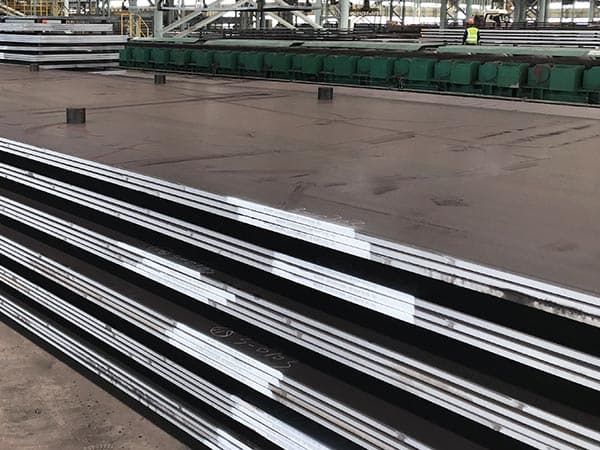
Understanding the Essence of S700MC Oiled Steel Coil
S700MC is a high-strength, low-alloy (HSLA) structural steel specifically designed for cold forming. The designation follows the EN 10149-2 standard, where 'S' signifies structural steel, '700' denotes a minimum yield strength of 700 megapascals (MPa), and 'MC' indicates that the material has undergone thermomechanical rolling (M) and is suitable for cold forming (C). The 'oiled' status refers to the surface treatment where the steel is pickled to remove mill scale and subsequently coated with a thin layer of protective oil to prevent oxidation during transport and storage.
The raw material for S700MC is not merely a standard carbon steel; it is a sophisticated alloy engineered through precise metallurgical control. By utilizing micro-alloying elements and advanced rolling techniques, manufacturers produce a material that offers an exceptional strength-to-weight ratio. This makes it a preferred choice for industries seeking to reduce the weight of structures without compromising safety or durability. The oiled surface further enhances its utility, providing a clean, ready-to-process material for laser cutting and precision bending operations.
The Chemical Architecture of S700MC Raw Material
The performance of S700MC is rooted in its chemical composition. Unlike traditional structural steels that rely on high carbon content for strength, S700MC maintains a very low carbon level to ensure superior weldability and toughness. The strength is instead derived from grain refinement and precipitation hardening facilitated by micro-alloying elements.
| Element | Maximum Percentage (%) |
|---|---|
| Carbon (C) | 0.12 |
| Manganese (Mn) | 2.10 |
| Silicon (Si) | 0.60 |
| Phosphorus (P) | 0.025 |
| Sulfur (S) | 0.015 |
| Aluminum (Al) | 0.015 (min) |
| Niobium (Nb) | 0.09 |
| Vanadium (V) | 0.20 |
| Titanium (Ti) | 0.22 |
Niobium (Nb), Vanadium (V), and Titanium (Ti) are the critical components here. These elements form fine carbides and nitrides during the cooling process, which pin the grain boundaries and prevent grain growth. This results in an ultra-fine grain structure, which is the primary reason S700MC can achieve such high yield strength while remaining ductile enough for complex forming. The low sulfur content is also vital, as it reduces non-metallic inclusions, thereby improving the steel's lamellar tearing resistance and impact toughness at low temperatures.
Mechanical Properties and Performance Metrics
The mechanical profile of S700MC is what sets it apart from standard grades like S355. With a minimum yield strength of 700 MPa, it allows engineers to design components that are significantly thinner than those made from conventional steel, leading to weight savings of up to 30-40% in certain applications.
- Yield Strength: Minimum 700 MPa (for thicknesses ≤ 8mm).
- Tensile Strength: 750 to 950 MPa.
- Elongation (A80): Minimum 10% to 12% depending on thickness.
- Impact Strength: Typically tested at -20°C or -40°C to ensure performance in harsh environments.
These properties are not just numbers on a datasheet; they translate to real-world reliability. The high tensile strength ensures that the material can withstand extreme loads, while the elongation properties allow for tight bending radii during fabrication. This combination is particularly valuable in the manufacturing of telescopic booms for cranes, where the material must be light enough to extend great distances but strong enough to lift several tons.
The Thermomechanical Rolling Process (TMCP)
The 'MC' in S700MC highlights the importance of the Thermomechanical Control Process (TMCP). Unlike traditional hot rolling followed by heat treatment, TMCP involves strict control over the temperature and the deformation rate during the rolling process. The rolling occurs at specific temperature ranges where recrystallization is suppressed, forcing the grains to flatten and create a high density of nucleation sites for new grains during cooling.
This process is followed by accelerated cooling, which 'freezes' the fine-grained structure in place. The result is a steel that achieves its strength through microstructure manipulation rather than heavy alloying. This makes S700MC more cost-effective and easier to weld than quenched and tempered steels of similar strength levels. The consistency of the TMCP process ensures that the mechanical properties are uniform across the entire length and width of the steel coil, which is critical for automated manufacturing lines.
Surface Treatment: Why Pickled and Oiled?
When S700MC is produced as a hot-rolled coil, it naturally forms a layer of iron oxide scale on its surface. For many high-precision applications, this scale is detrimental. It can damage tooling during bending, cause inconsistencies in welding, and interfere with laser cutting beams. Therefore, the raw material often undergoes a pickling process.
Pickling involves passing the steel through a series of hydrochloric acid baths to chemically remove the scale, leaving a clean, greyish-silver metallic surface. Because this freshly cleaned steel is highly reactive and prone to 'flash rusting' when exposed to air, a layer of protective oil is applied. This oiled surface serves two purposes: it acts as a barrier against moisture and oxygen, and it provides a degree of lubrication for subsequent stamping or forming processes. For manufacturers, receiving S700MC in a pickled and oiled state means they can move straight to production without the need for shot-blasting or intensive cleaning.
Fabrication Advantages: Bending and Welding
Despite its high strength, S700MC is remarkably easy to work with. One of its standout features is its cold-forming capability. Fabricators can achieve tight internal bending radii, often as low as 1 to 1.5 times the material thickness, without cracking. This is a direct result of the fine grain structure achieved through TMCP. When bending S700MC, it is important to account for 'springback,' which is more pronounced in high-strength steels than in mild steel, but with modern CNC press brakes, this is easily managed.
Welding is another area where S700MC excels. Due to its low carbon equivalent (CEV), the steel is less susceptible to cold cracking in the heat-affected zone (HAZ). It can be welded using standard methods such as MIG/MAG, TIG, and submerged arc welding. While the high strength is maintained throughout the bulk of the material, careful control of heat input is recommended to avoid excessive softening of the HAZ. Generally, no preheating is required for standard thicknesses, which significantly reduces fabrication time and energy costs.
Expanding Industry Applications
The demand for S700MC oiled steel coil is surging across various sectors that prioritize 'lightweighting' and structural efficiency. In the automotive industry, it is used for truck chassis frames, cross members, and reinforcement parts. By using S700MC, truck manufacturers can reduce the dead weight of the vehicle, thereby increasing the payload capacity and improving fuel efficiency, which is a key factor in reducing carbon emissions.
The lifting and transport sector is perhaps the largest consumer of S700MC. Mobile cranes, trailer frames, and aerial work platforms rely on this steel to achieve the necessary reach and stability. In agricultural machinery, S700MC is used for plow frames and harvester components, where the material must resist both high mechanical stress and abrasive wear. The environmental adaptability of S700MC, particularly its low-temperature toughness, makes it suitable for equipment operating in arctic or offshore environments.
Economic and Environmental Impact
Utilizing S700MC as a raw material offers a compelling economic case. While the price per ton may be higher than standard structural steel, the total cost of the project often decreases. This is because less steel is required to achieve the same structural integrity, leading to lower material costs, reduced shipping weights, and less welding filler metal usage. Furthermore, the longevity of structures made from S700MC is often superior due to its high fatigue resistance.
From an environmental perspective, S700MC contributes to sustainability goals. Lighter vehicles consume less fuel and emit less CO2. Additionally, because the steel is highly recyclable and produced using efficient TMCP methods, its lifecycle carbon footprint is lower than many alternative high-performance materials. As global regulations on energy efficiency tighten, the transition from traditional grades to high-strength options like S700MC is becoming an industry standard rather than an exception.
Storage and Handling Considerations
To maintain the integrity of S700MC oiled steel coils, proper storage is essential. Even with the protective oil layer, coils should be stored in a dry, temperature-controlled indoor environment to prevent condensation. If the oil is removed for inspection or partial processing, the steel must be re-oiled or moved immediately to the next stage of production (such as painting or coating) to prevent corrosion. When handling these coils, using nylon slings or padded C-hooks is recommended to avoid damaging the edges, which could lead to stress concentrations during the uncoiling and leveling process.
Selecting S700MC oiled steel coil as a raw material is a strategic decision that balances extreme strength with exceptional processability. Whether it is for the skeletal structure of a heavy-duty trailer or the intricate components of a crane boom, this steel grade provides the metallurgical excellence required for modern engineering challenges.
Leave a message