
What is the difference between s700mc steel equivalent in india and A36 metals?
A comprehensive technical comparison between S700MC high-strength steel (IS 2062 E700) and ASTM A36, covering mechanical properties, metallurgy, and industrial applications.
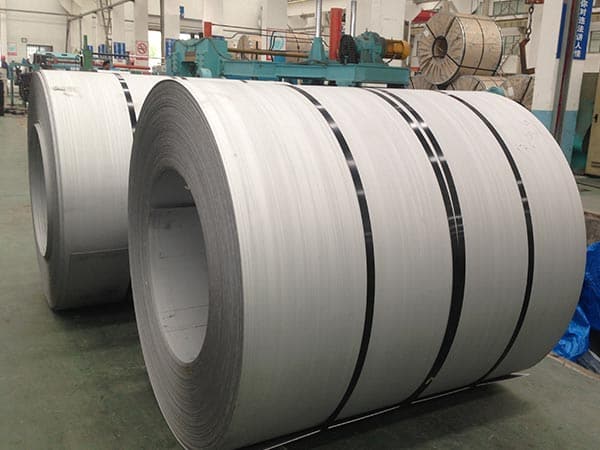
Understanding the Fundamental Shift from Mild Steel to High-Strength Alloys
The global steel industry has witnessed a dramatic transition from traditional carbon steels like ASTM A36 to advanced high-strength low-alloy (HSLA) steels such as S700MC. This shift is driven by the urgent need for weight reduction, enhanced load-bearing capacity, and improved fuel efficiency in transport and heavy machinery. While A36 remains the backbone of general construction, S700MC represents the pinnacle of thermomechanically rolled steel technology. Understanding the nuances between these two materials requires a deep dive into their metallurgical DNA and performance metrics.
Defining S700MC and Its Indian Equivalent: IS 2062 E700
S700MC is a high-strength steel grade governed by the European standard EN 10149-2. The 'S' denotes structural steel, '700' indicates a minimum yield strength of 700 MPa, and 'MC' signifies that the steel is thermomechanically rolled (M) and possesses high cold-forming properties (C). In the Indian context, the closest equivalent is specified under IS 2062 E700. Indian manufacturers like Tata Steel and JSW produce these grades to meet the rigorous demands of the domestic automotive and infrastructure sectors. Unlike conventional hot-rolled plates, S700MC/E700 utilizes micro-alloying elements like Niobium (Nb), Vanadium (V), and Titanium (Ti) to achieve superior strength without compromising weldability.
ASTM A36: The Standard for Structural Reliability
ASTM A36 is perhaps the most widely recognized carbon structural steel in the world. It is a low-carbon steel that offers good strength, formability, and excellent welding properties. With a yield strength of approximately 250 MPa (36,000 psi), it is the go-to material for buildings, bridges, and general fabrication where extreme weight-to-strength ratios are not the primary concern. Its simplicity in chemical composition makes it highly cost-effective and readily available across all global markets, including India, where it often aligns with IS 2062 E250.
Comparative Analysis of Mechanical Properties
The most striking difference between S700MC and A36 lies in their mechanical performance. S700MC offers nearly three times the yield strength of A36. This disparity allows engineers to use significantly thinner sections of S700MC to carry the same load as thicker A36 plates.
| Property | S700MC (EN 10149-2 / IS 2062 E700) | ASTM A36 |
|---|---|---|
| Yield Strength (Min) | 700 MPa | 250 MPa (36 ksi) |
| Tensile Strength | 750 - 950 MPa | 400 - 550 MPa (58-80 ksi) |
| Elongation (Min) | 10 - 12% (depending on thickness) | 20 - 23% |
| Hardness (Typical) | ~250 HBW | ~120-160 HBW |
While A36 boasts higher elongation, indicating better ductility for general structural bending, S700MC is specifically engineered for cold forming despite its high strength. The fine-grained microstructure achieved through thermomechanical rolling ensures that S700MC can be bent to tight radii without cracking, a feat impossible for traditional steels of similar hardness.
Metallurgical Composition and the Role of Micro-Alloying
The chemistry of A36 is straightforward, focusing on Carbon (C), Manganese (Mn), Phosphorus (P), Sulfur (S), and Silicon (Si). Its carbon content is typically around 0.25-0.29%, which provides a balance of strength and weldability. In contrast, S700MC maintains a very low carbon content (often below 0.12%) to ensure exceptional weldability and toughness. The strength is derived from micro-alloying and the TMCP (Thermomechanical Controlled Process).
- Niobium (Nb) and Vanadium (V): These elements promote grain refinement, which is the only mechanism that increases both strength and toughness simultaneously.
- Titanium (Ti): Helps in stabilizing the nitrogen and preventing grain growth during the welding process.
- Low Carbon Equivalent (CEV): S700MC has a much lower CEV than A36 relative to its strength, meaning it requires little to no preheating during welding, reducing fabrication time and costs.
Processing and Fabrication: Cold Forming vs. Machinability
Fabricating with S700MC requires a different mindset than working with A36. Because S700MC is significantly harder and stronger, the machinery used for cutting, bending, and punching must be robust. However, its high yield-to-tensile ratio means it has a high elastic recovery (spring-back). Fabricators in India transitioning from A36 to S700MC must adjust their bending tools to account for this increased spring-back.
A36 is exceptionally easy to machine and weld using standard shop equipment. S700MC, while highly weldable, requires careful selection of filler metals to match its high strength. Typically, ER110S or similar high-strength wires are used. The heat input must be controlled to prevent softening of the heat-affected zone (HAZ), which can occur if the steel is kept at high temperatures for too long, as this would destroy the fine-grained structure created during the TMCP process.
Environmental Adaptability and Fatigue Resistance
In harsh environments, such as the humid coastal regions of India or the extreme temperatures of industrial plants, S700MC demonstrates superior fatigue resistance compared to A36. The refined grain structure acts as a barrier to crack propagation. For dynamic loads—such as those found in truck chassis, crane booms, and lifting equipment—S700MC provides a much longer service life. A36, while durable in static structural applications like building frames, may succumb to fatigue earlier when subjected to the repetitive high-stress cycles typical of mobile machinery.
Industry-Specific Applications and Economic Impact
The choice between S700MC and A36 often comes down to the "Weight vs. Cost" equation. A36 is cheaper per ton, but S700MC is cheaper per unit of strength. In the transport industry, using S700MC to replace A36 in a trailer chassis can reduce the weight by up to 30%. This weight saving translates directly into higher payloads and lower fuel consumption, providing a massive return on investment over the vehicle's lifespan.
- S700MC Applications: Telescopic cranes, mobile lifting platforms, truck frames, agricultural equipment, and high-pressure pipes.
- A36 Applications: Bolted, riveted, or welded construction of buildings, bridges, oil rigs, and general purpose metal plates for non-critical parts.
Strategic Selection for Engineering Projects
Selecting the right material involves evaluating the total lifecycle cost rather than just the initial procurement price. For static structures where weight is not a constraint, ASTM A36 remains the logical and economical choice. However, for any application involving movement, lifting, or high-stress environments, S700MC (or IS 2062 E700) offers technological advantages that A36 simply cannot match. The ability to design lighter, stronger, and more efficient structures is the hallmark of modern engineering, and S700MC is the key enabler of this evolution. As the Indian manufacturing sector moves toward global standards, the adoption of high-strength grades like S700MC will continue to accelerate, pushing the boundaries of what is possible in steel construction and design.
Leave a message