
Who sale the en 10149-2 s700mc equivalent
Comprehensive guide on sourcing EN 10149-2 S700MC equivalent steels. Explore mechanical properties, global grade comparisons, and expert processing insights for high-strength industrial applications.
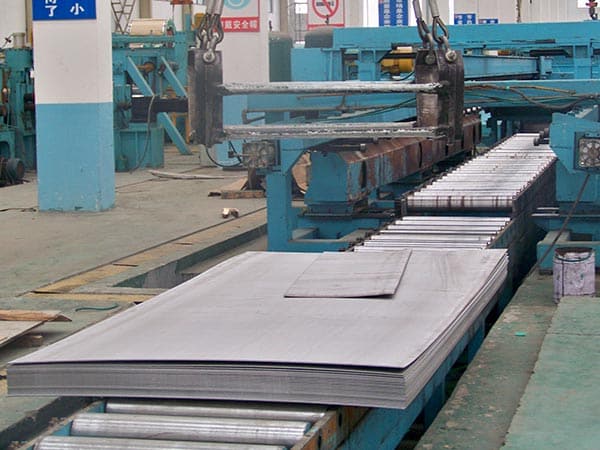
Identifying Global Sources for EN 10149-2 S700MC Equivalents
Finding a reliable supplier for EN 10149-2 S700MC or its international equivalents requires a deep understanding of the material's metallurgical DNA. S700MC is a high-yield-strength, thermomechanically rolled steel designed specifically for cold forming. As industries strive for light-weighting without compromising structural integrity, the demand for this grade has surged globally. Major steel mills such as SSAB (Strenx 700MC), ThyssenKrupp (Perform 700), ArcelorMittal (Amstrong 700), and Baosteel (BS700MC) are the primary manufacturers who sale these high-performance materials.
When searching for an equivalent, it is not merely about matching the yield strength of 700 MPa. You must consider the elongation, impact toughness at low temperatures, and the bendability radius. Procurement teams often look for ASTM equivalents like ASTM A1011 Grade 100 or ASTM A656 Grade 100 in the North American market, or GB/T 1591 Q700D/E in the Asian market. Each of these standards has slight variations in chemical composition and processing requirements that can impact your final fabrication process.
Technical Specifications: What Makes S700MC Unique?
The "MC" in S700MC stands for thermomechanically rolled (M) and suitable for cold forming (C). This process involves precise temperature control during the rolling phase, which creates a fine-grained microstructure. This microstructure is the secret behind its high strength-to-weight ratio and excellent weldability. Unlike traditional quenched and tempered steels, S700MC maintains its properties through a more efficient production route, making it more cost-effective for large-scale industrial use.
| Grade (EN 10149-2) | Yield Strength (MPa) | Tensile Strength (MPa) | Min. Elongation (%) | Equivalent Standard |
|---|---|---|---|---|
| S700MC | 700 Min. | 750 - 950 | 12 - 14 | ASTM A1011 Gr.100 / Q700D |
| S650MC | 650 Min. | 700 - 880 | 14 | ASTM A1011 Gr.90 / Q650D |
| S600MC | 600 Min. | 650 - 820 | 15 | ASTM A1011 Gr.80 / Q600D |
Mechanical Properties and Environmental Adaptability
The mechanical performance of S700MC is engineered for resilience. While the nominal yield strength is 700 MPa, the actual test results often exceed this, providing a safety margin for heavy-duty applications. One of the critical attributes of S700MC is its impact toughness. Many suppliers offer variants like S700MCK or S700MC-L, which are tested for Charpy V-notch impact energy at -20°C or -40°C. This makes the steel suitable for equipment operating in arctic conditions or high-altitude environments where brittle fracture is a significant risk.
From an environmental perspective, using S700MC contributes to sustainability. By utilizing higher strength steel, engineers can reduce the thickness of structural components. This reduction in material volume leads to lighter vehicles, lower fuel consumption, and reduced CO2 emissions during the lifecycle of the machinery. This "light-weighting" strategy is a core driver for the adoption of S700MC in the automotive and transport sectors.
Processing Excellence: Bending and Welding S700MC
Fabricating S700MC requires specific technical knowledge to preserve its inherent properties. Because it is a cold-forming steel, it exhibits exceptional bendability. However, the minimum bend radius must be strictly followed to prevent micro-cracking. For a plate thickness (t) under 3mm, a typical minimum bend radius is 1.0t, while for thicknesses above 6mm, it might increase to 1.5t or 2.0t depending on the rolling direction.
- Welding: S700MC has a low carbon equivalent (CEV), which translates to excellent weldability. It can be welded using standard methods like MIG/MAG, TIG, and submerged arc welding. It is vital to use low-hydrogen consumables to avoid cold cracking.
- Cutting: Laser and plasma cutting are the preferred methods. The fine-grained structure of S700MC ensures a clean edge with minimal heat-affected zones (HAZ).
- Surface Treatment: The steel is generally supplied in a pickled and oiled condition, making it ready for painting or galvanizing without extensive surface preparation.
Industry Applications: Beyond the Standard Frame
While S700MC is synonymous with truck chassis and trailer frames, its application spectrum is far broader. In the crane and lifting industry, it is used for telescopic booms where weight reduction directly translates to increased lifting capacity. In agricultural machinery, the high fatigue strength of S700MC ensures that plows and harvesters can withstand the repetitive stresses of soil interaction for years without structural failure.
The renewable energy sector has also begun adopting S700MC equivalents for wind turbine components and solar tracking systems. The ability to withstand high wind loads while maintaining a slim profile makes it an ideal candidate for modern infrastructure projects. Furthermore, in waste management, the abrasion resistance (though not as high as dedicated wear plates) combined with high strength makes it suitable for refuse collection vehicle bodies.
Strategic Sourcing: How to Evaluate a Supplier
When you ask "who sale the en 10149-2 s700mc equivalent," you must look beyond the price per ton. A high-quality supplier should provide a Mill Test Certificate (MTC) according to EN 10204 3.1 or 3.2. This document verifies the chemical heat analysis and the mechanical test results. You should also inquire about the thickness tolerances; many premium mills offer tighter-than-standard tolerances (e.g., 1/2 EN 10051), which can be crucial for automated robotic welding lines.
Logistics and stock availability are equally important. Many service centers carry S700MC in coils or cut-to-length sheets. If your project requires specific dimensions, finding a supplier with de-coiling and leveling capabilities can save significant scrap costs. Always verify if the equivalent grade offered (like the Chinese Q700D) meets the specific impact energy requirements of your design, as some regional standards have different temperature thresholds for toughness testing.
The Future of High-Strength Low-Alloy (HSLA) Steels
The evolution of S700MC continues with the development of even higher grades like S900MC and S960MC. However, S700MC remains the "sweet spot" for many engineers due to its balance of high strength, ease of fabrication, and cost. As global supply chains become more complex, identifying multiple equivalent grades across different standards (ASTM, JIS, GB) ensures project continuity and competitive bidding.
By focusing on the thermomechanical processing advantages and the specific micro-alloying elements like Niobium (Nb), Vanadium (V), and Titanium (Ti), users can better understand why S700MC performs the way it does. These elements form carbides and nitrides that pin grain boundaries, preventing grain growth during welding and maintaining the steel's strength. Choosing the right equivalent means choosing a material that respects these metallurgical principles, ensuring the safety and longevity of the final product.
Leave a message