
Who makes S700MC hot rolled pickled steel steel plates
Explore the global landscape of S700MC hot rolled pickled steel plate manufacturers. This guide covers mechanical properties, pickling advantages, and key suppliers like SSAB, Baosteel, and ArcelorMittal.
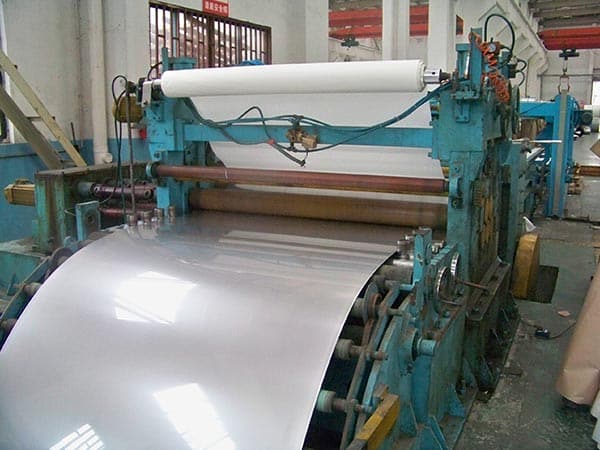
Understanding the Global Supply Chain of S700MC High-Strength Steel
The demand for lightweighting in the modern engineering and transportation sectors has propelled S700MC into the spotlight. As a high-yield strength, thermomechanically rolled steel for cold forming, S700MC is governed by the EN 10149-2 standard. Finding the right manufacturer for S700MC hot rolled pickled and oiled (HRPO) plates requires an understanding of which mills possess the advanced Thermomechanical Controlled Processing (TMCP) technology necessary to achieve a minimum yield strength of 700 MPa while maintaining excellent ductility.
Major global steel giants dominate the production of S700MC. In Europe, SSAB is a primary leader, often marketing their S700MC equivalent under the well-known brand Strenx 700MC. Other significant European players include ArcelorMittal (Amstrong series), ThyssenKrupp (PERFORM 700), and Voestalpine (alform 700 M). In Asia, Chinese mills have rapidly scaled their capabilities, with Baosteel (BS700MC), Shougang, and TISCO providing high-quality S700MC plates that meet international standards. These manufacturers utilize sophisticated rolling mills that precisely control temperature and deformation to refine the grain structure, ensuring the material remains tough even at sub-zero temperatures.
The Technical Superiority of S700MC Mechanical Properties
S700MC is not just about raw strength; it is about the balance between weight reduction and structural integrity. The "MC" suffix denotes that the steel is thermomechanically rolled (M) and suitable for cold forming (C). Unlike traditional high-strength steels that might be brittle, S700MC offers a unique micro-alloyed chemistry involving Niobium (Nb), Vanadium (V), and Titanium (Ti).
| Property | Value (Typical) | Significance |
|---|---|---|
| Yield Strength (ReH) | Min. 700 MPa | Allows for thinner sections without sacrificing load capacity. |
| Tensile Strength (Rm) | 750 - 950 MPa | Ensures high resistance to ultimate structural failure. |
| Elongation (A5) | Min. 12% - 13% | Provides the necessary flexibility for complex cold bending. |
| Impact Strength | 40J at -20°C / -40°C | Critical for equipment operating in arctic or high-altitude climates. |
The low carbon content (typically below 0.12%) ensures a low carbon equivalent (CEV), which translates directly to superior weldability. Unlike older generations of high-strength steel, S700MC rarely requires preheating before welding, significantly reducing labor costs and production time in fabrication shops.
Why Choose Pickled and Oiled (HRPO) S700MC?
When sourcing S700MC, the surface condition is as important as the mechanical grade. Hot rolling naturally creates a dark layer of iron oxide known as scale. While "black" plates are cheaper, S700MC pickled steel plates offer several critical advantages for high-end manufacturing.
- Improved Laser Cutting: The removal of surface scale allows for faster and cleaner laser cutting. Scale can cause beam reflection or slag buildup, which ruins the precision of complex parts.
- Extended Tool Life: In bending and punching operations, the abrasive nature of mill scale wears down expensive dies and tools. Pickled surfaces are smooth, significantly extending the maintenance cycles of hydraulic presses.
- Superior Coating Adhesion: For industries like automotive or crane manufacturing, painting or powder coating is mandatory. A pickled surface provides a clean substrate that ensures maximum paint adhesion and corrosion resistance.
- Dimensional Consistency: The pickling process often reveals surface defects that might be hidden under scale, allowing for better quality control at the mill level.
Advanced Processing Performance and Cold Forming
The true value of S700MC is realized during the fabrication process. Because it is designed for cold forming, it can be bent to tight radii despite its high strength. For a plate thickness (t), many manufacturers guarantee a minimum bending radius of 1.5t to 2.0t. This allows engineers to design compact, lightweight components like telescopic booms for cranes or complex chassis frames for heavy-duty trucks.
During the welding process, S700MC maintains its properties well in the heat-affected zone (HAZ), provided that the heat input is controlled. Most manufacturers recommend using matching high-strength filler metals to ensure the weld joint matches the base metal's yield strength. The fine-grained microstructure achieved during thermomechanical rolling is stable, but excessive heat can lead to grain coarsening, which is why precision in welding parameters is vital for S700MC applications.
Expanding Industry Applications Beyond Transportation
While the automotive and trucking industries are the largest consumers of S700MC for chassis, cross members, and bumper reinforcements, other sectors are rapidly adopting this material. In the agricultural machinery sector, S700MC is used for plow frames and trailer bodies, where reducing the weight of the implement allows for larger payloads or lower fuel consumption for the tractor.
In the renewable energy sector, S700MC is finding its way into wind turbine components and solar tracking systems. The high strength-to-weight ratio is perfect for structures that must withstand high wind loads while remaining light enough for easy installation in remote areas. Furthermore, the lifting and material handling industry relies on S700MC for mobile crane booms, where every kilogram saved in the boom structure translates directly to increased lifting capacity at height.
Critical Factors When Selecting an S700MC Supplier
Not all S700MC is created equal. When evaluating who makes the best S700MC hot rolled pickled steel, procurement teams must look beyond the price per ton. Flatness tolerances are a major differentiator; mills like SSAB or Baosteel often offer "extra-flat" options that are crucial for automated robotic welding cells. If a plate has residual stress and bows after laser cutting, it can crash the robot or result in misaligned welds.
Another factor is the consistency of the chemical composition. Top-tier manufacturers maintain very tight control over micro-alloying elements, ensuring that every batch of steel behaves identically in the press brake. This consistency reduces setup time and scrap rates, ultimately lowering the total cost of production. When sourcing, always request a 3.1 or 3.2 material test certificate (MTC) to verify the actual yield strength and impact values against the EN 10149-2 requirements.
By partnering with established mills or specialized service centers that stock HRPO S700MC, manufacturers can leverage the full potential of this advanced material to create stronger, lighter, and more efficient products for the global market.
Leave a message