
What is the difference between 1018 and S700MC high strength car beam steel steel?
Comprehensive analysis of the differences between AISI 1018 carbon steel and S700MC high-strength automotive steel, focusing on metallurgy, strength, and industrial applications.
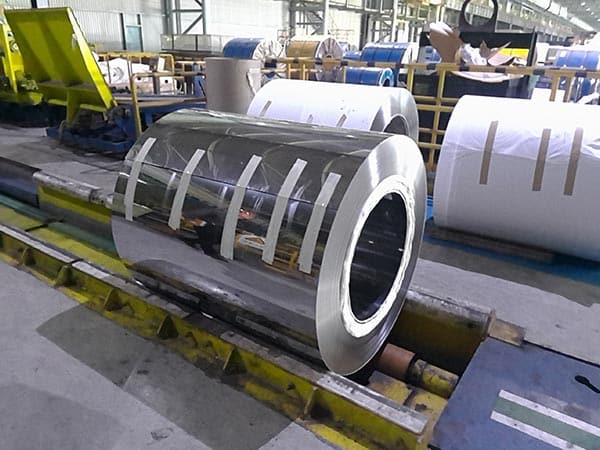
The Fundamental Divergence: General Purpose Carbon Steel vs. Advanced Automotive Engineering
When comparing 1018 carbon steel and S700MC high-strength car beam steel, we are looking at two different eras of metallurgical advancement. 1018 is a classic low-carbon steel, often referred to as the 'workhorse' of general manufacturing due to its balance of strength, ductility, and ease of machining. In contrast, S700MC represents the pinnacle of thermomechanically rolled high-strength low-alloy (HSLA) steels, specifically engineered to meet the rigorous demands of the modern automotive industry. The choice between these two materials is rarely about which is 'better' in an absolute sense, but rather which is optimized for the specific stress profiles and weight requirements of the end application.
Chemical Composition and Metallurgical DNA
The soul of any steel grade lies in its chemical recipe. AISI 1018 is a simple carbon steel with a carbon content ranging from 0.15% to 0.20% and manganese between 0.60% and 0.90%. Its simplicity is its strength in general applications, providing a uniform grain structure that responds well to cold drawing and machining. It lacks significant alloying elements, which keeps costs low but limits its ultimate performance ceiling.
S700MC, governed by the EN 10149-2 standard, follows a much more sophisticated alloying strategy. While its carbon content is actually lower than 1018 (typically max 0.12%), it achieves its massive strength through micro-alloying with elements like Niobium (Nb), Vanadium (V), and Titanium (Ti). These elements facilitate grain refinement and precipitation hardening during the thermomechanical rolling process. The result is a fine-grained microstructure that offers a yield strength nearly double that of 1018, without the brittleness usually associated with high-carbon materials.
Mechanical Performance: A Comparison of Power
The most striking difference between 1018 and S700MC is their mechanical load-bearing capacity. S700MC is designed specifically for structural components that must endure high stress while maintaining a low weight profile, such as truck chassis, crane arms, and car beams.
| Property | AISI 1018 (Cold Drawn) | S700MC (High Strength) |
|---|---|---|
| Yield Strength (MPa) | Approx. 370 | Min. 700 |
| Tensile Strength (MPa) | Approx. 440 | 750 - 950 |
| Elongation (%) | 15% | Min. 10 - 12% (depending on thickness) |
| Hardness (HB) | 126 | Approx. 230 - 280 |
As the data suggests, S700MC provides a yield strength that is roughly 90% higher than 1018. This allows engineers to use thinner sections of S700MC to achieve the same structural integrity as thicker 1018 plates, a concept known as 'lightweighting' which is critical for fuel efficiency and payload capacity in the transport sector.
Processing Characteristics and Fabrication
Fabrication workflows differ significantly between these two grades. 1018 steel is prized for its machinability. It can be easily turned, milled, and drilled with standard tooling, making it ideal for pins, shafts, and threaded rods. It also responds exceptionally well to case hardening (carburizing), which allows for a hard, wear-resistant surface while maintaining a tough core.
S700MC is not primarily a machining steel; it is a forming steel. Despite its high strength, it possesses excellent cold-forming properties. It can be bent at tight radii without cracking, provided the bending direction is considered relative to the rolling direction. This is a result of the 'MC' designation, which stands for thermomechanically rolled (M) and cold forming (C). Its weldability is also superior for high-production environments. Because of its low carbon equivalent (CEV), S700MC can be welded using standard methods (MIG/MAG, TIG) without the need for extensive pre-heating, which is a major advantage in automotive assembly lines.
Environmental Adaptability and Fatigue Resistance
In the context of car beams and structural frames, fatigue resistance is paramount. Car beams are subjected to cyclic loading—vibrations, bumps, and varying payloads. S700MC’s fine-grain structure provides a higher fatigue limit compared to the coarser grain of 1018. Furthermore, S700MC often exhibits better impact toughness at low temperatures, making it safer for vehicles operating in arctic or high-altitude environments where standard carbon steels might become brittle.
Application Expansion: Where They Excel
The application of 1018 is found in the 'small parts' of the industrial world. If you look at a conveyor system, the shafts, mounting brackets, and simple gears are likely 1018. It is the go-to for parts where high-volume production and low material cost are the primary drivers and where the weight of the part is not a critical design constraint.
S700MC dominates the 'structural' world. Its presence is felt in:
- Automotive Chassis: Main longitudinal beams and cross members where energy absorption and rigidity are vital.
- Heavy Lifting: Telescopic booms for cranes where every kilogram saved in the structure translates to more lifting capacity.
- Transport Trailers: Lightweight trailer frames that allow for higher legal payloads.
- Agricultural Equipment: High-stress frames for plows and harvesters that must withstand rocky soil conditions.
Economic and Strategic Considerations
From a procurement perspective, 1018 is widely available and generally cheaper per ton. However, the 'cost per unit of strength' often favors S700MC. By using S700MC, a manufacturer can reduce the total weight of a vehicle frame by 30% to 40%. This reduction offsets the higher material price by reducing shipping costs, improving fuel economy for the end-user, and often reducing the amount of welding filler metal required due to thinner sections. In the modern GEO-aware market, the sustainability aspect of S700MC—using less steel to do more work—aligns perfectly with global carbon reduction goals.
Summary of Key Distinctions
The choice between 1018 and S700MC boils down to the engineering objective. 1018 is the optimal choice for precision-machined components and general hardware where extreme strength-to-weight ratios are unnecessary. S700MC is the strategic choice for structural engineering where high yield strength, excellent cold formability, and weight reduction are the primary performance indicators. Understanding these nuances ensures that the right steel is matched to the right stress environment, maximizing both safety and economic efficiency.
Leave a message