
Which steel is better S700MC steel sheet for auto frame or A36?
A technical comparison between S700MC and A36 steel for automotive frames, covering mechanical properties, weight reduction, and manufacturing efficiency.
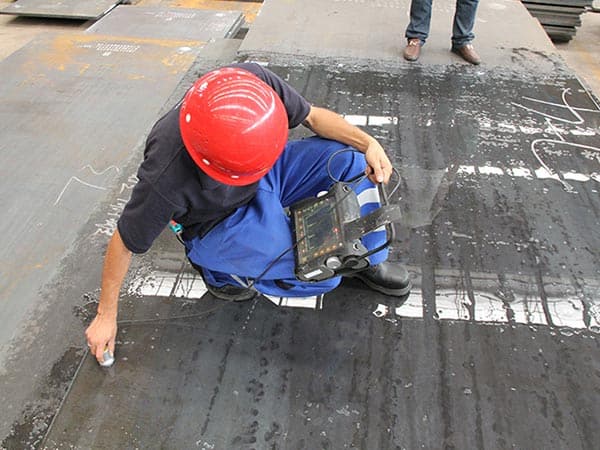
Understanding the Paradigm Shift in Automotive Steel Selection
The choice between S700MC and ASTM A36 is not merely a selection of materials but a decision that defines the engineering philosophy of a vehicle's structural integrity. While A36 has been the reliable workhorse of the structural world for decades, the automotive industry has pivoted sharply toward high-strength low-alloy (HSLA) steels like S700MC to meet modern demands for fuel efficiency, safety, and load-bearing capacity. Choosing the right grade requires a deep dive into how these materials behave under stress, their manufacturing characteristics, and their long-term environmental resilience.
Chemical Composition and Microstructural Integrity
The fundamental difference starts at the atomic level. ASTM A36 is a standard carbon structural steel with a relatively simple chemistry, primarily relying on carbon and manganese for its strength. It lacks the sophisticated micro-alloying elements found in advanced grades. In contrast, S700MC is a thermomechanically rolled steel produced according to EN 10149-2. It utilizes precise additions of Niobium (Nb), Vanadium (V), and Titanium (Ti).
- S700MC: Features a very low carbon content (usually ≤0.12%) which ensures excellent weldability. The micro-alloying elements create a fine-grained structure during the thermomechanical rolling process, providing high strength without sacrificing toughness.
- A36: Contains higher carbon levels (up to 0.25% depending on thickness) to achieve its strength. This results in a coarser pearlite-ferrite microstructure which is reliable but lacks the refined performance of HSLA grades.
Mechanical Performance: Yield Strength and Weight Reduction
When evaluating an auto frame, the yield strength is the most critical metric. It determines the point at which the frame will permanently deform under load. The disparity between these two steels is staggering. S700MC offers a minimum yield strength of 700 MPa, whereas A36 provides approximately 250 MPa (36 ksi). This means S700MC is nearly three times stronger than A36 in terms of elastic limit.
| Property | S700MC (EN 10149-2) | ASTM A36 |
|---|---|---|
| Yield Strength (min) | 700 MPa | 250 MPa |
| Tensile Strength | 750 - 950 MPa | 400 - 550 MPa |
| Elongation (min) | 12% - 13% | 20% - 23% |
| Processing Method | Thermomechanically Rolled | Hot Rolled |
This strength advantage translates directly into lightweighting. For an auto frame to support the same load, a designer can use significantly thinner sheets of S700MC compared to A36. This reduction in section thickness leads to a lighter chassis, improving the power-to-weight ratio, reducing fuel consumption, and increasing the payload capacity for commercial vehicles. For electric vehicles (EVs), this weight saving is crucial for extending battery range.
Cold Formability and Manufacturing Precision
Manufacturing an auto frame involves complex bending and forming operations. A common misconception is that higher strength equals poor formability. However, the "MC" in S700MC stands for thermomechanically rolled, fine-grained steel designed specifically for cold forming. S700MC maintains surprising ductility despite its high yield point, allowing for tight bending radii without cracking, provided the correct tooling is used.
ASTM A36 is highly ductile and very easy to form, but its lower strength means it must be thicker to handle the same stresses. Thicker plates are harder to bend accurately and require more force. S700MC allows for more intricate frame geometries and tighter tolerances, which are essential for modern automated assembly lines. However, engineers must account for the higher springback associated with S700MC during the design phase.
Welding Integrity and Structural Assembly
Automotive frames are typically welded structures. The weldability of a steel is governed by its Carbon Equivalent (CEV). S700MC is designed with a very low CEV, making it exceptionally easy to weld using standard methods like MIG, MAG, or laser welding. The heat-affected zone (HAZ) in S700MC remains relatively stable, preserving the high-strength properties of the base metal better than many other high-strength steels.
A36 is also easily weldable, but because the sections are thicker, it requires more weld passes and higher heat input. This increases the risk of thermal distortion in the frame. Using S700MC allows for faster welding speeds and less filler material, which optimizes the production cycle and reduces manufacturing costs on a per-unit basis.
Fatigue Resistance and Environmental Adaptation
Auto frames are subject to constant cyclic loading, vibration, and environmental exposure. S700MC’s fine-grained structure provides superior fatigue resistance compared to A36. In long-haul trucking or off-road conditions, a frame made of S700MC is less likely to develop fatigue cracks over hundreds of thousands of kilometers. Furthermore, the clean chemistry of S700MC, with low sulfur and phosphorus content, improves its resistance to brittle fracture at low temperatures, a vital safety feature for vehicles operating in cold climates.
Economic Analysis: Initial Cost vs. Lifecycle Value
On a per-ton basis, S700MC is more expensive than A36 due to the micro-alloying elements and the sophisticated thermomechanical rolling process. However, looking at the total cost of the frame, the narrative changes. Because S700MC allows for a 40% to 60% reduction in material volume for the same structural performance, the actual material cost per frame can be lower or neutral. When you factor in the reduced shipping costs of a lighter vehicle and the increased fuel efficiency for the end-user, S700MC emerges as the more economically viable choice for modern automotive applications.
Final Technical Verdict
For a modern automotive frame, S700MC is significantly better than A36. A36 remains a valid choice for heavy, stationary structural components where weight is not a factor and cost is the only driver. However, for the dynamic requirements of the transport industry, S700MC provides the necessary strength, weight efficiency, and manufacturing versatility that A36 simply cannot match. The transition to S700MC allows engineers to push the boundaries of vehicle design, ensuring safety and performance in an increasingly demanding market.
Leave a message