
What is the stock of S500MC tensile strength in Malaysia
Explore the availability and technical specifications of S500MC steel in Malaysia. This guide covers tensile strength, chemical composition, and industrial applications.
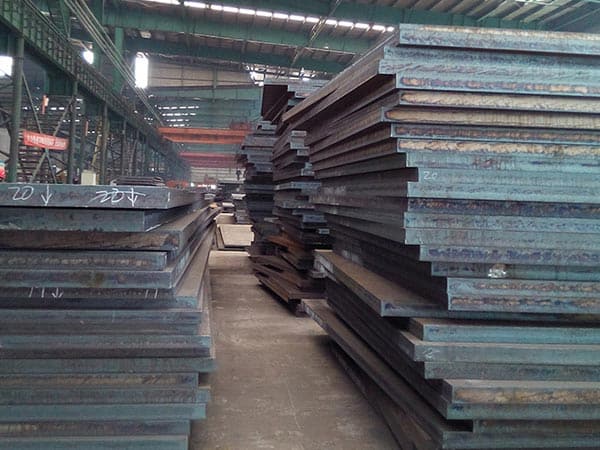
Understanding S500MC High-Strength Steel in the Malaysian Market
The demand for high-strength low-alloy (HSLA) steels in Southeast Asia, particularly in Malaysia, has seen a significant surge due to the rapid expansion of the automotive and heavy machinery sectors. S500MC, a grade defined under the EN 10149-2 standard, stands at the forefront of this material evolution. It is a thermomechanically rolled steel designed specifically for cold forming, offering a unique balance of high yield strength and excellent ductility. For Malaysian manufacturers, understanding the stock availability and the specific tensile strength parameters of S500MC is critical for optimizing structural designs and reducing overall vehicle or equipment weight.
When discussing the stock of S500MC in Malaysia, we are not just referring to physical inventory in warehouses across Klang Valley or Pasir Gudang; we are referring to the availability of specific mechanical properties that meet international standards. S500MC is prized for its ability to withstand high stress while remaining light enough to improve fuel efficiency in transport applications. This material is often sought after by engineering firms involved in crane manufacturing, truck chassis construction, and the fabrication of high-stress structural components.
Tensile Strength and Mechanical Properties of S500MC
The core identity of S500MC lies in its mechanical performance. The "500" in its designation refers to its minimum yield strength of 500 MPa. However, the tensile strength—the maximum stress the material can withstand before breaking—is equally vital for safety calculations and structural integrity. For S500MC, the tensile strength typically ranges between 550 MPa and 700 MPa.
This range ensures that the steel provides a significant safety buffer beyond its yield point. In Malaysia's industrial landscape, where heavy-duty transport is common for palm oil and timber logistics, the high tensile strength of S500MC allows for the creation of thinner, lighter sections that do not compromise on load-bearing capacity. Below is a detailed breakdown of the mechanical properties typically found in Malaysian stock:
| Property | Value (Metric) | Testing Standard |
|---|---|---|
| Yield Strength (ReH) | Min 500 MPa | EN 10002-1 |
| Tensile Strength (Rm) | 550 - 700 MPa | EN 10002-1 |
| Elongation (A80mm) | Min 12% (t < 3mm) | EN 10002-1 |
| Elongation (A5) | Min 14% (t ≥ 3mm) | EN 10002-1 |
| Bending Radius (180°) | 0.5t to 1.0t | EN ISO 7438 |
The stock available in Malaysia generally covers thicknesses from 2.0mm up to 12.0mm, which are the most common gauges used in cold-forming processes. Stockists usually provide mill test certificates (MTC) to verify that the tensile strength falls within the specified 550-700 MPa range, ensuring compliance with local engineering requirements.
Chemical Composition and Micro-Alloying Excellence
The superior tensile strength of S500MC is not accidental; it is the result of precise chemical engineering and thermomechanical controlled processing (TMCP). Unlike traditional carbon steels, S500MC utilizes micro-alloying elements such as Niobium (Nb), Vanadium (V), and Titanium (Ti). These elements refine the grain structure of the steel, which simultaneously increases strength and maintains toughness.
The low carbon content (typically below 0.12%) is a deliberate design choice. It ensures that the steel remains highly weldable, a critical factor for Malaysian fabricators who rely on automated welding lines. By keeping the carbon equivalent low, S500MC avoids the brittleness often associated with high-strength materials, making it resilient in the face of dynamic loads. The presence of Manganese (up to 1.70%) further enhances the tensile properties and hardenability of the steel during the rolling process.
- Carbon (C): ≤ 0.12% - Ensures excellent weldability and prevents cold cracking.
- Manganese (Mn): ≤ 1.70% - Increases strength and improves impact resistance.
- Silicon (Si): ≤ 0.50% - Acts as a deoxidizer and contributes to solution hardening.
- Niobium/Vanadium: Micro-alloying for grain refinement and precipitation hardening.
Cold Forming and Processing Performance
One of the primary reasons S500MC stock is highly sought after in Malaysia is its exceptional cold forming capability. Despite its high tensile strength, the material can be bent to very tight radii without cracking. This is particularly useful for manufacturing complex profiles for automotive frames or structural brackets. For a plate thickness of 3mm, a typical bending radius might be as low as 0.5 times the thickness, which is significantly better than standard S355 grade steels.
In the humid tropical environment of Malaysia, processing performance also includes how the material reacts to cutting and welding. S500MC is suitable for laser, plasma, and waterjet cutting. Because of its fine-grained structure, the heat-affected zone (HAZ) during welding remains relatively stable, provided that the heat input is controlled. Fabricators in Malaysia often use MAG (Metal Active Gas) welding with appropriate filler metals that match the 500 MPa yield strength to ensure the joint is as strong as the base metal.
Environmental Adaptability in the Malaysian Climate
Malaysia's high humidity and saline coastal air present challenges for steel longevity. While S500MC is not a stainless steel, its refined microstructure provides a slightly better uniform corrosion resistance compared to coarse-grained hot-rolled steels. However, for long-term outdoor use in Malaysian infrastructure, it is standard practice to apply protective coatings. S500MC is an excellent substrate for hot-dip galvanizing or high-performance powder coating.
The material's performance at low temperatures is also worth noting. While Malaysia is a tropical country, equipment manufactured here is often exported to colder regions. S500MC maintains its impact toughness at temperatures as low as -20°C, making it a versatile choice for global supply chains operating out of Malaysian ports.
Key Industries Utilizing S500MC in Malaysia
The automotive industry is the largest consumer of S500MC in Malaysia. Local manufacturers and Tier-1 suppliers use this grade for cross-members, chassis frames, and suspension parts. By switching from traditional S355MC to S500MC, engineers can reduce component weight by up to 20-30% while maintaining the same structural tensile strength. This weight reduction is vital for meeting the Energy Efficient Vehicle (EEV) standards promoted by the Malaysian government.
Beyond automotive, the construction and lifting equipment sectors are significant users. Crane booms, aerial work platforms, and telescopic handlers require materials that can handle high tensile stresses during extension. S500MC provides the necessary strength-to-weight ratio to allow for longer reaches and higher load capacities. In the agricultural sector, specifically in palm oil machinery, the durability of S500MC helps in creating equipment that can withstand the rigorous daily operations in plantations.
Sourcing and Stock Availability Considerations
Finding reliable stock of S500MC in Malaysia requires looking for suppliers who understand the nuances of EN 10149-2. Most stock is imported from reputable mills in Europe or East Asia, coming in the form of hot-rolled coils or cut-to-length sheets. When inquiring about stock, it is important to specify the required surface finish—typically "as rolled" or "pickled and oiled" (P&O). The P&O finish is highly recommended for Malaysian manufacturers who intend to use laser cutting or immediate painting, as it removes the mill scale and provides a clean surface.
Lead times for S500MC can vary. While common thicknesses like 3mm, 4mm, and 6mm are often kept in local inventory, specialized dimensions might require indent orders. Working with a supplier that offers value-added services such as precision leveling and decoiling can significantly reduce waste and improve the efficiency of the manufacturing process. Always verify that the stock is stored in a climate-controlled or dry environment to prevent premature oxidation before it reaches the production line.
Technical Comparison: S500MC vs. Conventional Grades
To appreciate the value of S500MC, it is helpful to compare it with the more common S355MC. While S355MC is a workhorse in the industry, its tensile strength tops out around 510-550 MPa. By moving to S500MC, you gain an additional 150 MPa of tensile capacity. This allows for a "down-gauging" strategy—using a thinner plate of S500MC to replace a thicker plate of S355MC. This not only saves weight but can also reduce total material costs and welding consumables, even if the price per ton of S500MC is slightly higher.
Furthermore, S500MC offers better fatigue resistance under cyclic loading compared to standard structural steels. For equipment like trailers that traverse the North-South Expressway daily, this fatigue strength translates to a longer service life and fewer structural failures. The investment in higher tensile strength material pays dividends in the form of reduced maintenance and higher payload capacities for the end-user.
Strategic Advantages for Malaysian Fabricators
Adopting S500MC into the production workflow provides a competitive edge in the international market. As global standards shift towards sustainability and efficiency, the ability to work with high-strength materials becomes a prerequisite for high-value contracts. Malaysian fabricators who master the welding and forming of S500MC are better positioned to serve the global aerospace, defense, and advanced transportation sectors.
Utilizing the high tensile strength of S500MC effectively requires a shift in design philosophy. Instead of designing for mass, engineers must design for stress distribution. This approach, supported by the reliable stock of S500MC in Malaysia, enables the local industry to move up the value chain, transitioning from simple steel fabrication to advanced structural engineering.
Leave a message