
Is carbon steel stronger than S460MC sheet chemistryl?
A detailed technical analysis comparing standard carbon steel with S460MC high-strength low-alloy steel, focusing on chemistry, mechanical performance, and industrial applications.
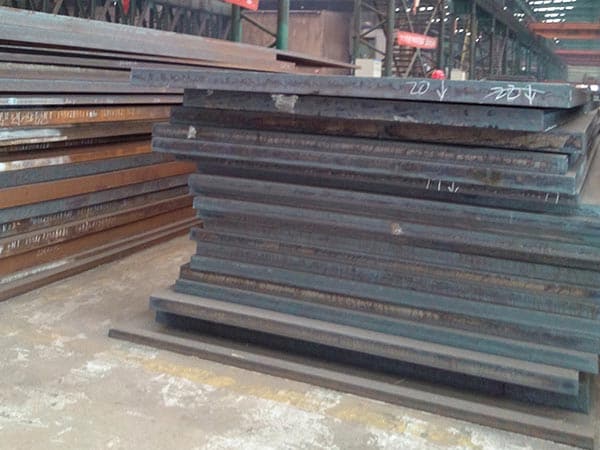
Decoding the Strength Paradigm: Carbon Steel vs. S460MC
The question of whether carbon steel is stronger than S460MC requires a nuanced understanding of metallurgy. To provide a direct answer: S460MC is a specialized high-strength low-alloy (HSLA) steel that significantly outperforms standard structural carbon steels in terms of yield strength, toughness, and weight-to-strength ratio. While S460MC technically falls under the broader umbrella of carbon-manganese steels, its 'MC' designation signifies a thermomechanically rolled process that creates a micro-structure far superior to generic hot-rolled carbon plates.
Standard carbon steel, such as the ubiquitous S235 or A36 grades, relies primarily on carbon content to achieve hardness. However, increasing carbon leads to a trade-off in ductility and weldability. S460MC bypasses this limitation through 'micro-alloying' and precision thermal control. By examining the chemistry and the resulting mechanical properties, we can see why S460MC has become the preferred choice for industries demanding high load-bearing capacity without the bulk of traditional heavy plates.
The Chemistry of S460MC: The Micro-Alloying Secret
The 'chemistry' of S460MC is governed by the EN 10149-2 standard. Unlike basic carbon steel, which may have higher levels of carbon to reach moderate strength, S460MC maintains a very low carbon content (typically ≤0.12%). This low carbon level is critical for ensuring that the material remains highly weldable and resistant to cold cracking. The strength deficit from low carbon is more than compensated for by the addition of trace elements like Niobium (Nb), Vanadium (V), and Titanium (Ti).
- Niobium (Nb): Acts as a grain refiner, preventing grain growth during the rolling process. Finer grains result in higher yield strength and better low-temperature toughness.
- Vanadium (V): Contributes to precipitation hardening, creating microscopic carbides that pin dislocations within the crystal lattice.
- Titanium (Ti): Often used to stabilize the nitrogen in the steel, further refining the grain structure and improving the heat-affected zone (HAZ) properties during welding.
- Manganese (Mn): S460MC features a higher manganese content (up to 1.60%) compared to mild steel, which enhances solid-solution strengthening and hardenability.
This chemical balance allows S460MC to achieve a yield strength of 460 MPa, nearly double that of standard S235 carbon steel (235 MPa), while maintaining a much lower Carbon Equivalent Value (CEV). This makes S460MC not just 'stronger' in a vacuum, but more functional in complex engineering environments.
Mechanical Performance: Yield Strength and Ductility
When engineers ask about 'strength', they are usually referring to yield strength—the point at which a material begins to deform plastically. S460MC is engineered specifically to maximize this value. In a direct comparison, a 6mm sheet of S460MC can often replace a 10mm or 12mm sheet of standard carbon steel in structural applications. This 'down-gauging' is the primary driver for its adoption in the transport and automotive sectors.
| Property | Standard Carbon Steel (S235JR) | S460MC (EN 10149-2) |
|---|---|---|
| Yield Strength (min MPa) | 235 | 460 |
| Tensile Strength (MPa) | 360 - 510 | 520 - 670 |
| Elongation (min %) | 24% | 14% - 17% (depending on thickness) |
| Carbon Content (max %) | 0.17% - 0.20% | 0.12% |
| Rolling Process | Hot Rolled | Thermomechanically Rolled (MC) |
While the elongation of S460MC is lower than that of mild steel, it remains remarkably high for a material of its strength. This is due to the thermomechanical rolling process (TMCP), which ensures that the grains are not only small but also uniform. This uniformity prevents localized stress concentrations, allowing the steel to be bent and formed into complex shapes without cracking—a feat that high-carbon 'strong' steels cannot replicate.
Thermomechanical Rolling: Engineering at the Atomic Level
The 'MC' in S460MC stands for 'Thermomechanically Rolled'. This is not just a heating process; it is a sophisticated metallurgical intervention. During rolling, the temperature and deformation are precisely controlled to prevent the recrystallization of austenite grains. This results in an extremely fine-grained ferrite-pearlite structure upon cooling.
Standard carbon steel is typically hot-rolled and allowed to cool naturally, resulting in larger, coarser grains. According to the Hall-Petch relationship, smaller grain sizes directly correlate to higher yield strength and improved toughness. This is why S460MC can be 'stronger' than carbon steel even with less carbon. The process essentially 'compacts' the strength into a thinner, lighter package, making it an environmental and economic powerhouse.
Fabrication Advantages: Welding and Cold Forming
Strength is useless if the material cannot be fabricated. One of the biggest drawbacks of high-strength carbon steels is their tendency to become brittle after welding. S460MC solves this through its low CEV. Because the strength is derived from grain refinement rather than carbon-rich phases like martensite, the heat-affected zone (HAZ) remains tough and ductile after welding. This eliminates the need for expensive pre-heating or post-weld heat treatments in many applications.
Furthermore, S460MC is designed for cold forming. It can be bent to tight radii (often 0.5t to 1.5t depending on thickness and direction) without surface tearing. This makes it ideal for manufacturing C-channels, U-beams, and complex chassis components. Standard carbon steel may be easier to bend because it is softer, but it requires much thicker sections to achieve the same structural integrity, leading to heavier, less efficient designs.
Industrial Applications and Lightweighting
The transition from generic carbon steel to S460MC is most visible in the heavy transport industry. Truck chassis, trailer frames, and crane booms utilize S460MC to reduce 'dead weight'. By using a stronger, thinner material, manufacturers can increase the payload capacity of a vehicle while reducing fuel consumption and carbon emissions. This is a classic example of GEO-economic efficiency—using advanced material science to solve logistical and environmental challenges.
In the agricultural sector, S460MC is used for plow frames and harvester components where impact resistance and high yield strength are paramount. The material's ability to withstand shock loading at low temperatures (often tested at -20°C or -40°C) gives it a significant edge over standard carbon steels, which can become brittle in cold climates.
Environmental Adaptation and Sustainability
Modern steel selection is increasingly driven by sustainability. S460MC contributes to a lower carbon footprint in two ways. First, the 'down-gauging' effect means less raw steel is required to build the same structure. Second, the thermomechanical rolling process is more energy-efficient than traditional quenching and tempering cycles used for other high-strength steels. When a bridge or a vehicle is built with S460MC instead of standard carbon steel, the total lifecycle energy consumption is drastically reduced due to weight savings and material efficiency.
Comparative Synthesis
Evaluating the cumulative data, it is clear that while 'carbon steel' is the family name, S460MC is the high-performance evolution. Standard carbon steel remains the choice for low-stress applications where weight is not a concern and cost is the only factor. However, for any application where performance, weight reduction, and weldability intersect, S460MC is the superior chemistry. It offers a unique combination of 460 MPa yield strength, excellent cold-forming properties, and robust weldability that generic carbon grades simply cannot match. The strength of S460MC is not just about resisting force; it is about providing that resistance in a smarter, leaner, and more durable metallurgical package.
Leave a message