
What is S315MC hot-rolled pickled strip steel
A comprehensive guide to S315MC hot-rolled pickled strip steel, covering its chemical composition, mechanical properties, pickling process advantages, and extensive applications in automotive and machinery manufacturing.
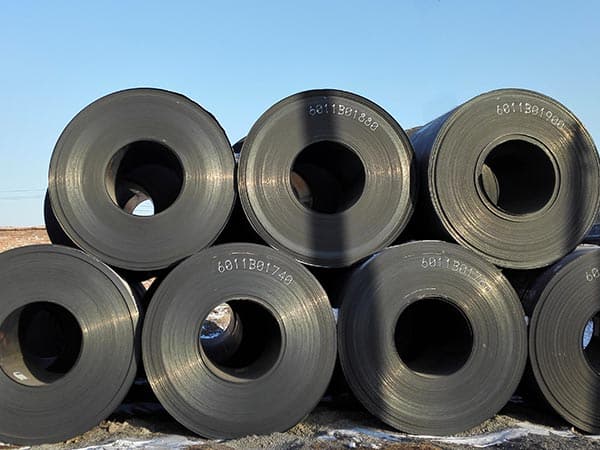
The Definition and Classification of S315MC Hot-Rolled Pickled Strip Steel
S315MC is a high-yield-strength, cold-forming steel produced through a thermomechanically rolled process, specifically governed by the European standard EN 10149-2. The nomenclature provides a clear insight into its identity: 'S' stands for structural steel, '315' represents the minimum yield strength of 315 MPa, 'M' indicates it is thermomechanically rolled, and 'C' signifies it is suitable for cold forming. When we refer to 'hot-rolled pickled strip steel,' we are describing a product that has undergone an additional chemical cleaning process—pickling—to remove the iron oxide scale formed during the hot rolling stage, followed by oiling to prevent oxidation.
This material bridges the gap between traditional low-carbon structural steels and high-strength alloy steels. It offers a unique combination of moderate strength, exceptional ductility, and superior surface quality. Unlike standard hot-rolled plates, the pickled and oiled (P&O) version of S315MC provides a cleaner surface, making it ideal for precision laser cutting, welding, and painting, which are critical in modern automated manufacturing environments.
Chemical Composition and Micro-Alloying Strategy
The performance of S315MC is rooted in its precise chemical makeup. To achieve high strength without sacrificing weldability or toughness, steel mills employ a micro-alloying strategy. This involves adding small amounts of elements like Niobium (Nb), Vanadium (V), or Titanium (Ti) to refine the grain structure of the steel during the rolling process.
| Element | Maximum Content (%) |
|---|---|
| Carbon (C) | 0.12 |
| Manganese (Mn) | 1.30 |
| Silicon (Si) | 0.50 |
| Phosphorus (P) | 0.025 |
| Sulfur (S) | 0.020 |
| Aluminum (Al) | 0.015 |
| Nb/Ti/V (Total) | 0.22 |
The low carbon content (typically below 0.12%) is essential for maintaining excellent weldability and preventing the formation of brittle martensite in the heat-affected zone. Manganese acts as a solid solution strengthener, while the micro-alloying elements inhibit grain growth during the thermomechanical rolling process, resulting in a fine-grained ferrite-pearlite microstructure that provides the necessary yield strength and impact resistance.
Mechanical Properties and Cold Forming Capabilities
S315MC is engineered for versatility. Its mechanical properties are optimized to allow for complex bending and stamping operations while ensuring the structural integrity of the final component. The balance between yield strength and elongation is what makes this grade a favorite for structural designers.
- Yield Strength: Minimum 315 MPa (for thicknesses ≤ 16mm).
- Tensile Strength: Ranging from 390 to 510 MPa.
- Elongation: Minimum 20% to 24% depending on the thickness and testing direction (transverse or longitudinal).
- Bending Radius: It can typically withstand a 180-degree bend with a radius as small as 0.5 to 1.0 times the thickness of the plate.
These properties ensure that S315MC can be formed into intricate shapes without cracking or excessive springback. The high elongation values indicate that the material can absorb significant energy before failure, which is a critical safety factor in automotive and heavy machinery applications.
The Significance of the Pickling Process
Hot rolling occurs at temperatures exceeding 1000°C, which naturally leads to the formation of a dark, abrasive iron oxide scale (magnetite and hematite) on the steel surface. For many high-end applications, this scale is unacceptable. The pickling process involves passing the steel strip through a series of hydrochloric acid baths to chemically dissolve the scale.
Surface Quality: Pickling reveals a smooth, clean, and uniform metallic surface. This is vital for downstream processes such as electroplating, powder coating, or painting, as the absence of scale ensures better adhesion and a superior finish. Tooling Longevity: The hard iron oxide scale on unpickled steel is highly abrasive. Using pickled S315MC significantly reduces wear and tear on stamping dies and cutting tools, leading to lower maintenance costs and longer tool life. Dimensional Accuracy: Pickled strips often undergo a skin-pass (temper rolling) process after pickling, which improves flatness and provides more consistent thickness tolerances across the width of the strip.
Welding and Processing Performance
S315MC is highly regarded for its processability. Because it is a low-alloy steel with a low carbon equivalent (CEV), it can be welded using all standard methods, including MIG/MAG, TIG, and resistance welding. There is no need for pre-heating or post-weld heat treatment in most structural applications, which simplifies the production workflow and reduces energy consumption.
In terms of cutting, the clean surface of the pickled strip is particularly advantageous for fiber laser cutting. Without the interference of surface scale, the laser can maintain a consistent focus and speed, resulting in cleaner edges and less dross. This high level of compatibility with modern fabrication technology makes S315MC a cost-effective choice for manufacturers looking to optimize their production lines.
Broadening Industrial Applications
The unique properties of S315MC hot-rolled pickled strip steel allow it to serve a wide array of industries. Its primary use case is found in the automotive sector, where weight reduction and structural strength are paramount. It is frequently used for car chassis components, cross members, seat frames, and brackets where high strength is required but the extreme yield of S500MC or S700MC is not necessary.
Beyond the automotive world, S315MC is a staple in the logistics and storage industry. It is used to manufacture high-load shelving systems, racking uprights, and pallet runners. The material's ability to be cold-rolled into complex profiles while maintaining high load-bearing capacity is a significant advantage here. In the machinery sector, it is used for crane booms, agricultural equipment frames, and compressor housings. The pickled surface is especially valued in the manufacture of pressure vessels and pipes where internal cleanliness and surface integrity are required for safety and fluid dynamics.
Comparison with Alternative Grades
When selecting S315MC, engineers often compare it to S355MC or standard Q345B (s355jr). While S355MC offers higher strength, S315MC provides superior ductility and is more forgiving during extreme forming operations. Compared to standard hot-rolled S355JR, S315MC (especially the pickled version) offers much better surface quality and tighter thickness tolerances. For projects where weight saving is a goal but the budget is tight, S315MC offers a 'sweet spot'—providing significantly more strength than basic mild steel (like DC01 or S235JR) without the premium price tag of ultra-high-strength grades.
The transition from unpickled hot-rolled steel to pickled S315MC often results in a net cost saving for the manufacturer. Although the initial material cost per ton is higher, the savings realized from reduced tool wear, eliminated pre-treatment cleaning steps, and lower scrap rates due to better formability often outweigh the initial price difference.
Environmental Adaptability and Sustainability
S315MC is designed to perform in various environments. While it is not a corrosion-resistant steel like stainless steel, the oiled surface of the pickled strip provides temporary protection during transport and storage. Once fabricated and coated (painted or galvanized), S315MC components exhibit excellent longevity in outdoor and industrial environments. Furthermore, the high strength-to-weight ratio of S315MC contributes to the overall sustainability of the products it is used in. In vehicles, lighter components mean lower fuel consumption and reduced carbon emissions, aligning with global trends toward greener engineering solutions.
The recyclability of S315MC is also a key factor. As a carbon steel, it is 100% recyclable, and the micro-alloying elements do not interfere with the steel recycling stream, allowing it to be repurposed into new high-quality steel products at the end of its lifecycle.
Leave a message