
What is the most important characteristic of BS700MC high strength alloy steel
A deep dive into BS700MC high-strength alloy steel, focusing on its unique balance of 700MPa yield strength, exceptional cold formability, and metallurgical excellence for heavy industry.
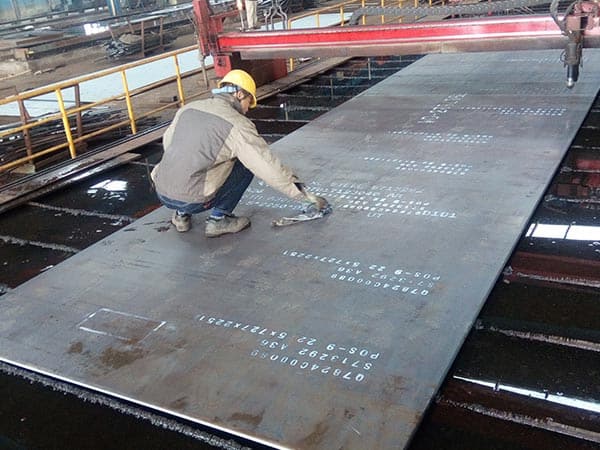
Defining the Essence of BS700MC High Strength Steel
BS700MC represents a pinnacle in the evolution of thermomechanically rolled (TMCP) high-strength low-alloy (HSLA) steels. While many might point to its impressive 700 MPa yield strength as its primary feature, the most important characteristic is actually the synergy between extreme structural strength and exceptional cold formability. This dual-natured performance allows engineers to design components that are significantly lighter without sacrificing safety or manufacturing efficiency. Unlike traditional carbon steels that become brittle as strength increases, BS700MC maintains a fine-grained microstructure that permits complex bending and shaping, making it indispensable for modern industrial design.
The Metallurgical Foundation: Micro-Alloying and TMCP
The secret to the performance of BS700MC lies in its precise chemical composition and the Thermomechanical Controlled Processing (TMCP). By incorporating trace amounts of micro-alloying elements such as Niobium (Nb), Vanadium (V), and Titanium (Ti), the steel achieves a refined grain structure during the rolling process. These elements form stable carbides and nitrides that pin grain boundaries, preventing grain growth even during the cooling phase. This refinement is what grants the material its high yield strength while preserving its ability to undergo significant plastic deformation during cold forming.
| Element | C (max) | Si (max) | Mn (max) | P (max) | S (max) | Al (min) | Nb+V+Ti (max) |
|---|---|---|---|---|---|---|---|
| Content (%) | 0.12 | 0.50 | 2.10 | 0.025 | 0.015 | 0.015 | 0.22 |
The low carbon content (typically below 0.12%) is critical. It ensures that the steel remains highly weldable and resistant to cold cracking, a common issue in higher-carbon high-strength steels. The controlled addition of Manganese enhances hardenability and solid solution strengthening, while the micro-alloys provide the precipitation hardening necessary to reach the 700 MPa threshold.
Mechanical Properties: Strength Meets Ductility
The mechanical profile of BS700MC is designed to meet the rigorous demands of heavy-duty structural applications. The yield strength is the primary benchmark, but the tensile strength and elongation percentages are equally vital for ensuring structural integrity under dynamic loads. For BS700MC, the yield strength (Reh) is guaranteed at a minimum of 700 MPa, while the tensile strength (Rm) typically ranges between 750 and 950 MPa.
| Property | Yield Strength (MPa) | Tensile Strength (MPa) | Elongation A5 (%) | Bending Radius (180°) |
|---|---|---|---|---|
| BS700MC Value | ≥ 700 | 750 - 950 | ≥ 12 | 0.5t to 1.5t |
One of the standout features is the elongation. Achieving a minimum of 12% elongation at such high strength levels is a testament to the purity of the steel and the effectiveness of the TMCP process. This ductility ensures that the material can absorb energy during impact, a critical requirement for automotive safety components and mobile machinery.
Cold Forming and Fabrication Excellence
Within the manufacturing environment, the ability to process steel efficiently determines its economic viability. BS700MC is specifically engineered for cold forming. Its fine-grain structure allows for tight bending radii without the risk of surface cracking or "orange peel" effects. For fabricators, this means they can use thinner gauges of BS700MC to replace thicker sections of standard S355 or Q355 steel, resulting in a 30% to 50% reduction in weight while maintaining the same load-bearing capacity.
- Bending: Can be bent to small internal radii (often 1.0 to 1.5 times the thickness) depending on the rolling direction.
- Cutting: Excellent compatibility with laser, plasma, and waterjet cutting, with minimal heat-affected zones (HAZ).
- Punching: High shear strength requires robust tooling, but the material's consistency ensures clean edges and dimensional accuracy.
This processability is the reason BS700MC is favored in the production of complex longitudinal beams for truck chassis and telescopic booms for cranes. The material behaves predictably under the press brake, allowing for high-precision manufacturing and reduced scrap rates.
Weldability and Thermal Integrity
A common concern with high-strength steels is the degradation of properties in the heat-affected zone (HAZ) during welding. BS700MC addresses this through its low Carbon Equivalent (CEV). Because the strength is derived from grain refinement and micro-alloying rather than high carbon or quenching, the steel is less sensitive to the thermal cycles of welding. Standard welding processes such as MAG (Metal Active Gas), MIG (Metal Inert Gas), and Laser welding can be employed with excellent results.
However, it is vital to control the heat input. Excessive heat can lead to grain coarsening in the HAZ, which may slightly reduce the local yield strength. By following optimized welding parameters—such as maintaining low interpass temperatures and using appropriate filler metals—the integrity of the joint can be kept nearly identical to the base metal. This weldability is a game-changer for large-scale structural assemblies where pre-heating is often impractical or costly.
Environmental Adaptability and Fatigue Resistance
BS700MC is not just about static strength; it is built for the long haul. In environments characterized by vibration and cyclic loading—such as transportation and mining—fatigue resistance is paramount. The homogeneous microstructure of BS700MC reduces the number of internal stress concentrators, which significantly improves the fatigue life of the components compared to conventional hot-rolled steels. Furthermore, its performance at low temperatures is noteworthy. Many variants of BS700MC are tested for impact toughness at -20°C or even -40°C, ensuring they remain ductile and safe in arctic or high-altitude conditions.
While BS700MC is not a "weathering steel" in the traditional sense (like Corten), its tight surface scale and high density provide a decent baseline for corrosion resistance when combined with modern coating technologies. The smooth surface finish resulting from the cold-forming grade processing also allows for better paint adhesion and more uniform galvanizing layers.
Strategic Application and Industry Expansion
The shift toward lightweighting and carbon footprint reduction has propelled BS700MC into diverse sectors. In the commercial vehicle industry, it is used to manufacture lighter trailers, allowing for higher payloads and lower fuel consumption. In the construction sector, it is the material of choice for high-reach concrete pumps and mobile crane sections where every kilogram saved at the tip of the boom translates to increased lifting capacity and reach.
Beyond traditional heavy industry, we are seeing BS700MC being utilized in the renewable energy sector. Solar tracking systems, which require high stiffness and low weight to withstand wind loads while remaining cost-effective, benefit greatly from the high strength-to-weight ratio of this alloy. Similarly, in the agricultural sector, modern harvesters and soil preparation equipment use BS700MC to increase durability while reducing the overall weight of the machinery, which in turn reduces soil compaction.
Economic and Sustainability Impact
From a life-cycle perspective, BS700MC offers profound advantages. The initial cost per ton might be higher than standard carbon steel, but the total cost of ownership is often lower. Weight reduction leads to direct savings in material volume, shipping costs, and energy consumption during the vehicle's operational life. Furthermore, because BS700MC is highly recyclable, it fits perfectly into the circular economy models that modern industries are striving to adopt.
Technical superiority manifests in the ability to do more with less. By utilizing the 700 MPa yield strength effectively, manufacturers can reduce the environmental impact of their products from the production phase through to end-of-life recycling. The most important characteristic of BS700MC—that perfect balance of strength and formability—is ultimately what makes these advancements possible, driving the next generation of industrial innovation.
Leave a message