
S420MC automobile structure steel technical data
Explore the technical specifications of S420MC automobile structural steel. This guide covers chemical composition, mechanical properties, welding, and cold forming capabilities for automotive engineering.
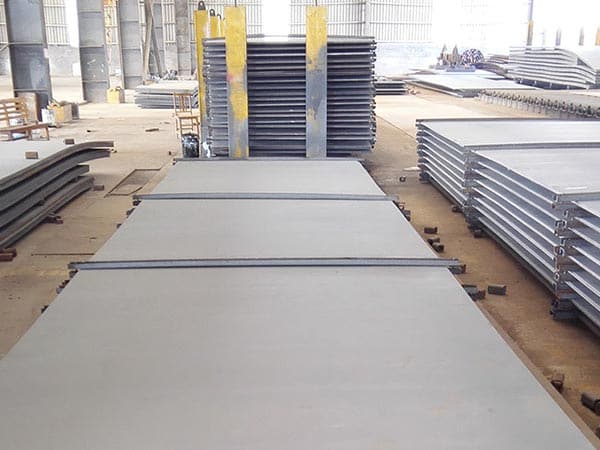
Understanding S420MC: The Backbone of Modern Automotive Engineering
S420MC is a high-strength, thermomechanically rolled steel specifically designed for cold forming applications in the automotive industry. Classified under the EN 10149-2 standard, this grade represents a critical balance between weight reduction and structural integrity. As vehicle manufacturers face increasing pressure to improve fuel efficiency while maintaining safety standards, S420MC has emerged as a primary material for chassis components, cross members, and longitudinal beams. The 'S' denotes structural steel, '420' indicates a minimum yield strength of 420 MPa, and 'MC' signifies its thermomechanically rolled condition with high cold-formability. This material is engineered to offer superior toughness and excellent weldability, making it indispensable for complex structural parts that require both strength and precision.
Metallurgical Composition and Micro-Alloying Strategy
The performance of S420MC is rooted in its precise chemical composition. Unlike traditional carbon steels, S420MC utilizes micro-alloying elements such as Niobium (Nb), Vanadium (V), and Titanium (Ti) to achieve grain refinement. This fine-grained structure is the secret behind its high yield strength and excellent impact resistance. The carbon content is kept strictly low to ensure that the material remains ductile and easy to weld. Manganese acts as a solid solution strengthener and improves hardenability, while Silicon is controlled to optimize the surface quality for subsequent coating processes.
| Element | Maximum Content (%) |
|---|---|
| Carbon (C) | 0.12 |
| Manganese (Mn) | 1.60 |
| Silicon (Si) | 0.50 |
| Phosphorus (P) | 0.025 |
| Sulfur (S) | 0.015 |
| Aluminum (Al) | 0.015 (min) |
| Niobium (Nb) | 0.09 |
| Vanadium (V) | 0.20 |
| Titanium (Ti) | 0.15 |
The synergistic effect of these elements allows S420MC to maintain a fine ferrite-pearlite microstructure even after significant cold deformation. The low sulfur and phosphorus levels are particularly important for reducing the risk of hot cracking during welding and improving the material's fatigue life under cyclic loading conditions often found in heavy-duty truck frames.
Mechanical Properties and Yield Strength Dynamics
The primary advantage of S420MC is its high yield-to-tensile ratio. This allows engineers to design thinner sections that can carry the same loads as thicker, lower-grade steels like S355MC. This weight reduction directly translates to increased payload capacity for commercial vehicles and lower emissions for passenger cars. The mechanical properties are tested longitudinal to the rolling direction, ensuring that the material can withstand the stresses of complex stamping and bending operations.
| Property | Value Range |
|---|---|
| Yield Strength (ReH) | Min 420 MPa |
| Tensile Strength (Rm) | 480 - 620 MPa |
| Elongation (A80mm) for t < 3mm | Min 16% |
| Elongation (A5) for t ≥ 3mm | Min 19% |
| Bending Radius (180°) | 0.5t to 1.5t (depending on thickness) |
It is important to note that the yield strength of S420MC remains stable even when subjected to moderate heat during processing, provided the temperature does not exceed the critical transformation range. This stability is vital for maintaining the structural safety of the vehicle over its entire lifecycle. The high elongation values indicate that despite its strength, the steel retains significant plasticity, which is essential for energy absorption during a collision.
Cold Forming and Fabrication Excellence
One of the standout features of S420MC is its exceptional cold-forming capability. Automotive parts such as U-beams, brackets, and reinforcements often require tight bending radii. S420MC is designed to be bent 180 degrees without cracking, provided the minimum mandrel diameter is respected. This is achieved through the thermomechanical rolling process (TMCP), which produces a very clean steel with minimal non-metallic inclusions. Inclusions are often the starting points for cracks during bending; by minimizing them, S420MC ensures a high degree of reliability in the workshop.
- Bending: Excellent for complex geometries with minimal springback.
- Stamping: High precision in deep-drawing applications compared to standard HSLA steels.
- Shearing: Clean edges with minimal burr formation, reducing the need for secondary finishing.
- Punching: High resistance to edge cracking during hole expansion tests.
When designing tools for S420MC, engineers must account for the higher forces required compared to mild steel. However, the consistency of the material's mechanical properties across different batches ensures that production lines can maintain high speeds without frequent adjustments to the stamping presses.
Welding Characteristics and Structural Integrity
Welding is a critical process in automobile assembly, and S420MC is engineered for compatibility with all standard welding methods, including MAG (Metal Active Gas), laser welding, and resistance spot welding. Because of its low carbon equivalent (Ceq), the steel is not prone to cold cracking in the heat-affected zone (HAZ). This eliminates the need for preheating in most thicknesses, significantly reducing production costs and cycle times.
The HAZ of S420MC typically maintains a high level of toughness, which is a common concern with high-strength steels. The micro-alloying elements prevent excessive grain growth during the thermal cycle of welding, ensuring that the joint remains as strong as the base metal. For structural components like truck chassis, where fatigue resistance is paramount, the smooth transition and fine grain structure provided by S420MC are major technical advantages.
Environmental Adaptability and Fatigue Resistance
Automotive components are subjected to harsh environments, including road salt, moisture, and extreme temperature fluctuations. While S420MC is not a stainless grade, its chemical purity and fine microstructure provide a solid foundation for various protective coatings. It is highly compatible with hot-dip galvanizing, E-coating (electrophoretic painting), and zinc-rich primers. The uniform surface finish ensures excellent adhesion of these coatings, preventing delamination and under-film corrosion.
Fatigue resistance is another area where S420MC excels. In commercial vehicles, the chassis is constantly flexed. The high yield strength of S420MC raises the fatigue limit, allowing the structure to endure millions of cycles without developing stress cracks. This durability is a key reason why S420MC is the preferred choice for long-haul transport vehicles that must operate reliably for over a decade.
Expanding Applications Across Industries
While primarily developed for the automotive sector, the technical attributes of S420MC have led to its adoption in other demanding industries. In the crane and lifting equipment sector, it is used for telescopic booms and support structures where weight reduction is critical for stability. In the agricultural machinery industry, it provides the necessary strength for plow frames and harvester components that face high impact loads from stony soil.
- Heavy Trucks: Main frames, side rails, and cross members.
- Construction Machinery: Lightweight booms and structural supports.
- Renewable Energy: Support structures for solar trackers and wind turbine components.
- Storage Systems: High-load racking and shelving where space optimization is required.
The versatility of S420MC stems from its ability to provide high strength without the brittleness typically associated with high-carbon steels. This makes it a safe and cost-effective choice for any application where structural failure is not an option and weight saving is a priority.
Technical Comparison: S420MC vs. S355MC and S500MC
Choosing the right grade requires an understanding of the trade-offs between strength and formability. S355MC is often the entry-level HSLA steel, offering good formability but requiring thicker sections for high-load parts. S420MC offers a significant jump in strength (approximately 18% higher yield) with only a marginal decrease in ductility. This makes it the 'sweet spot' for many automotive engineers. S500MC, on the other hand, provides even higher strength but requires more careful consideration of bending radii and welding parameters. S420MC remains the most balanced option for general structural parts that require a mix of complex forming and high load-bearing capacity.
Optimizing Production with S420MC
To maximize the benefits of S420MC, manufacturers should focus on the synergy between material properties and design. Utilizing CAD/CAE tools to simulate the forming process can help in predicting springback and optimizing the part geometry. Because S420MC is a thermomechanically rolled product, it is essential to avoid high-temperature heat treatments (like normalizing) that could undo the grain refinement achieved during the rolling process. Cold forming and low-temperature stress relieving are the recommended fabrication paths to ensure the technical data specified in the standards is fully realized in the final component.
Leave a message