
What is the scope of appearance inspection of S500MC
Explore the comprehensive scope of appearance inspection for S500MC high-strength steel. This guide covers surface defects, dimensional tolerances, edge quality, and the impact of inspection on cold forming performance.
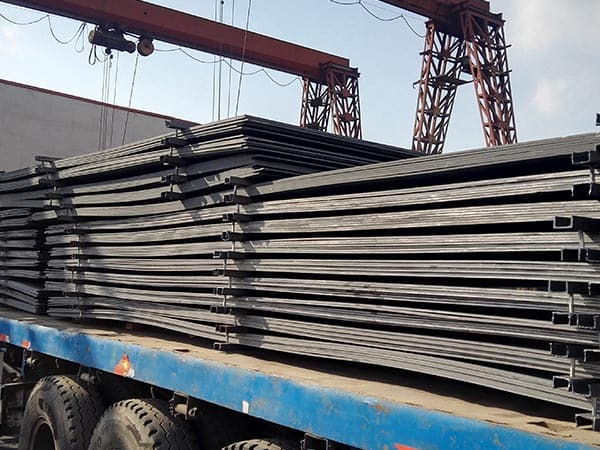
Understanding the Critical Role of S500MC Appearance Inspection
S500MC is a high-strength, low-alloy (HSLA) hot-rolled steel designed specifically for cold forming. Governed by the EN 10149-2 standard, this material is prized for its balance of high yield strength (minimum 500 MPa) and exceptional ductility. However, the mechanical integrity of S500MC is heavily dependent on its surface condition. Appearance inspection is not merely a cosmetic check; it is a rigorous quality assurance process that identifies structural risks, ensures weldability, and guarantees performance during complex bending or deep drawing operations. In the context of heavy-duty engineering, even a minor surface discontinuity can become a stress concentrator, leading to catastrophic failure under fatigue loading.
The Primary Categories of Surface Defect Inspection
The scope of appearance inspection for S500MC begins with a detailed evaluation of the steel plate or coil surface. According to EN 10163-2, surface qualities are categorized to define what level of imperfection is permissible. For S500MC, which is often used in structural automotive components and crane booms, the surface must be free from defects that interfere with its intended use.
- Cracks and Fissures: These are the most critical defects. Because S500MC undergoes significant deformation during cold forming, any micro-crack on the surface can propagate rapidly. Inspection protocols mandate that no longitudinal or transverse cracks are visible to the naked eye.
- Scale and Pitting: During the hot rolling process, iron oxide (scale) can be pressed into the surface. If not properly removed during pickling, this scale creates pits. Excessive pitting reduces the effective thickness of the material and can lead to uneven coating adhesion in subsequent painting or galvanizing processes.
- Scabs and Slivers: These are thin layers of metal that have been folded over the surface but not fully integrated. They pose a significant risk during welding, as they can cause inclusions or porosity in the weld bead.
- Roll Marks and Scratches: Mechanical damage from the rolling mill or handling equipment must be monitored. While shallow scratches may be acceptable, deep gouges that exceed the negative thickness tolerance are grounds for rejection.
Dimensional and Geometric Tolerances
Appearance inspection extends beyond the texture of the steel to include its physical geometry. S500MC must adhere to strict dimensional standards (often EN 10051) to ensure compatibility with automated laser cutting and robotic welding systems.
| Inspection Parameter | Significance for S500MC | Common Requirement |
|---|---|---|
| Thickness Uniformity | Ensures consistent springback during bending. | Strict adherence to EN 10051 Category B. |
| Flatness (Planarity) | Critical for precision laser cutting and nesting. | Max deviation often < 3mm/m for specialized applications. |
| Camber (Lateral Bow) | Prevents tracking issues in continuous processing lines. | Must not exceed specified limits over a 2-meter length. |
| Out-of-Squareness | Ensures efficient material utilization in blanking. | Strict limits on the difference between diagonal measurements. |
Edge Quality and Shear Integrity
The edges of S500MC coils or plates are subject to intense scrutiny. Since this material is frequently used for chassis frames and cross-members, the edge condition directly impacts the fatigue life of the finished part. Inspection focuses on:
Burr Height: Excessive burrs from shearing can cause localized stress and interfere with the fit-up of parts. For S500MC, burr height is typically restricted to 10% of the material thickness.
Edge Cracking: During the cooling or shearing process, the edges of high-strength steel can develop micro-fractures. If these are not detected, they will expand during the cold-forming stage, particularly when the material is bent parallel to the rolling direction.
Lamellar Tearing Resistance: While primarily a metallurgical property, visual inspection of the edges can sometimes reveal laminations or heavy inclusions that indicate poor internal cleanliness, which would compromise the steel's performance in Z-direction loading.
Surface Preparation and Pickling Quality
S500MC is frequently supplied in a pickled and oiled (P&O) condition. The appearance inspection here focuses on the effectiveness of the chemical descaling process. A "clean" surface should have a uniform, matte gray appearance. Inspection parameters include:
- Under-pickling: Remaining patches of black scale are unacceptable as they prevent proper lubrication during forming and hinder welding.
- Over-pickling: Excessive exposure to acid can lead to a "burned" or roughened surface, which increases friction in the dies and can lead to hydrogen embrittlement in sensitive grades.
- Oil Coverage: The rust-preventative oil must be applied uniformly. Dry spots are susceptible to flash rusting, while excessive oil can cause slippage in feeding mechanisms.
Impact of Appearance on Downstream Processing
The correlation between surface appearance and mechanical performance in S500MC is profound. For instance, the "orange peel" effect—a roughening of the surface during stretching—can indicate a coarse grain structure. While not a defect in the traditional sense, it affects the aesthetic quality of visible components and can be a precursor to localized necking.
In robotic welding environments, the surface must be free of carbonaceous residues or heavy oil. Inspection ensures that the S500MC surface chemistry (specifically the absence of surface-segregated silicon or manganese oxides) allows for stable arc characteristics and deep penetration. High-strength steels like S500MC are sensitive to the heat-affected zone (HAZ); therefore, a clean surface ensures that heat input is consistent across the joint.
Advanced Inspection Methodologies
Modern quality control for S500MC has moved beyond simple human observation. Automated Surface Inspection Systems (ASIS) use high-speed cameras and AI algorithms to scan 100% of the coil surface at production speeds. These systems can detect and classify defects smaller than 0.5mm, providing a digital map of the coil's quality. For critical structural applications, Ultrasonic Testing (UT) may be used as an extension of appearance inspection to ensure that surface-visible slivers do not hide deeper internal delaminations.
Environmental Adaptability and Storage Inspection
S500MC is an unalloyed steel and is prone to oxidation if not handled correctly. The inspection scope includes checking for "white rust" (in galvanized versions) or "red rust" (in hot-rolled versions). Proper storage inspection ensures that no moisture is trapped between the sheets, which can cause capillary corrosion. The presence of "water stains" is often a reason for rejection in the automotive sector, as these stains can telegraph through thin paint coatings.
Standardized Marking and Traceability
Finally, the appearance inspection covers the legibility and accuracy of the marking. Each plate or coil of S500MC must be clearly stamped or stenciled with the heat number, grade, and manufacturer's logo. This ensures full traceability back to the melt shop, which is a mandatory requirement for ISO 9001 and IATF 16949 certified supply chains. Incorrect or missing markings are treated as a major non-conformity during the inspection process.
By maintaining a comprehensive scope of appearance inspection, manufacturers ensure that S500MC delivers its promised high-strength performance without the risk of premature failure. This rigorous attention to detail supports the development of lighter, stronger, and more efficient structures across the global transport and construction industries.
Leave a message