
Do you know the S550MC thickness range
Explore the comprehensive guide on S550MC steel, focusing on its thickness range, mechanical properties, chemical composition, and industrial applications. Learn how this thermomechanically rolled steel optimizes weight and performance in modern engineeri
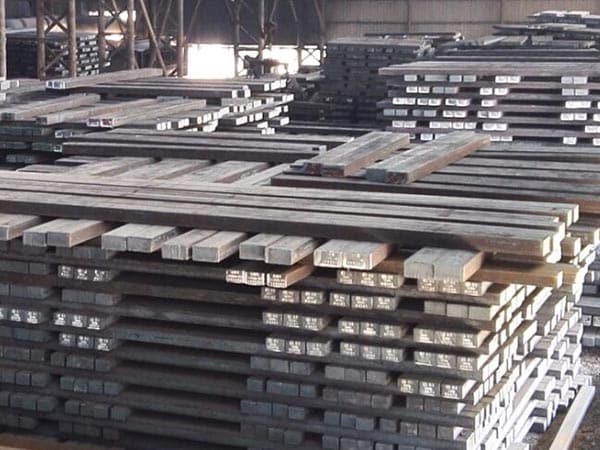
Understanding the Dimensional Boundaries: The S550MC Thickness Range
When engineering high-performance structures, the question Do you know the S550MC thickness range is often the starting point for material selection. S550MC, a high-yield strength steel for cold forming, is governed by the EN 10149-2 standard. Its thickness range is not just a static number but a reflection of the thermomechanical rolling process (TMCP) capabilities of modern steel mills.
Typically, S550MC is available in thicknesses ranging from 1.5 mm to 20 mm. However, the most common commercial availability sits between 2.0 mm and 12 mm. Thinner gauges, such as 1.5 mm to 3.0 mm, are frequently utilized in automotive components where weight reduction is critical. Conversely, thicker plates reaching 15 mm or 20 mm are sought after for heavy-duty machinery frames and crane booms. It is important to note that as the thickness increases, maintaining the uniform fine-grained microstructure becomes more challenging, which is why premium mills utilize advanced cooling controls to ensure the yield strength remains consistent across the entire cross-section.
The Metallurgical Blueprint: Chemical Composition of S550MC
The exceptional strength-to-weight ratio of S550MC is achieved through a low-carbon, micro-alloyed design. Unlike traditional structural steels that rely on high carbon content for strength, S550MC uses elements like Niobium (Nb), Vanadium (V), and Titanium (Ti) to refine the grain structure. This approach ensures that the steel remains highly weldable and ductile despite its high yield point.
| Element | Max % (EN 10149-2) | Role in S550MC |
|---|---|---|
| Carbon (C) | 0.12 | Ensures weldability and prevents brittleness. |
| Manganese (Mn) | 1.80 | Increases strength and hardness. |
| Silicon (Si) | 0.50 | Deoxidizer and solid solution strengthener. |
| Phosphorus (P) | 0.025 | Controlled to maintain toughness. |
| Sulfur (S) | 0.015 | Kept low to improve internal cleanliness. |
| Aluminium (Al) | 0.015 | Grain refinement and deoxidation. |
| Nb + V + Ti | 0.22 | Micro-alloying for precipitation hardening. |
By keeping the carbon equivalent (CEV) low, S550MC offers a significant advantage in fabrication. It minimizes the risk of cold cracking during welding, a common issue with higher carbon steels. This chemical precision is what allows the material to maintain its integrity even in the thinner ends of its thickness range.
Mechanical Performance: Beyond the 550 MPa Threshold
The name S550MC directly refers to its minimum yield strength of 550 MPa. However, the mechanical profile is more nuanced. The interaction between tensile strength, elongation, and the thickness of the material determines its suitability for specific engineering tasks. For instance, thinner sheets often exhibit slightly different elongation characteristics compared to heavy plates due to the rolling reduction ratio.
| Property | Value Range | Notes |
|---|---|---|
| Yield Strength (Reh) | Min 550 MPa | Measured longitudinal to rolling direction. |
| Tensile Strength (Rm) | 600 - 760 MPa | Provides a robust safety margin. |
| Elongation (A80mm) | Min 12% | For thickness < 3mm. |
| Elongation (A5) | Min 14% | For thickness ≥ 3mm. |
| Bending Radius (90°) | 1.0 - 1.5 x t | Depends on thickness (t). |
The thermomechanical rolling process is the engine behind these numbers. By controlling the temperature and the deformation during the rolling stages, manufacturers create a fine-grained ferrite-pearlite or bainitic structure. This microstructure is far superior to that of normalized steels, providing S550MC with high impact energy absorption even at low temperatures, making it suitable for outdoor applications in cold climates.
Processing Performance: Bending, Welding, and Cutting
High-strength steel is only useful if it can be efficiently processed. S550MC excels in cold forming. Because of its high purity and fine grain, it can be bent to tight radii without cracking. For engineers, this means the ability to design complex, rigid shapes that replace heavy cast parts or multi-component welded assemblies.
- Cold Bending: For a thickness of 6mm, a typical minimum bending radius would be around 9mm (1.5t). This allows for compact designs in chassis and brackets.
- Welding: S550MC can be welded using all standard methods (MIG/MAG, TIG, Laser). Due to its low alloy content, preheating is generally not required for standard thicknesses, though it is vital to control heat input to avoid softening the heat-affected zone (HAZ).
- Laser Cutting: The low silicon and consistent flatness of S550MC make it an ideal candidate for high-speed laser cutting. It produces clean edges with minimal dross, reducing the need for secondary finishing.
The environmental adaptability of S550MC is also noteworthy. While it is not a weathering steel, its dense surface scale (if ordered as hot-rolled black) or its smooth pickled surface (S550MC+P) provides an excellent substrate for modern coating systems, including powder coating and hot-dip galvanizing.
Strategic Applications: Driving Innovation
The shift toward S550MC is driven by the global demand for energy efficiency. In the transportation sector, every kilogram saved translates to lower fuel consumption or higher payload capacity. This steel grade is the backbone of several critical industries.
- Automotive Engineering: Used in longitudinal beams, cross members, and chassis components where high strength is needed to withstand crash loads while keeping the vehicle light.
- Heavy Lifting: Telescopic crane booms and aerial work platforms benefit from the high yield strength, allowing for longer reaches without increasing the weight of the base vehicle.
- Agricultural Machinery: Plow frames, trailer chassis, and harvester components utilize the impact resistance and fatigue strength of S550MC to handle the rigors of soil interaction and vibration.
- Infrastructure: Cold-formed profiles for solar mounting systems and light-gauge steel framing often specify S550MC to optimize material usage in large-scale projects.
Utilizing the full thickness range of S550MC allows designers to transition seamlessly from light structural components to heavy-duty load-bearing members using the same material family. This consistency simplifies procurement and quality control processes within a manufacturing facility.
Cost-Efficiency and Sustainability
Adopting S550MC is a strategic economic decision. Although the price per ton may be higher than standard s355jr steel, the total cost of ownership is often lower. By utilizing the high yield strength, engineers can reduce the thickness of a part by 30% to 40% while maintaining the same load-bearing capacity. This weight reduction leads to lower shipping costs, reduced welding consumables, and faster assembly times.
From a sustainability perspective, S550MC contributes to a lower carbon footprint. Less steel produced means less iron ore mined and less CO2 emitted during the smelting process. Furthermore, the longevity and recyclability of high-strength low-alloy (HSLA) steels align with circular economy goals. When considering the S550MC thickness range, it is clear that this material is not just a commodity, but a sophisticated tool for modern industrial challenges.
Leave a message