
Why high yield strength alloy en 10149-2 s700mc is not easy to rust
Discover why EN 10149-2 S700MC high yield strength steel offers superior surface stability and oxidation resistance compared to standard carbon steels.
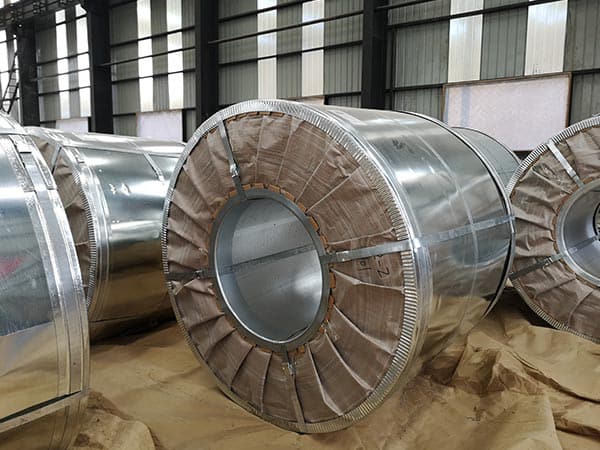
Decoding the Corrosion Resistance of EN 10149-2 S700MC
When discussing high-strength structural steels, EN 10149-2 S700MC stands out as a pinnacle of metallurgical engineering. A common question among engineers and procurement specialists is whether this high-yield alloy possesses inherent rust-resistant properties. While S700MC is not classified as a stainless steel, its unique chemical composition and the specific thermomechanical rolling process (TMCP) used in its production grant it a significantly higher resistance to atmospheric oxidation and surface degradation compared to conventional hot-rolled carbon steels like S355 or Q345.
The secret to its "not easy to rust" reputation lies in its micro-alloyed structure. Unlike traditional steels that rely on high carbon content for strength, S700MC utilizes trace amounts of Niobium (Nb), Vanadium (V), and Titanium (Ti). These elements do more than just refine the grain size; they influence the formation of a more stable and compact oxide layer on the steel's surface, which acts as a temporary barrier against moisture and oxygen penetration.
The Role of Thermomechanical Rolling in Surface Integrity
The manufacturing process of S700MC follows the EN 10149-2 standard, which specifies thermomechanical rolling. This process involves precise temperature control during the rolling stages, followed by accelerated cooling. This results in an extremely fine-grained ferritic-pearlitic microstructure. From a corrosion perspective, a finer grain structure translates to a more uniform electrochemical potential across the surface of the metal.
In coarse-grained steels, the boundaries between grains often act as focal points for localized corrosion or pitting. Because S700MC has a highly homogenized and dense grain distribution, the initiation of rust is more evenly distributed and proceeds at a much slower rate. This uniformity ensures that when the steel is exposed to the elements, it does not develop deep, structural-weakening pits as quickly as lower-grade alloys might.
Chemical Composition and Oxidation Stability
The chemical blueprint of S700MC is designed for weldability and strength, but it also provides secondary benefits for environmental adaptability. By keeping the carbon content exceptionally low (typically below 0.12%), the steel avoids the formation of large iron carbides that can trigger galvanic micro-cells on the surface.
| Element | Maximum Content (%) | Impact on Performance |
|---|---|---|
| Carbon (C) | 0.12 | Enhances weldability and reduces carbide-induced corrosion. |
| Manganese (Mn) | 2.10 | Improves toughness and helps in grain refinement. |
| Silicon (Si) | 0.60 | Deoxidizes the melt, ensuring a cleaner steel surface. |
| Nb + V + Ti | 0.22 (combined) | Forms stable nitrides/carbides that hinder oxidation paths. |
The inclusion of Titanium and Niobium is particularly critical. These elements bind with nitrogen and carbon to form stable precipitates. These precipitates not only pin grain boundaries to prevent growth but also create a surface chemistry that is less reactive to the sulfur and chloride ions often found in industrial or coastal atmospheres.
Mechanical Properties and Their Indirect Effect on Longevity
While yield strength (700 MPa) is a mechanical metric, it contributes to the steel's environmental performance through "lightweighting." Because S700MC allows for thinner sections to carry the same load as thicker S355 steel, the total surface area exposed to the environment relative to the structural volume is optimized. Furthermore, the high elasticity and toughness of S700MC mean that the surface is less likely to develop micro-cracks under stress, which are often the starting points for "stress corrosion cracking."
- Yield Strength: Min. 700 MPa (for thicknesses ≤ 8mm)
- Tensile Strength: 750 - 950 MPa
- Elongation: Min. 12% (depending on thickness)
- Impact Energy: Excellent low-temperature toughness, often tested at -20°C or -40°C.
Superior Coating Adhesion: A Key Factor
One reason S700MC is perceived as being "not easy to rust" in practical applications is its exceptional compatibility with modern protective coatings. The thermomechanical process leaves a very thin, tight mill scale compared to the thick, flaky scale found on traditional hot-rolled plates. This thin scale is easier to remove via sandblasting or pickling, resulting in a superior surface profile for painting, powder coating, or galvanizing.
When S700MC is galvanized, the low silicon and phosphorus content ensures a controlled Sandelin effect, leading to a more uniform and adherent zinc layer. This synergy between the base metal and the protective coating provides a level of corrosion protection that far exceeds what can be achieved with standard structural steels. The steel's smooth surface finish also prevents the accumulation of dirt and moisture, which are primary catalysts for the rusting process.
Industrial Applications and Environmental Performance
The transition to S700MC is visible across multiple heavy-duty industries. In the automotive sector, truck chassis and frames manufactured from S700MC show significantly less surface degradation over a 10-year lifecycle compared to older carbon steel frames. This is due to the combination of the steel's inherent metallurgical stability and its ability to maintain coating integrity even under the constant vibration and mechanical stress of road transport.
In the crane and lifting equipment industry, where components are often exposed to harsh outdoor weather, the use of S700MC reduces maintenance costs. The steel's resistance to atmospheric "creeping" corrosion ensures that telescopic booms and structural supports remain safe and aesthetically acceptable for longer periods. Similarly, in the agricultural machinery sector, the ability of S700MC to withstand the corrosive effects of fertilizers and wet soil makes it a preferred choice for plow frames and trailer bodies.
Processing Advantages: Welding and Cold Forming
The low Carbon Equivalent (CEV) of S700MC makes it remarkably easy to weld. Unlike many high-strength steels that require extensive preheating to prevent cold cracking, S700MC can often be welded at ambient temperatures. This ease of processing ensures that the Heat Affected Zone (HAZ) remains narrow and retains its fine-grained structure, preventing the creation of "weak spots" where corrosion usually begins.
Furthermore, the excellent cold-forming properties allow for tight bending radii without surface tearing. In lower-quality steels, the micro-tears created during bending act as traps for moisture, leading to internal rusting. S700MC’s ability to maintain surface continuity during complex forming operations is a major factor in its long-term durability in structural applications.
The Economic and Environmental Logic
Choosing S700MC is an investment in the lifecycle of a product. While the initial cost per ton may be higher than standard S355, the reduction in material weight (often up to 30%), lower welding costs, and extended intervals between repainting or maintenance provide a much lower Total Cost of Ownership (TCO). From an environmental perspective, the longevity of S700MC structures means fewer resources are spent on repairs and replacements, aligning with modern sustainability goals in the steel and construction industries.
Understanding that S700MC's resistance to rust is a result of its refined chemistry, precise manufacturing, and superior coating compatibility allows engineers to design more robust, lighter, and more durable machinery. It is the harmony of high yield strength and surface stability that defines EN 10149-2 S700MC as a premier material for the modern industrial age.
Leave a message