
Will 1.0976 hot-rolled steel rust?
Comprehensive analysis of 1.0976 (S355MC) hot-rolled steel's corrosion behavior, mechanical strength, and industrial applications. Learn how environmental factors and surface treatments affect its longevity.
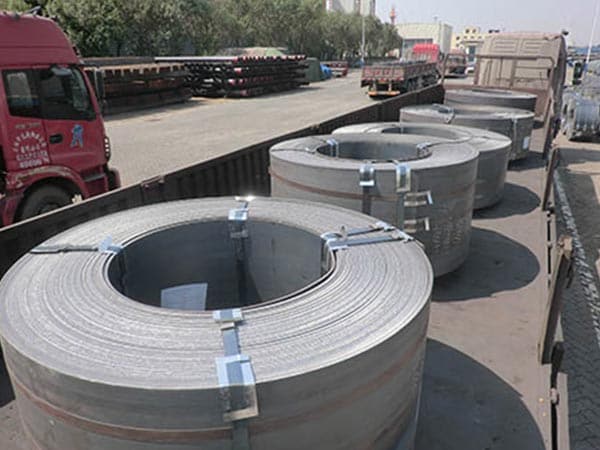
The Core Question: Will 1.0976 Hot-Rolled Steel Rust?
When engineers and procurement specialists evaluate 1.0976 hot-rolled steel, the primary concern often revolves around its environmental durability. To answer the question directly: Yes, 1.0976 hot-rolled steel will rust if it is exposed to moisture and oxygen without any protective coating. As a high-strength low-alloy (HSLA) steel, 1.0976 (commonly known as S355MC under the EN 10149-2 standard) is designed primarily for its mechanical performance and weight-saving capabilities rather than inherent corrosion resistance. Unlike stainless steel, which contains high levels of chromium to form a passive protective layer, 1.0976 is a carbon-based alloy that remains susceptible to oxidation.
Understanding the Composition of 1.0976 (S355MC)
The susceptibility of 1.0976 to rust is rooted in its chemical makeup. This steel grade is thermomechanically rolled, achieving its strength through a precise balance of micro-alloying elements rather than high carbon content. This specific chemistry improves weldability and formability but does not provide a barrier against atmospheric corrosion.
| Element | Maximum Percentage (%) | Role in the Alloy |
|---|---|---|
| Carbon (C) | 0.12 | Ensures strength while maintaining excellent weldability. |
| Manganese (Mn) | 1.50 | Increases hardness and tensile strength. |
| Silicon (Si) | 0.50 | Acts as a deoxidizer during the melting process. |
| Niobium (Nb) | 0.09 | Refines grain structure for higher yield strength. |
| Titanium (Ti) | 0.15 | Provides precipitation hardening. |
While elements like Niobium and Titanium significantly enhance the yield strength and toughness of the material, they do not offer the electrochemical protection required to stop the formation of iron oxide (rust). In humid or saline environments, the iron atoms on the surface of 1.0976 react with water and oxygen, leading to the characteristic reddish-brown flaky layer.
The Impact of the Hot-Rolling Process on Corrosion
The "hot-rolled" nature of 1.0976 introduces a specific surface feature known as mill scale. This is a bluish-black layer of iron oxides (magnetite and hematite) that forms during the cooling process after the steel is rolled at high temperatures.
- Initial Protection: For a short period, intact mill scale can actually provide a minor degree of protection against light moisture.
- The Risk of Pitting: Mill scale is brittle and non-uniform. As the steel is handled, bent, or cut, the scale cracks. These cracks create localized electrochemical cells where moisture can penetrate, leading to accelerated "pitting" corrosion underneath the scale.
- Surface Preparation: For most high-end applications, the mill scale is removed via pickling (S355MC+P) or shot blasting before the steel is painted or galvanized.
Mechanical Superiority vs. Environmental Vulnerability
1.0976 is favored in the automotive and heavy machinery industries because of its high yield strength (minimum 355 MPa) and exceptional cold formability. It allows manufacturers to use thinner sections of steel to achieve the same structural integrity as thicker, traditional carbon steels, effectively reducing the overall weight of vehicles and structures.
However, the reduced thickness makes corrosion management even more critical. If a structural component made of 1.0976 loses 1mm of thickness to rust, the percentage of lost structural capacity is much higher than it would be for a thicker, lower-grade steel. Therefore, while the material offers superior mechanical properties, its environmental adaptability must be managed through external means.
Environmental Adaptability and Industrial Scenarios
The rate at which 1.0976 rusts depends heavily on the atmospheric conditions of its application. In dry, indoor environments, the oxidation process is extremely slow and may only result in a light surface patina over several years. Conversely, in coastal or industrial areas with high sulfur dioxide levels, the degradation can be rapid.
- Automotive Chassis: Exposed to road salt and moisture, 1.0976 components require e-coating or specialized waxes to prevent structural failure.
- Agricultural Machinery: Constant exposure to soil, fertilizers, and rain necessitates heavy-duty powder coating or hot-dip galvanizing.
- Construction Brackets: Used in hidden structural joints, these are often supplied in a pickled and oiled state to prevent rust during transport and assembly.
How to Prevent Rust on 1.0976 Steel
To maximize the lifespan of 1.0976 hot-rolled steel, several surface treatment strategies are commonly employed. The choice depends on the final application and the required aesthetic finish.
1. Pickling and Oiling (P&O): This is the most common temporary solution. The steel is passed through an acid bath to remove mill scale and then coated with a thin layer of oil. This prevents rust during storage and transit but must be removed before welding or painting.
2. Metallic Coatings: Hot-dip galvanizing or zinc-nickel plating provides sacrificial protection. Even if the coating is scratched, the zinc will corrode in preference to the 1.0976 steel base.
3. Organic Coatings: Painting, powder coating, and electrophoresis (KTL) are standard for 1.0976. Because S355MC has a very fine grain structure, it provides an excellent substrate for paint adhesion, provided the surface is properly cleaned of oils and scale.
Processing Performance and Its Effect on Rust
The way 1.0976 is processed also influences its corrosion profile. Since it is a thermomechanically rolled steel, it handles heat differently than standard structural steels.
- Welding: 1.0976 has a low carbon equivalent (CEV), making it highly weldable. However, the heat-affected zone (HAZ) around a weld can sometimes be more prone to rust if the protective oxide layer is disturbed and not restored via post-weld cleaning.
- Laser Cutting: High-precision laser cutting is common for S355MC. The edges produced by laser cutting can develop a thin oxide film that must be removed if the part is to be painted, as paint will not adhere well to the laser-cut edge.
- Cold Bending: One of the primary advantages of 1.0976 is its ability to be bent into complex shapes. During bending, the surface tension can cause micro-cracks in the mill scale, which are prime spots for rust to begin if the part is left untreated.
Comparing 1.0976 with Other Grades
When deciding whether 1.0976 is the right choice, it is helpful to compare it to other common hot-rolled grades. For instance, compared to S235JR, 1.0976 offers significantly higher strength and better weight-to-performance ratios. However, both will rust at similar rates under the same environmental conditions because neither contains significant corrosion-inhibiting alloys like Chromium or Copper (as found in weathering steels like Corten).
If your project requires the strength of S355 but demands higher rust resistance without coatings, you might look toward S355J2W (weathering steel). However, for the vast majority of precision engineering and automotive applications, 1.0976 remains the superior choice due to its consistent thickness tolerances and superior cold-forming characteristics, provided a coating strategy is in place.
Final Technical Assessment
1.0976 hot-rolled steel is a high-performance material that prioritizes strength, ductility, and weight reduction. While it does not possess natural resistance to rust, its predictable oxidation behavior allows it to be used effectively across diverse industries when paired with modern coating technologies. By understanding the interaction between its micro-alloyed chemistry and the environment, manufacturers can leverage the benefits of S355MC while ensuring long-term durability through proper surface management.
Leave a message