
How to distinguish hot rolled 1.0986 weldable structural steel and cold rolled steel by naked eyes
Expert guide on visually identifying 1.0986 (S500MC) hot-rolled weldable structural steel versus cold-rolled steel through surface texture, color, and dimensional cues.
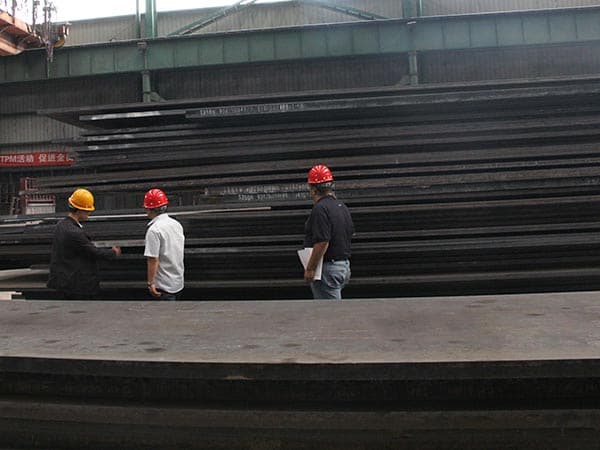
Understanding the Visual Identity of 1.0986 Steel
In the complex world of metallurgy, identifying materials accurately at the warehouse or on the production floor is a critical skill for quality control and engineering precision. 1.0986 steel, commonly known by its EN 10149-2 designation as S500MC, is a high-yield strength, thermomechanically rolled structural steel. Distinguishing this specific hot-rolled grade from standard cold-rolled steel using only the naked eye requires a deep understanding of surface morphology, oxide behavior, and geometric characteristics. While both may appear as simple gray sheets to the untrained eye, the physical signatures left by their respective manufacturing processes are distinct and unmistakable once understood.
The Surface Texture and Mill Scale Signature
The most immediate visual cue when examining 1.0986 hot-rolled steel is the presence of mill scale. During the hot rolling process, which occurs at temperatures exceeding 1,000°C, the steel reacts with atmospheric oxygen to form a thin, dark layer of iron oxides. On 1.0986 (S500MC), this scale is often very tight and fine due to the thermomechanical rolling process, which is more controlled than traditional hot rolling. It typically presents as a bluish-black or dark gray matte finish. In contrast, cold-rolled steel undergoes processing at room temperature after the initial hot rolling and pickling. This eliminates the mill scale entirely, resulting in a surface that is exceptionally smooth, often reflective, and has a metallic luster similar to a mirror or a finely sanded piece of aluminum.
When you run your fingers across the surface, 1.0986 will feel slightly tactile or grainy, even if it has been pickled and oiled (P&O). Cold-rolled steel, however, feels oily and perfectly slick. The 1.0986 grade is designed for high-strength structural applications, so its surface is optimized for weldability and coating adhesion rather than the aesthetic perfection required for consumer electronics or visible appliance panels where cold-rolled steel excels.
Color Variations and Light Reflection
Light interaction provides significant clues for identification. 1.0986 steel tends to absorb light rather than reflect it. Even when the surface is cleaned, the inherent porosity of the hot-rolled microstructure creates a diffused reflection. The color of 1.0986 can range from a deep charcoal to a dusty blue, depending on the cooling rate during the thermomechanical process. Cold-rolled steel exhibits a much higher degree of specular reflection. It appears silver-gray or bright white-gray under warehouse lighting. If you can see a clear reflection of overhead lights on the steel surface, it is almost certainly cold-rolled. If the light appears as a blurry, soft glow, you are likely looking at a hot-rolled product like 1.0986.
Dimensional Precision and Edge Profiles
The geometry of the steel sheet or coil offers another set of visual evidence. Cold rolling allows for extremely tight dimensional tolerances. Consequently, the edges of cold-rolled steel are typically very sharp, square, and uniform. The thickness across the width of a cold-rolled sheet is remarkably consistent. 1.0986, being a hot-rolled structural product, often displays what is known as a "mill edge" or a slightly rounded, natural edge if it hasn't been slit. Even when slit, the edges of hot-rolled 1.0986 may show slight irregularities or a "burr" that differs in texture from the cold-rolled equivalent. Furthermore, 1.0986 is frequently produced in thicknesses that exceed the standard range for cold rolling. While cold-rolled steel is usually found in gauges below 3.0mm, 1.0986 is commonly utilized in thicknesses from 2.0mm up to 20mm or more, providing a structural robustness that cold-rolled sheets cannot match.
Mechanical Properties and Material Comparison
To better understand why these visual differences exist, it is helpful to compare the technical specifications of 1.0986 with typical cold-rolled commercial grades. The following table highlights the divergence in properties that dictate their physical appearance.
| Property | 1.0986 (S500MC) Hot Rolled | DC01 (Standard Cold Rolled) |
|---|---|---|
| Yield Strength (MPa) | Min. 500 | 140 - 280 |
| Tensile Strength (MPa) | 550 - 700 | 270 - 410 |
| Surface Finish | Matte, Oxide Scale or Pickled | Bright, Smooth, Lustrous |
| Thickness Range | 2.0mm to 20mm+ | 0.3mm to 3.0mm |
| Primary Application | Truck frames, Crane arms, Structural parts | Car panels, Appliances, Furniture |
The high yield strength of 1.0986 is achieved through a specific chemical composition including micro-alloying elements like Niobium (Nb), Vanadium (V), or Titanium (Ti). These elements influence how the grain structure forms during cooling, which indirectly affects the surface's micro-topography. Cold-rolled steel, focusing on formability and finish, lacks these heavy structural reinforcements, resulting in its characteristic "soft" and uniform visual profile.
Visual Indicators of Weldability and Processing
1.0986 is specifically marketed as a weldable structural steel. When inspecting this material, you might notice specific markings or stamps indicating its compliance with EN 10149-2. Because it is designed for welding in heavy machinery and automotive chassis, the surface is often prepared to be free of heavy pitting. If you observe a sheet that has been "pickled and oiled," it will look cleaner than raw hot-rolled steel but will still lack the high-gloss finish of cold-rolled. Look for the "P&O" signature: a uniform, dull gray appearance with a light protective oil film, which is a common state for 1.0986 when it is ready for laser cutting or welding.
Environmental Adaptation and Oxidation Patterns
How the steel reacts to the environment can also reveal its identity. If left unprotected, hot-rolled 1.0986 will develop a layer of rust that often follows the pattern of the underlying mill scale, sometimes appearing in patches. Cold-rolled steel, due to its smooth surface and lack of scale, tends to oxidize more uniformly across the entire surface, often starting as a fine orange dust. The higher density of the surface on cold-rolled steel means that initial oxidation is very visible and immediate, whereas the dark scale on 1.0986 can sometimes mask early stages of corrosion.
Practical Inspection Tips for Professionals
When standing in a steel yard, follow these steps to distinguish 1.0986 from cold-rolled alternatives:
- Check the thickness: If the material is over 3mm thick, it is almost certainly hot-rolled 1.0986 or another structural grade, as cold rolling thick plates is energy-prohibitive.
- Observe the corners: Look for the crispness of the edge. Cold-rolled steel has a "machined" look to its edges, while 1.0986 will look more "organic" or industrial.
- Use a flashlight: Shine a light at a low angle. If the beam scatters and the surface looks like a fine orange peel or a matte road surface, it is 1.0986. If the beam reflects clearly, it is cold-rolled.
- Identify the color: Look for the tell-tale blue-gray hue of thermomechanical rolling. Standard cold-rolled steel will never have this blue tint; it will be strictly silver or gray.
Understanding these nuances ensures that the right material is used for the right application. 1.0986 is a powerhouse in the structural world, offering a balance of high strength and excellent weldability that cold-rolled steels simply cannot provide in heavy-duty environments. By mastering these visual identification techniques, professionals can ensure material integrity and optimize their manufacturing workflows without always relying on laboratory testing.
Leave a message