
At what humidity does S 355 MC rust?
Explore the scientific threshold for S355MC steel oxidation. This guide covers critical humidity levels, the impact of chemical composition on rust formation, and professional protection methods for high-yield cold forming steel.
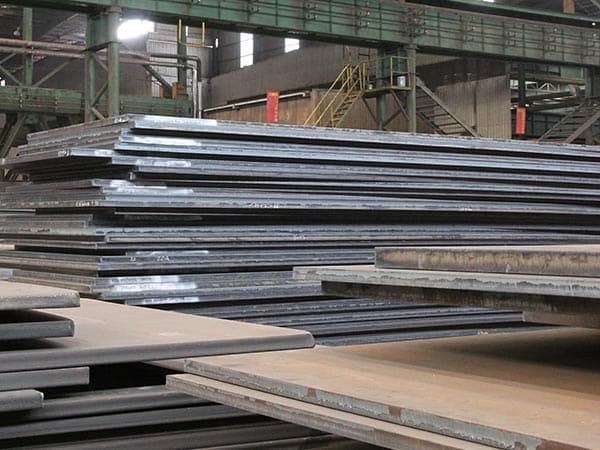
The Scientific Threshold: Defining the Critical Relative Humidity for S355MC
Understanding the corrosion behavior of S355MC steel (standardized under EN 10149-2) requires a deep dive into the electrochemical interactions between iron and its environment. S355MC is a thermomechanically rolled, high-yield strength steel designed for cold forming. Unlike stainless steels that form a passive chromium oxide layer, S355MC is a carbon-manganese steel that remains susceptible to atmospheric oxidation. The fundamental question regarding the humidity level at which it begins to rust is typically answered by the concept of Critical Relative Humidity (CRH).
Extensive metallurgical studies and environmental testing indicate that the corrosion rate of S355MC remains negligible when the relative humidity (RH) is below 40% to 50%. However, once the environment reaches a threshold of approximately 60% RH, the rate of oxidation increases significantly. This is known as the first critical humidity point. If the humidity exceeds 80%, a continuous film of water molecules (an electrolyte) forms on the steel surface, leading to rapid electrochemical corrosion. At this stage, the oxygen from the air dissolves into the moisture film, reacting with the iron (Fe) to form iron oxides, commonly known as rust.
| Relative Humidity (RH) Range | Corrosion Risk Level | Surface Reaction on S355MC |
|---|---|---|
| Below 40% | Negligible | Adsorption of mono-molecular water layers; no electrolyte formation. |
| 40% - 60% | Low to Moderate | Slow oxidation; localized spots may appear if contaminants are present. |
| 60% - 80% | High | Formation of a thin electrolyte layer; rapid increase in oxidation rate. |
| Above 80% | Extreme | Visible rust formation (Fe2O3·nH2O) within hours or days. |
The Role of Surface Contaminants and Hygroscopic Particles
While 60% RH is the theoretical baseline, real-world conditions often accelerate this process. S355MC surfaces are rarely chemically pure. The presence of hygroscopic salts (such as chlorides from marine environments or road salts) can lower the critical humidity threshold to as low as 35% to 40%. These salts absorb moisture from the air even in seemingly dry conditions, creating localized electrolytic cells on the steel surface.
Furthermore, dust and industrial pollutants like Sulfur Dioxide (SO2) act as catalysts. SO2 reacts with moisture to form sulfuric acid, which aggressively attacks the grain boundaries of the S355MC micro-structure. Because S355MC is refined through thermomechanical rolling to achieve a fine-grained structure, the surface energy is relatively high, making it slightly more reactive to chemical stressors than traditional hot-rolled structural steels if left unprotected.
Material Composition and Oxidation Susceptibility
The chemical composition of S355MC is optimized for mechanical performance—specifically high yield strength and excellent bendability—rather than corrosion resistance. The low carbon content (typically ≤0.12%) and the addition of micro-alloying elements like Niobium (Nb), Vanadium (V), and Titanium (Ti) provide the fine grain structure but do not offer the "self-healing" properties found in weathering steels (like Corten) or stainless steels.
- Iron Content: Being predominantly iron, the lack of significant Chromium (>10.5%) means the steel cannot form a stable protective oxide film.
- Manganese Levels: While Manganese enhances strength, it does not contribute to atmospheric corrosion resistance.
- Surface Finish: S355MC is often supplied in a pickled and oiled (P&O) condition. The pickling process removes mill scale (which can actually act as a temporary, albeit brittle, barrier), leaving the raw steel surface highly vulnerable to humidity if the protective oil film is compromised.
Impact of Temperature Fluctuations and the Dew Point
It is not just the absolute humidity level that matters, but the relationship between temperature and humidity. The Dew Point is the critical temperature at which air becomes saturated with water vapor. If the temperature of the S355MC steel plate drops below the dew point of the surrounding air, water will condense directly on the metal surface. This liquid water (100% local humidity) triggers immediate rusting.
In warehouse environments, this often occurs during "thermal lag." When a cold S355MC coil is moved into a warmer, humid workshop, the steel remains cold longer than the air. Moisture condenses on the cold metal, leading to black staining or red rust. Maintaining the steel temperature at least 3°C above the dew point is a standard industrial requirement for preventing storage-related corrosion.
Mechanical Consequences of Rust on S355MC Applications
For industries utilizing S355MC—such as automotive chassis manufacturing, heavy machinery, and structural cold-formed sections—rust is more than an aesthetic issue. Surface pitting caused by corrosion can act as stress concentrators. Since S355MC is frequently used in components subject to dynamic loads, these pits can significantly reduce the fatigue life of the part.
During the welding of S355MC, the presence of surface oxides (rust) can introduce hydrogen into the weld pool, leading to hydrogen-induced cracking or porosity. Therefore, even if the humidity levels have only caused minor surface oxidation, the material must be mechanically or chemically cleaned before further processing to ensure the integrity of the high-strength joints.
Professional Mitigation and Storage Protocols
To prevent S355MC from reaching its critical oxidation point, several industrial strategies are employed. The choice of protection depends on the intended lifecycle of the component and the environmental exposure during transit and storage.
- VCI (Volatile Corrosion Inhibitors): For international shipping, S355MC components are often wrapped in VCI paper or film. These release molecules that form a molecular protective layer on the steel surface, effectively blocking moisture even if the RH is high.
- Electrostatic Oiling: Pickled S355MC is usually coated with a thin layer of rust-preventative oil. This oil acts as a physical barrier, raising the tolerance for humidity significantly.
- Metallic Coatings: For long-term environmental exposure, S355MC is an excellent substrate for hot-dip galvanizing or zinc-rich primers. The high-strength properties of the steel are maintained while the zinc provides sacrificial protection.
- Climate-Controlled Warehousing: Storing S355MC in facilities with dehumidification systems to keep RH below 50% is the most effective way to ensure the material remains in "prime" condition for laser cutting and forming.
Environmental Adaptability and Industry-Specific Risks
In the automotive sector, S355MC is used for its weight-saving potential. However, the underside of vehicles is a high-humidity, high-salt environment. Without secondary coatings like e-coating or powder coating, the humidity levels under a vehicle (often 90%+) would cause S355MC to fail prematurely. Similarly, in agricultural machinery, exposure to organic fertilizers (which are often hygroscopic salts) can trigger rusting at humidity levels as low as 30%.
Engineers must consider the Micro-Climate. A steel plate stored near an open loading dock will experience vastly different humidity cycles than one stored in the center of a sealed warehouse. Monitoring these local conditions is vital for maintaining the high surface quality required for modern automated manufacturing processes.
Leave a message