
How EN 1.0984 EN 10149-2 properties differ A36 steel properties
Detailed comparison between EN 1.0984 (S460MC) and ASTM A36 steel. Explore differences in mechanical properties, chemical composition, weldability, and industrial applications for engineering optimization.
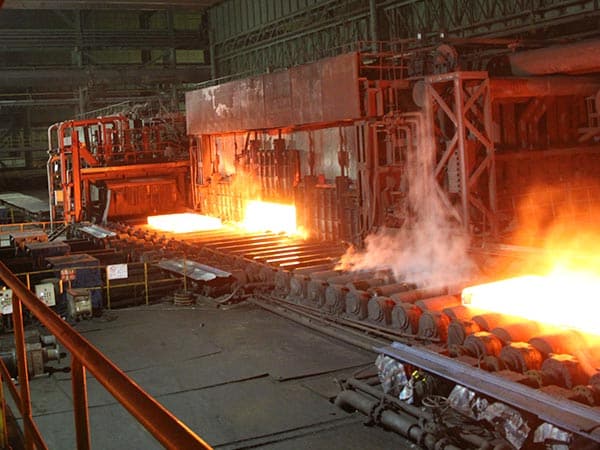
Introduction to Material Disparity: EN 1.0984 vs. ASTM A36
In the complex landscape of structural engineering, selecting the right steel grade is a pivot point between project success and structural failure. The comparison between EN 1.0984 (commonly known as S460MC under the EN 10149-2 standard) and ASTM A36 represents a fundamental choice between modern high-strength thermomechanically rolled steel and traditional hot-rolled carbon steel. While both are widely utilized, their metallurgical DNA and performance envelopes differ significantly, impacting everything from weight-to-strength ratios to fabrication costs.
EN 1.0984 is a high-yield-strength steel designed specifically for cold forming, whereas ASTM A36 is the quintessential 'mild steel' of the North American market, prized for its versatility and ease of use in general construction. Understanding these differences requires a deep dive into their chemical makeup, mechanical thresholds, and how they behave under various processing conditions.
Chemical Composition: Precision vs. Versatility
The chemical profile of EN 1.0984 is tightly controlled to facilitate its high strength without compromising weldability. As a thermomechanically rolled (TMCP) steel, it relies on a fine-grained microstructure achieved through specific cooling and rolling cycles rather than high carbon content. This results in a very low carbon equivalent (CEV), which is critical for preventing cold cracking during welding.
Conversely, ASTM A36 is a basic carbon steel. Its chemistry is less restrictive, focusing primarily on maintaining minimum mechanical properties. While it is incredibly reliable, it lacks the micro-alloying elements like Niobium (Nb) or Vanadium (V) often found in EN 10149-2 grades that help refine grain size.
| Element (Max %) | EN 1.0984 (S460MC) | ASTM A36 (Plates up to 20mm) |
|---|---|---|
| Carbon (C) | 0.12 | 0.25 |
| Manganese (Mn) | 1.60 | 0.80 - 1.20 |
| Silicon (Si) | 0.50 | 0.40 |
| Phosphorus (P) | 0.025 | 0.04 |
| Sulfur (S) | 0.015 | 0.05 |
The lower carbon content in EN 1.0984 compared to A36 is a deliberate engineering choice. It allows the material to remain ductile even at higher strength levels, making it superior for complex cold-forming operations like tight-radius bending.
Mechanical Performance: The Yield Strength Gap
The most striking difference lies in the yield strength. EN 1.0984 (S460MC) offers a minimum yield strength of 460 MPa. In contrast, ASTM A36 provides a minimum yield of approximately 250 MPa (36,000 psi). This means that S460MC is nearly 85% stronger than A36 in terms of its resistance to permanent deformation.
- Yield Strength: S460MC (460 MPa) vs. A36 (250 MPa).
- Tensile Strength: S460MC (520-670 MPa) vs. A36 (400-550 MPa).
- Elongation: S460MC typically requires 14-17% (depending on thickness), while A36 offers around 20-23%.
This strength disparity allows engineers to use thinner sections of EN 1.0984 to carry the same load as thicker A36 sections. This 'lightweighting' is a primary driver in the automotive and heavy machinery industries, where reducing tare weight directly translates to increased payload and fuel efficiency.
Fabrication and Cold Forming Capabilities
EN 1.0984 is specifically optimized for cold forming. The EN 10149-2 standard ensures that the steel can be bent to tight radii without cracking. This is essential for manufacturing complex chassis components, crane arms, and cross members. When working with S460MC, fabricators benefit from consistent springback and predictable deformation behavior.
ASTM A36, while capable of being formed, is not specifically 'fine-tuned' for high-precision cold bending in the same way. Due to its higher carbon content and lack of grain refinement, it may exhibit more variability during extreme forming operations. However, A36 excels in general machining and drilling, where its consistent hardness and lack of specialized alloying make it very 'forgiving' in a standard workshop environment.
Welding Integrity and Heat Affected Zones (HAZ)
Both steels are considered highly weldable, but they require different considerations. The low carbon equivalent of EN 1.0984 means it generally does not require preheating, even in thicker sections. However, because its strength is derived from the TMCP process (a combination of mechanical work and thermal control), excessive heat input during welding can lead to 'softening' in the Heat Affected Zone (HAZ). Welders must strictly control interpass temperatures to maintain the 460 MPa yield integrity.
ASTM A36 is the gold standard for weldability in structural steel. It can be welded using almost any standard process (SMAW, GMAW, FCAW) with minimal risk. Because it is not a TMCP steel, it is less sensitive to high heat input, making it the preferred choice for massive structural assemblies where large, multi-pass welds are necessary.
Environmental Adaptability and Fatigue Resistance
In terms of environmental adaptability, neither steel is inherently 'corrosion-resistant' like stainless or weathering steel. Both require protective coatings (galvanizing, painting) for outdoor exposure. However, the fine-grained structure of EN 1.0984 provides superior fatigue resistance compared to A36. In dynamic applications—such as truck frames or moving machinery parts—the ability of S460MC to withstand cyclic loading without crack initiation is a significant technical advantage.
A36 is better suited for static structures where fatigue is not the primary failure mode. Its toughness at low temperatures is adequate for most temperate climates, but for sub-zero arctic conditions, EN 10149-2 grades often offer better-guaranteed impact properties (if specified as 'L' grades, though S460MC itself focuses on forming).
Strategic Application Mapping
The choice between these two grades usually comes down to the specific requirements of the end product:
- EN 1.0984 (S460MC) Applications: Heavy-duty truck chassis, crane booms, cold-pressed parts, agricultural equipment, and high-strength structural tubing where weight saving is critical.
- ASTM A36 Applications: Building frames, bridges, oil rigs, storage tanks, and general purpose plates, bars, and shapes where thickness is less of a constraint than cost and availability.
By utilizing EN 1.0984, manufacturers can often reduce the total weight of a structure by 20% to 40% compared to a design based on A36. While the price per ton for S460MC is higher, the reduction in material volume and the subsequent savings in transport and welding consumables often result in a lower total cost of ownership.
Final Engineering Considerations
When transitioning from A36 to EN 1.0984, designers must recalculate deflection and stiffness. Since both steels have roughly the same Modulus of Elasticity (approx. 210 GPa), a thinner S460MC part will be more flexible than a thicker A36 part, even if it is stronger. Therefore, structural stiffness must be managed through geometry (e.g., adding ribs or changing profiles) rather than just material thickness.
Ultimately, EN 1.0984 represents the frontier of high-efficiency steel design, while ASTM A36 remains the reliable backbone of global infrastructure. Matching the grade to the specific mechanical and processing needs of the project ensures both safety and economic viability.
Leave a message