
At what humidity does S355MC hot-rolled pickled strip rust?
Detailed analysis of the humidity thresholds and environmental factors that cause S355MC hot-rolled pickled steel strips to rust, including metallurgical insights and storage tips.
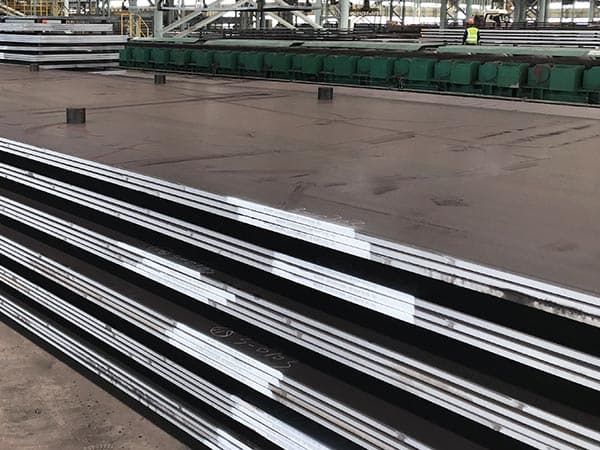
Understanding the Surface Sensitivity of S355MC Hot-Rolled Pickled Strips
S355MC is a high-strength low-alloy (HSLA) steel grade governed by the EN 10149-2 standard, specifically designed for cold forming. While its mechanical properties, such as a minimum yield strength of 355 MPa, make it a favorite for automotive frames and structural components, its surface condition after pickling introduces specific vulnerabilities. Pickling is a chemical process that uses hydrochloric or sulfuric acid to remove the black oxide scale (mill scale) formed during hot rolling. This leaves a clean, reactive metallic surface. Unlike raw hot-rolled steel, which has a protective layer of magnetite, pickled S355MC is 'naked' and highly susceptible to atmospheric moisture.
The Critical Humidity Threshold for Rust Formation
The primary catalyst for the oxidation of S355MC is relative humidity (RH). Scientific research and industrial experience indicate that the critical humidity threshold for carbon steel is approximately 60%. Below this level, the rate of corrosion is negligible. However, when the RH exceeds 60%, a thin, invisible film of water begins to adsorb onto the steel surface. If the humidity reaches 70% to 80%, the corrosion rate accelerates exponentially. This is because the water film becomes thick enough to act as an electrolyte, facilitating the electrochemical reaction between iron, oxygen, and moisture.
For S355MC hot-rolled pickled strips, the risk is even higher if the material is not oiled. Even at 50% humidity, if there are temperature fluctuations that lead to the dew point being reached, condensation will form directly on the metal, causing immediate 'flash rust.' This is why climate control in warehouses is paramount for maintaining the integrity of this specific steel grade.
Chemical Composition and Its Role in Corrosion Resistance
The chemistry of S355MC is optimized for strength and weldability rather than corrosion resistance. Unlike stainless steels that contain high levels of chromium, S355MC relies on micro-alloying elements. Let's look at the typical chemical composition limits:
| Element | Maximum Content (%) |
|---|---|
| Carbon (C) | 0.12 |
| Manganese (Mn) | 1.50 |
| Silicon (Si) | 0.50 |
| Phosphorus (P) | 0.025 |
| Sulfur (S) | 0.020 |
| Niobium (Nb) | 0.09 |
The low carbon and high manganese content improve toughness, but they do not provide a barrier against oxidation. The presence of sulfur and phosphorus is strictly limited because these elements can act as nucleation sites for pitting corrosion if the steel is exposed to high-humidity environments for extended periods.
Environmental Factors That Accelerate Rusting
While humidity is the main driver, other environmental variables significantly lower the threshold at which S355MC begins to degrade. These include:
- Atmospheric Pollutants: In industrial areas, sulfur dioxide (SO2) reacts with moisture to form weak sulfuric acid, which aggressively attacks the pickled surface.
- Chloride Ions: In coastal regions, salt particles (chlorides) are hygroscopic. They pull moisture out of the air even when the RH is below 50%, creating a localized corrosive environment.
- Surface Contamination: Dust, fingerprints, or metallic particles left on the S355MC strip can create oxygen concentration cells, leading to localized rusting even in relatively dry conditions.
- Temperature Cycling: Rapid cooling of a warehouse at night can cause the air to reach its saturation point, resulting in condensation on the cold thermal mass of the steel coils.
Mechanical Performance and Structural Integrity Post-Rusting
Light surface rust, often referred to as 'yellow rust,' usually does not impact the mechanical properties of S355MC. However, if the rust progresses to 'red rust' or 'pitting,' the effective cross-sectional area of the strip decreases. For a high-precision material like S355MC, which is often used in thicknesses ranging from 1.5mm to 20mm, even minor pitting can create stress concentrators. This is particularly dangerous in applications involving fatigue loading, such as truck chassis or crane arms, where a surface defect can become the starting point for a structural crack.
Optimizing Storage and Handling to Prevent Oxidation
To ensure that S355MC hot-rolled pickled strips remain in prime condition, strict storage protocols must be followed. The goal is to keep the material away from the 60% RH danger zone. Standard practices include:
- Protective Oiling: Most pickled strips are supplied with a layer of anti-rust oil. This oil acts as a physical barrier against moisture. If the oil film is broken or uneven, rust will form at the gaps.
- Vapor Corrosion Inhibitors (VCI): Using VCI paper or film for wrapping coils creates a protective molecular layer on the steel surface, neutralizing the corrosive effects of humidity.
- First-In, First-Out (FIFO): Reducing the residence time in the warehouse minimizes the cumulative exposure to fluctuating environmental conditions.
- Indoors Storage: S355MC pickled strips should never be stored outdoors. Even under a tarp, the 'greenhouse effect' can trap moisture and accelerate corrosion.
Industrial Applications Demanding High Surface Quality
The demand for S355MC is driven by industries that require a clean surface for subsequent processing. For instance, in laser cutting, the absence of mill scale (thanks to pickling) allows for faster cutting speeds and cleaner edges. In automated welding, a rust-free surface ensures better arc stability and reduces the risk of porosity in the weld bead. Furthermore, in the agricultural machinery sector, S355MC is often powder-coated; any residual rust under the coating would lead to delamination and premature failure of the equipment in the field. Understanding the humidity limits is not just about aesthetics; it is about ensuring the success of the entire manufacturing chain.
Leave a message