
What is the BS700MC tensile test tests BBN Steel offer
Explore the technical specifications of BS700MC tensile testing at BBN Steel. This guide covers yield strength, elongation, and structural performance for high-load applications.
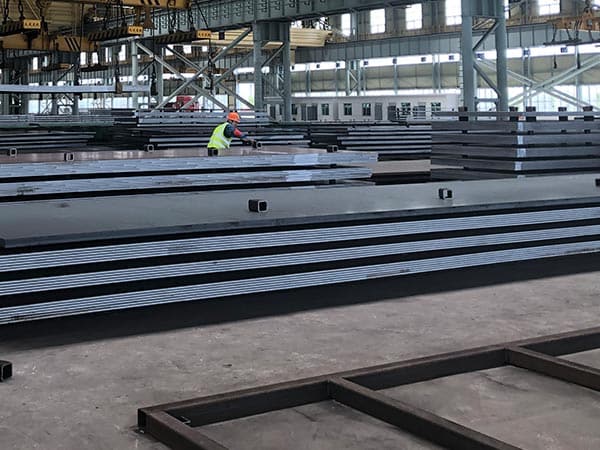
Understanding the BS700MC Tensile Test Protocols at BBN Steel
BS700MC represents a pinnacle of high-strength low-alloy (HSLA) steel engineering, specifically designed for cold forming applications where weight reduction and structural integrity are paramount. At BBN Steel, the tensile test is not merely a routine check but a comprehensive evaluation of the material's ability to withstand extreme stress without failure. This grade, often associated with the EN 10149-2 standard (S700MC), undergoes rigorous thermomechanical rolling processes to achieve its superior mechanical properties. The tensile test measures how the material reacts under tension, providing critical data such as yield strength (Rp0.2), ultimate tensile strength (Rm), and elongation (A percentage).
Engineering projects involving heavy-duty truck chassis, crane booms, and complex structural components rely on the accuracy of these tests. BBN Steel utilizes advanced universal testing machines (UTM) equipped with high-precision extensometers to capture the stress-strain curve with microscopic accuracy. This data ensures that every batch of BS700MC meets the minimum yield strength of 700 MPa, allowing designers to push the limits of modern architecture and machinery. The testing process also evaluates the material's elasticity, which is vital for components that experience cyclic loading and require high fatigue resistance.
The Technical Significance of Yield and Tensile Strength
The core of the BS700MC tensile test lies in identifying the transition from elastic to plastic deformation. For BS700MC, the yield strength (Rp0.2) is the most critical value, indicating the point at which the steel begins to deform permanently. BBN Steel's testing laboratory focuses on ensuring this value consistently exceeds the 700 MPa threshold. This high yield-to-tensile ratio is achieved through precise micro-alloying with elements like Niobium (Nb), Vanadium (V), and Titanium (Ti), which refine the grain structure and provide precipitation hardening.
Ultimate Tensile Strength (Rm) follows the yield point, representing the maximum stress the steel can withstand before necking occurs. For BS700MC, this typically ranges between 750 and 950 MPa. Understanding the gap between yield and tensile strength is essential for safety margins in engineering. BBN Steel provides detailed reports that include the full stress-strain profile, enabling engineers to calculate the energy absorption capacity of the steel, a factor that is increasingly important in automotive crash safety and seismic-resistant construction.
Chemical Composition and Its Impact on Tensile Results
The mechanical performance of BS700MC is a direct result of its chemical makeup. BBN Steel maintains strict control over the alloying process to ensure that the tensile test results remain consistent across different production heats. Low carbon content is maintained to enhance weldability and toughness, while the addition of micro-alloying elements provides the necessary strength without sacrificing ductility.
| Element | Carbon (C) % | Manganese (Mn) % | Silicon (Si) % | Phosphorus (P) % | Sulfur (S) % | Aluminium (Al) % |
|---|---|---|---|---|---|---|
| BS700MC Max | 0.12 | 2.10 | 0.50 | 0.025 | 0.015 | 0.015 |
By keeping the carbon equivalent (CEV) low, BBN Steel ensures that the high tensile strength does not lead to brittleness. The presence of Manganese helps in solid solution strengthening, while Phosphorus and Sulfur are kept to a minimum to prevent internal inclusions that could act as stress concentrators during the tensile test. This chemical precision is why BS700MC maintains high elongation values even at such high strength levels.
Mechanical Property Standards Offered by BBN Steel
When BBN Steel conducts a tensile test for BS700MC, the results are benchmarked against international standards to ensure global compliance. The following table outlines the typical mechanical properties expected from a certified BS700MC steel plate or coil:
| Property | Yield Strength Rp0.2 (MPa) | Tensile Strength Rm (MPa) | Elongation A80 (%) | Elongation A5 (%) |
|---|---|---|---|---|
| Specification | Min 700 | 750 - 950 | Min 10 | Min 12 |
Elongation is a key indicator of the material's ductility. A higher elongation value means the steel can be formed into complex shapes without cracking. BBN Steel’s testing protocols emphasize the importance of both A80 (for thicknesses less than 3mm) and A5 (for thicker sections) measurements to provide a complete picture of the material's forming potential. This is particularly relevant for the "MC" designation, which stands for Thermomechanically Rolled and Cold Forming.
Specimen Preparation and Testing Methodology
The reliability of a tensile test depends heavily on how the specimen is prepared. BBN Steel follows ISO 6892-1 or ASTM E8 standards for specimen machining. For BS700MC, specimens are usually taken transverse to the rolling direction, as this is often the most demanding orientation for high-strength steels. The surface finish of the specimen must be smooth to avoid premature failure due to surface defects.
- Orientation: Transverse specimens are standard, but longitudinal testing is available upon request for specific structural analyses.
- Gauge Length: Precision-marked gauge lengths allow for accurate calculation of permanent elongation after fracture.
- Strain Rate Control: BBN Steel uses computer-controlled strain rates to ensure the test captures the true behavior of the material, avoiding the artificial strength increases that can occur with high-speed testing.
- Data Acquisition: Digital sensors record thousands of data points per second, ensuring the yield point is identified with absolute precision.
This meticulous approach ensures that the data provided to the client is not just a number, but a reliable engineering parameter that can be used in finite element analysis (FEA) and other advanced design simulations.
Cold Forming Performance and Bendability
While the tensile test measures pulling force, the "MC" in BS700MC highlights its exceptional cold forming capabilities. BBN Steel complements tensile testing with bend tests to verify that the material can handle tight radii without surface splitting. For a 700 MPa steel, the ability to be bent 180 degrees over a small mandrel is a testament to its refined microstructure.
The relationship between tensile strength and bendability is inverse in most steels, but BS700MC breaks this trend through grain refinement. BBN Steel advises customers on the minimum bending radius based on the tensile data, ensuring that fabrication processes do not exceed the material's physical limits. This makes it an ideal choice for manufacturing telescoping crane arms and complex automotive frame rails where both strength and shape are critical.
Welding Integrity and Strength Retention
One of the primary concerns with high-strength steels is the loss of tensile strength in the heat-affected zone (HAZ) during welding. BBN Steel conducts extensive research into the weldability of BS700MC, ensuring that the tensile properties of the welded joint remain as close as possible to the base metal. Because BS700MC relies on thermomechanical rolling rather than traditional heat treatment (like quenching and tempering), it is less sensitive to welding heat.
BBN Steel recommends specific welding parameters and low-hydrogen consumables to maintain the 700 MPa yield strength across the joint. Tensile tests on welded samples are frequently performed to validate the integrity of the fabrication process. This ensures that the final structure does not have a "weak link" that could lead to catastrophic failure under load.
Environmental Adaptability and Fatigue Life
BS700MC is often used in environments where it is subjected to dynamic loads and fluctuating temperatures. BBN Steel’s testing regime includes assessing how tensile properties hold up under various conditions. High-strength steel can sometimes be susceptible to hydrogen embrittlement or stress corrosion cracking; however, the clean chemistry of BBN Steel’s BS700MC mitigates these risks.
Furthermore, the high yield strength directly contributes to an improved fatigue limit. Components made from BS700MC can withstand more load cycles before the initiation of fatigue cracks compared to standard structural steels. This longevity is a key selling point for the transportation industry, where reducing the weight of a trailer while increasing its service life provides a massive return on investment. BBN Steel provides the technical data necessary for engineers to perform life-cycle assessments and durability studies.
Why Choose BBN Steel for BS700MC Testing and Supply
BBN Steel stands out in the global market by offering more than just a product; we provide a verified technical solution. Our laboratories are equipped with the latest technology to perform not only tensile tests but also Charpy V-notch impact tests, hardness tests, and microscopic grain size analysis. This holistic approach to quality control ensures that every millimeter of BS700MC delivered meets the highest international standards.
The transparency of our testing process, documented through comprehensive Mill Test Certificates (MTC), gives our partners the confidence to use BS700MC in the most demanding applications. Whether it is for the construction of high-rise buildings, the manufacturing of heavy-duty agricultural equipment, or the development of next-generation electric vehicle chassis, BBN Steel provides the material and the data to ensure success. Our expertise in thermomechanical rolling and HSLA metallurgy makes us a preferred partner for companies looking to innovate and optimize their structural designs.
Leave a message