
What is the S700MC yield strength normalizing process
Explore the technical intricacies of S700MC yield strength, the impact of heat treatment, and why thermomechanical rolling replaces traditional normalizing for high-strength low-alloy steels.
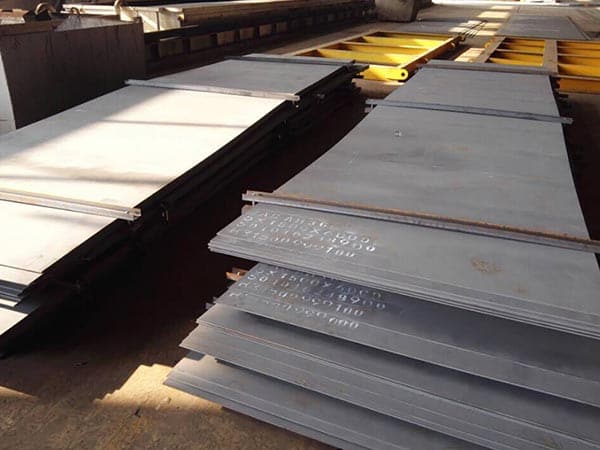
Understanding the S700MC Material Identity
S700MC is a high-strength low-alloy (HSLA) steel grade specifically designed for cold forming. According to the EN 10149-2 standard, the "S" denotes structural steel, "700" indicates a minimum yield strength of 700 MPa, and "MC" signifies that the material is thermomechanically rolled (M) and intended for cold forming (C). Unlike traditional structural steels that might rely on normalizing to achieve grain refinement, S700MC derives its exceptional mechanical properties from a sophisticated Thermomechanical Control Process (TMCP). This distinction is critical for engineers and fabricators because the term "normalizing" in the context of S700MC is often a point of technical clarification rather than a recommended procedure.
The Myth of the S700MC Normalizing Process
In traditional metallurgy, normalizing involves heating steel above its upper critical temperature (Ac3) and cooling it in still air to refine the grain structure and improve toughness. However, applying a standard normalizing process to S700MC is counterproductive. Because S700MC achieves its 700 MPa yield strength through a combination of micro-alloying and controlled rolling at specific temperature ranges, reheating the steel to normalizing temperatures (typically 850°C to 950°C) destroys the delicate microstructure created during the TMCP stage. If S700MC is normalized, the dislocation density decreases, and the fine precipitates of niobium and vanadium coarsen, leading to a significant drop in yield strength, often falling back to levels around 350-450 MPa. Therefore, the "process" for maintaining S700MC yield strength is strictly avoiding high-temperature heat treatments that mimic normalizing.
Thermomechanical Rolling: The Real Strength Driver
The yield strength of S700MC is a result of precise temperature control during the rolling mill process. The steel is rolled at temperatures where recrystallization is inhibited. This creates a highly deformed austenite structure that, upon cooling, transforms into an extremely fine-grained ferrite and pearlite (or bainite) matrix. This grain refinement is the only strengthening mechanism that simultaneously increases both strength and toughness. The fine grain size acts as a barrier to dislocation movement, which is why S700MC can maintain high ductility despite its extreme hardness.
| Mechanical Property | Value (Minimum) | Testing Standard |
|---|---|---|
| Yield Strength (ReH) | 700 MPa | EN ISO 6892-1 |
| Tensile Strength (Rm) | 750 - 950 MPa | EN ISO 6892-1 |
| Elongation (A80mm) | 10% - 12% (depending on thickness) | EN ISO 6892-1 |
| Impact Energy (KV) | 40 J at -20°C (optional) | EN ISO 148-1 |
Chemical Composition and Micro-alloying Synergy
The ability to reach 700 MPa without a quenching and tempering cycle depends on the chemical synergy of micro-alloying elements. S700MC uses a low carbon content to ensure excellent weldability, while adding Niobium (Nb), Vanadium (V), and Titanium (Ti). These elements form carbonitrides that pin grain boundaries during the rolling process. Niobium is particularly effective in raising the recrystallization temperature, allowing for more effective thermomechanical processing. Titanium serves to stabilize nitrogen and protect the boron or niobium from forming less effective compounds.
| Element | Maximum Content (%) | Purpose |
|---|---|---|
| Carbon (C) | 0.12 | Ensures weldability and reduces brittleness |
| Manganese (Mn) | 2.10 | Increases strength and hardenability |
| Silicon (Si) | 0.60 | Deoxidation and solid solution strengthening |
| Niobium (Nb) | 0.09 | Grain refinement and precipitation hardening |
| Titanium (Ti) | 0.22 | Prevents grain growth at high temperatures |
Processing Performance: Welding and Cold Forming
S700MC is prized for its processing versatility. Since it is a low-carbon steel, its Carbon Equivalent (CEV) is relatively low, making it less susceptible to cold cracking during welding. However, because the strength is derived from the TMCP process, the Heat Affected Zone (HAZ) during welding is a critical area. Excessive heat input can cause local softening (annealing effect) where the grain size increases and the yield strength drops. It is recommended to use low heat input welding techniques and consumables that match the strength of the base metal.
- Cold Bending: S700MC allows for tight bending radii, typically 1.0 to 1.5 times the thickness (t) for 90-degree bends, which is remarkable for a steel with 700 MPa yield.
- Laser Cutting: The low impurity levels and uniform microstructure result in clean edges and minimal distortion during thermal cutting.
- Surface Quality: The MC grade usually features a high-quality surface finish, suitable for immediate painting or galvanizing.
Environmental Adaptability and Fatigue Resistance
In structural applications, S700MC exhibits superior fatigue resistance compared to standard S355 grades. The fine-grained structure slows down the initiation and propagation of fatigue cracks. This makes it ideal for dynamic loading environments, such as the chassis of heavy trucks or the booms of mobile cranes. While it is not a dedicated weathering steel, its low alloy content provides a slight improvement in atmospheric corrosion resistance over plain carbon steels, though protective coatings are still recommended for harsh environments.
Strategic Industry Applications
The shift toward S700MC is driven by the need for weight reduction without sacrificing structural integrity. By replacing S355 with S700MC, engineers can often reduce the thickness of components by 30% to 40%, leading to lighter vehicles and lower fuel consumption.
- Automotive and Transport: Longitudinal beams, cross members, and chassis components for trucks and trailers.
- Lifting Equipment: Telescopic booms for cranes, aerial work platforms, and high-capacity forklifts.
- Agriculture: High-stress frames for plows, harvesters, and trailers where durability and weight are balanced.
- Infrastructure: Cold-formed sections for specialized building frames and racking systems.
Final Technical Considerations for Engineers
When specifying S700MC, it is vital to remember that this steel is a "state-of-delivery" product. Any subsequent heat treatment, including stress relieving or normalizing, must be performed with extreme caution. Stress relieving should generally be kept below 580°C to avoid significant strength loss. If the design requires extensive hot forming, S700MC is not the appropriate choice; instead, a quenched and tempered (QT) steel or a different alloy design should be considered. The value of S700MC lies in its "as-rolled" efficiency, providing a high-performance solution that bypasses the energy-intensive heat treatment cycles required by older steel technologies.
Leave a message