
What are the S500MC tensile strength advantages
Discover the comprehensive advantages of S500MC tensile strength. Learn how this thermomechanically rolled HSLA steel optimizes weight, durability, and processing efficiency in modern engineering.
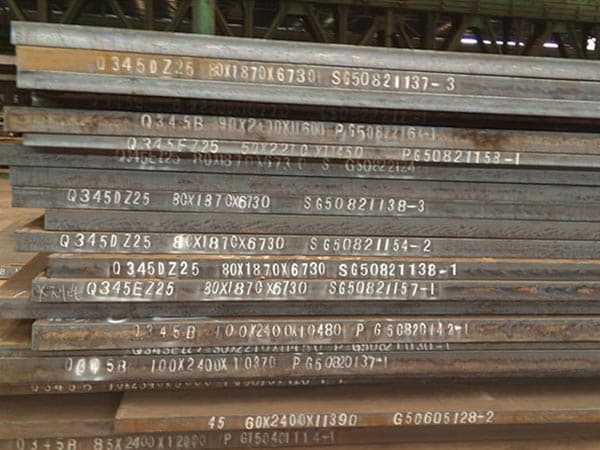
Understanding the S500MC Tensile Strength Benchmark
In the evolving landscape of industrial materials, S500MC stands out as a premier high-strength low-alloy (HSLA) steel, governed by the EN 10149-2 standard. The "S" denotes structural steel, while "500" represents its minimum yield strength of 500 MPa. However, the true engineering value often lies in its tensile strength, which typically ranges between 550 and 700 MPa. This specific range is not a random byproduct of manufacturing but a meticulously engineered window that balances raw power with ductility.
The tensile strength of S500MC allows engineers to push the boundaries of design. Unlike traditional carbon steels like S235 or S355, S500MC offers a significantly higher threshold before permanent deformation or fracture occurs. This capability is essential for components subjected to high stress and dynamic loads. By utilizing the superior tensile properties of S500MC, manufacturers can achieve structural integrity while significantly reducing the thickness of the steel plates used, leading to the first major advantage: lightweighting.
The Metallurgical Foundation of S500MC Performance
The impressive tensile strength of S500MC is rooted in its thermomechanical rolling process. Unlike traditional hot-rolling followed by heat treatment, thermomechanical rolling (indicated by the "MC" suffix) involves precise temperature control during the deformation process. This creates a fine-grained microstructure that is far superior to standard normalized steels. The addition of micro-alloying elements such as Niobium (Nb), Vanadium (V), and Titanium (Ti) facilitates grain refinement and precipitation hardening.
These micro-alloys work at the molecular level to impede dislocation movement within the crystal lattice. When a load is applied, these obstacles require more energy to overcome, directly resulting in higher tensile and yield strengths. Because the strength is achieved through grain refinement rather than high carbon content, S500MC maintains excellent toughness even at low temperatures, a critical factor for equipment operating in harsh northern climates or high-altitude environments.
Weight Reduction and Structural Efficiency
One of the most compelling advantages of S500MC tensile strength is the potential for mass optimization. In the transportation and heavy machinery sectors, weight is the enemy of efficiency. A higher tensile strength means that a thinner section of S500MC can carry the same load as a much thicker section of S355 steel. For instance, replacing S355 with S500MC can often result in a weight saving of 25% to 35% for specific structural components.
This weight reduction ripples through the entire lifecycle of a product. In the automotive industry, lighter truck frames and chassis components lead to higher payloads and reduced fuel consumption. In the construction of crane booms or telescopic handlers, the high strength-to-weight ratio allows for longer reaches and higher lifting capacities without increasing the overall footprint of the machine. The tensile strength of S500MC essentially provides a "safety buffer" that allows for leaner, more elegant engineering solutions without compromising safety standards.
Cold Forming Excellence: Strength Meets Pliability
A common misconception in metallurgy is that higher tensile strength automatically leads to brittleness. S500MC shatters this myth. Despite its high strength, it exhibits exceptional cold forming properties. The fine-grained structure mentioned earlier allows the steel to be bent and folded into complex shapes without cracking. This is a vital advantage for manufacturers who need to create intricate structural profiles, such as C-channels, U-beams, or custom chassis rails.
The minimum elongation values for S500MC (typically 12% to 14% depending on thickness) ensure that the material can withstand the stresses of tight-radius bending. For designers, this means they can integrate fewer parts by creating complex single-piece components, reducing the need for extensive welding and assembly. The consistency of S500MC’s tensile properties across the entire coil or plate also ensures predictable spring-back during the forming process, which is crucial for automated mass production lines.
Superior Weldability for Complex Assemblies
Welding is often the weak link in high-strength steel applications. However, S500MC is designed with a low carbon equivalent (CEV). Because the strength is derived from thermomechanical processing and micro-alloying rather than high carbon or alloy content, the steel is remarkably easy to weld using standard methods such as MAG, TIG, or laser welding.
The advantage here is twofold. First, the risk of cold cracking in the heat-affected zone (HAZ) is significantly lower than in traditional high-strength steels. Second, the tensile strength of the welded joint remains robust, provided the correct filler materials and heat inputs are managed. This allows for the construction of large-scale, high-stress structures where every joint must match the performance of the base metal. The ability to maintain high tensile integrity across a welded assembly is why S500MC is the preferred choice for trailer frames and heavy-duty containers.
Environmental Adaptability and Fatigue Resistance
S500MC tensile strength advantages extend into the realm of durability and fatigue life. Components in the transport sector are rarely subjected to static loads; they face constant vibration, cyclic loading, and environmental stress. The high yield-to-tensile ratio of S500MC provides excellent resistance to fatigue failure. The fine-grained structure acts as a barrier to crack initiation and propagation, extending the service life of the equipment.
Furthermore, S500MC performs exceptionally well in varying temperatures. While some steels become brittle in cold weather, S500MC retains its impact toughness. This environmental resilience ensures that the tensile strength advantages are not lost when the thermometer drops, making it suitable for global distribution and use in diverse geographic regions. Its resistance to atmospheric corrosion can also be enhanced through standard coating processes, as the low-silicon content often found in S500MC variants is conducive to high-quality galvanizing.
Technical Comparison: S500MC vs. Conventional Steels
To better understand the positioning of S500MC, it is helpful to compare its mechanical properties with more traditional grades. The following table highlights the leap in performance that S500MC provides over standard S355MC.
| Property | S355MC (Standard HSLA) | S500MC (High Strength) | Advantage of S500MC |
|---|---|---|---|
| Min. Yield Strength (MPa) | 355 | 500 | 40% higher load-bearing capacity |
| Tensile Strength (MPa) | 430 - 550 | 550 - 700 | Significant safety and stress buffer |
| Min. Elongation (A5 %) | 19 | 12 - 14 | Maintains good formability at higher strength |
| Bending Radius (90°) | 0.5t | 1.0t | Excellent for complex cold forming |
| Typical Application | General structural parts | Chassis, crane booms, cross members | Optimized for high-stress environments |
Economic Impact and Sustainability
From a commercial perspective, the advantages of S500MC tensile strength translate directly into cost savings. While the price per ton of S500MC may be higher than S355, the total cost of the project often decreases. Using less material means lower shipping costs, reduced welding consumables, and faster processing times. In a market where steel prices are volatile, the ability to use 30% less material is a powerful competitive edge.
Sustainability is another critical factor. The global push for green manufacturing favors materials that contribute to a lower carbon footprint. By enabling the production of lighter vehicles, S500MC helps reduce CO2 emissions during the vehicle's operational life. Additionally, the efficiency of the thermomechanical rolling process itself is often more energy-efficient than complex multi-stage heat treatments, making S500MC a responsible choice for the modern industrial age.
Optimizing Production with S500MC
Integrating S500MC into a production line requires an understanding of its unique characteristics. Because of its high tensile strength, the machinery used for cutting and bending must be capable of handling the increased resistance. High-quality fiber lasers or plasma cutters are recommended to ensure clean edges that do not introduce stress concentrators. When bending, it is important to account for the slightly higher spring-back compared to lower-grade steels, though this is easily managed with modern CNC press brakes.
The surface quality of S500MC is typically excellent, characterized by a thin, tightly adherent scale layer or a pickled and oiled finish. This provides a superior substrate for painting, powder coating, or galvanizing. By choosing S500MC, manufacturers are not just choosing a stronger steel; they are choosing a material that streamlines the entire fabrication process from the first cut to the final coating.
Diverse Industry Applications
The versatility of S500MC has led to its widespread adoption across multiple high-stakes industries. In the agricultural sector, it is used for plow frames and trailer bodies that must withstand immense soil resistance and heavy loads. In renewable energy, it finds its way into the structural supports for solar arrays and wind turbine components where wind-induced fatigue is a constant threat.
The logistics and transport industry remains the largest consumer, utilizing S500MC for everything from heavy-duty racking systems to the side-impact beams of passenger cars. The common thread across these applications is the need for a material that provides maximum strength with minimum bulk. S500MC’s tensile strength is the key that unlocks these design possibilities, allowing for a future where structures are lighter, stronger, and more efficient than ever before.
Leave a message