
China s355mc steel equivalent astm prices continue to decline
Analyze the current price decline of China S355MC steel and its ASTM equivalents. This guide covers mechanical properties, processing advantages, and industry applications.
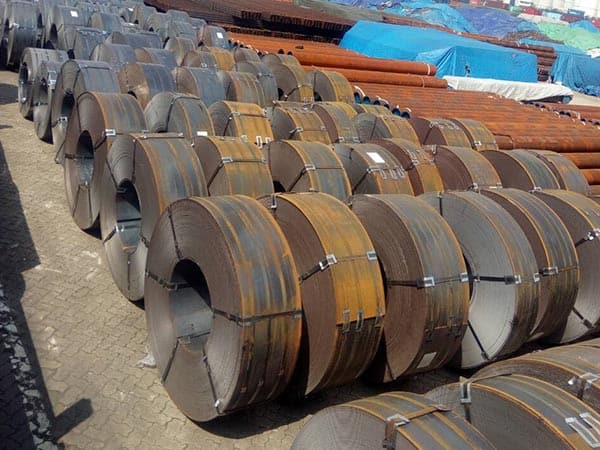
The Economic Shift in High-Strength Steel Markets
The global steel market is currently witnessing a significant adjustment, particularly regarding China S355MC steel equivalent ASTM materials. As industrial demand fluctuates and production capacities stabilize, the pricing for these high-strength, low-alloy (HSLA) steels has shown a consistent downward trend. This shift presents a unique opportunity for global manufacturers to optimize their supply chains while maintaining high structural standards. S355MC, governed by the EN 10149-2 standard, is a thermomechanically rolled steel designed for cold forming. Its ASTM equivalents, primarily found within the ASTM A1011 HSLAS Grade 50 or ASTM A1018 categories, are also seeing similar price corrections. This decline is not merely a reflection of raw material costs but also stems from improved manufacturing efficiencies in Chinese mills, which have mastered the micro-alloying processes required for these grades.
Comparative Analysis: S355MC vs. ASTM Equivalents
Understanding the technical nuances between S355MC and its ASTM counterparts is essential for engineering compliance. S355MC is characterized by a minimum yield strength of 355 MPa. In the North American market, engineers often look to ASTM A1011 Grade 50 Class 2 or ASTM A656 Grade 50 as functional equivalents. While the standards originate from different regulatory bodies, their chemical compositions and mechanical behaviors overlap significantly, allowing for seamless substitution in many structural applications. The thermomechanical rolling process (denoted by the 'MC' suffix) ensures a fine-grained microstructure, which is superior to traditional normalized steels in terms of toughness and formability.
| Property | S355MC (EN 10149-2) | ASTM A1011 HSLAS Gr 50 | ASTM A656 Grade 50 |
|---|---|---|---|
| Yield Strength (min) | 355 MPa | 345 MPa (50 ksi) | 345 MPa (50 ksi) |
| Tensile Strength | 430-550 MPa | 450 MPa (min) | 450 MPa (min) |
| Elongation (min) | 19-23% (varies by thickness) | 20-22% | 20% |
| Processing Method | Thermomechanically Rolled | Hot Rolled | Hot Rolled / Controlled Cooled |
Mechanical Superiority and Weight Reduction Potential
One of the primary drivers for the adoption of S355MC and its ASTM equivalents is the potential for lightweighting. By utilizing a higher yield strength compared to standard S235 or A36 carbon steels, manufacturers can reduce the thickness of structural components without compromising safety or integrity. This reduction in material volume directly translates to lower shipping costs and improved fuel efficiency in transport-related applications. The fine-grained structure achieved through controlled rolling and cooling cycles provides exceptional resistance to brittle fracture, even at lower temperatures. This makes the material highly reliable for equipment operating in diverse climatic conditions, from humid tropical ports to cold northern construction sites.
Advanced Processing Performance: Welding and Forming
The processing advantages of China S355MC steel are a major factor in its widespread use. Because the steel achieves its strength through thermomechanical processing rather than high carbon content, it maintains a very low Carbon Equivalent (CEV). This low CEV is critical for weldability. Unlike traditional high-strength steels that may require extensive pre-heating or post-weld heat treatments, S355MC can be welded using standard MIG, TIG, or submerged arc welding techniques with minimal risk of cold cracking in the heat-affected zone (HAZ). Furthermore, the excellent cold-forming properties allow for tight bending radii. For a typical S355MC plate, a bending radius of 0.5 to 1.5 times the thickness is often achievable, which is vital for complex chassis components and crane booms.
- Superior Laser Cutting: The clean surface and consistent grain structure of S355MC make it ideal for high-speed laser cutting, resulting in smooth edges and minimal dross.
- Excellent Bending: The material resists cracking during sharp bends, which is essential for the production of U-beams and C-channels.
- Consistent Thickness: Chinese mills have implemented advanced Automatic Gauge Control (AGC) systems, ensuring that S355MC coils meet tight thickness tolerances.
Environmental Adaptability and Sustainability
In the modern manufacturing landscape, environmental impact is a critical metric. The use of S355MC contributes to sustainability goals in two ways. First, the reduction in total steel weight per unit (lightweighting) reduces the carbon footprint associated with the extraction and smelting of iron ore. Second, the durability of the material extends the lifecycle of the finished product, reducing the frequency of replacement and recycling. The corrosion resistance of these HSLA steels, while not as high as stainless steel, is significantly better than plain carbon steel due to the presence of micro-alloying elements like Niobium (Nb) and Titanium (Ti), which form a more stable oxide layer.
Expanding Industry Applications
The versatility of S355MC and its ASTM equivalents allows them to serve a wide array of sectors. In the automotive industry, these steels are the backbone of truck frames, cross members, and suspension parts where high strength-to-weight ratios are paramount. The construction machinery sector utilizes S355MC for telescopic booms, excavator buckets, and chassis of heavy-duty vehicles. Beyond mobile equipment, the renewable energy sector has begun adopting these grades for wind turbine components and solar tracking structures, where wind load resistance and material economy are essential. The current price decline makes it feasible for smaller-scale structural projects to upgrade from standard carbon steel to these high-performance grades, enhancing the overall quality of infrastructure.
Strategic Procurement in a Declining Price Environment
With prices for China S355MC steel equivalent ASTM materials continuing to soften, procurement strategies must evolve. Buyers should focus on long-term contracts that lock in these favorable rates while ensuring quality through rigorous testing. It is important to verify the Mill Test Certificate (MTC) to ensure compliance with EN 10149-2 or the relevant ASTM standard. As the gap between standard carbon steel and HSLA steel prices narrows, the value proposition for S355MC becomes undeniable. Companies that transition their designs to incorporate these high-strength materials now will gain a competitive edge in both cost and product performance as the global economy recovers. Monitoring the Shanghai Futures Exchange (SHFE) and iron ore price indices can provide further guidance on the timing of bulk purchases.
Leave a message