
At what humidity does s315 steel equivalent astm rust?
Comprehensive analysis of S315 steel and its ASTM equivalents regarding corrosion resistance, critical humidity thresholds, and environmental impact on mechanical properties.
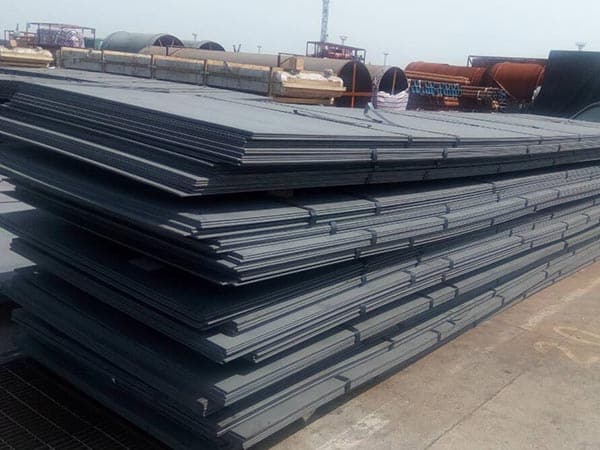
Defining S315 Steel and Its ASTM Equivalents
S315 steel, primarily recognized under the EN 10149-2 standard as S315MC, is a high-yield-strength steel designed for cold forming. This thermomechanically rolled steel is prized for its combination of strength, ductility, and weldability. When seeking an ASTM equivalent, engineers typically point toward ASTM A1011 HSLAS Class 1 Grade 45 or ASTM A572 Grade 42/50, depending on the specific application and thickness requirements. These materials are low-carbon, high-strength low-alloy (HSLA) steels that provide weight savings without compromising structural integrity.
Understanding the corrosion behavior of S315 requires a deep dive into its metallurgical structure. Unlike stainless steels, which contain significant chromium to form a passive protective layer, S315 and its ASTM counterparts are carbon-based. Their resistance to rust is inherently limited, making them highly sensitive to environmental factors, particularly atmospheric humidity.
The Critical Humidity Threshold for S315 Steel Oxidation
The relationship between steel and moisture is not linear. Research in atmospheric corrosion identifies a Critical Relative Humidity (CRH) level where the rate of oxidation increases exponentially. For S315 and ASTM A1011 equivalents, this threshold is generally accepted to be 60% Relative Humidity (RH).
Below 40% RH, the corrosion rate is negligible because the electrolyte layer on the steel surface is too thin to facilitate significant electrochemical reactions. Between 40% and 60% RH, a microscopic film of water begins to form, but it is often discontinuous. Once the humidity surpasses 70% to 80%, the moisture film becomes thick enough to act as a full electrolyte, allowing the flow of ions between anodic and cathodic sites on the steel surface, leading to rapid visible rust (Fe2O3·nH2O).
Chemical Composition Comparison: S315MC vs. ASTM Equivalents
The chemical makeup of these steels dictates how they interact with moisture and oxygen. S315MC focuses on low carbon content to ensure weldability, while micro-alloying elements like Niobium (Nb) or Titanium (Ti) provide strength. Below is a comparison of typical chemical profiles:
| Element (Max %) | S315MC (EN 10149-2) | ASTM A1011 HSLAS-F Gr 45 | Impact on Corrosion |
|---|---|---|---|
| Carbon (C) | 0.12 | 0.22 | Higher carbon can slightly increase localized pitting. |
| Manganese (Mn) | 1.30 | 1.35 | Forms MnS inclusions which can be initiation sites for rust. |
| Silicon (Si) | 0.50 | - | Can slightly influence the adherence of the oxide scale. |
| Phosphorus (P) | 0.025 | 0.04 | Accelerates atmospheric corrosion if levels are high. |
| Sulfur (S) | 0.020 | 0.04 | Sulfides promote moisture retention and acid formation. |
Atmospheric Pollutants and Their Synergy with Humidity
Humidity does not act alone. The presence of Sulfur Dioxide (SO2) in industrial environments or Chlorides (NaCl) in coastal areas drastically lowers the critical humidity threshold. For S315 steel stored in a coastal warehouse, rust can initiate at humidities as low as 40% to 50% because salt is hygroscopic—it pulls moisture out of the air and onto the metal surface.
In industrial zones, SO2 reacts with moisture to form weak sulfuric acid, which dissolves the initial protective oxide film that carbon steel tries to form. This cycle of wetting and drying is particularly aggressive for S315MC, as the thermomechanical processing creates a refined grain structure that, while excellent for strength, offers no inherent chemical barrier to acidic attack.
Mechanical Property Degradation Due to Humidity-Induced Rust
The primary concern with S315 and its ASTM equivalents rusting is not just aesthetic. Prolonged exposure to high humidity leads to pitting corrosion, which acts as a stress concentrator. Since S315MC is often used in components subjected to dynamic loads—such as automotive chassis, crane arms, and heavy machinery frames—these pits can become the starting point for fatigue cracks.
- Yield Strength Loss: While surface rust doesn't immediately reduce the bulk yield strength, the reduction in effective cross-sectional area over time will lower the load-bearing capacity.
- Ductility Reduction: Hydrogen embrittlement can occur if the corrosion process is severe, leading to a loss of the excellent cold-forming properties S315 is known for.
- Surface Roughness: Rust increases friction, which is detrimental if the S315 part is intended for further processing like fine blanking or precision bending.
Process Performance and Weldability Post-Oxidation
If S315 steel has been exposed to high humidity and developed a layer of scale or rust, its process performance is significantly hampered. During welding, iron oxide (rust) can introduce oxygen into the weld pool, leading to porosity and inclusions. This is particularly problematic for the high-speed automated welding often used with ASTM A1011 materials.
Furthermore, the cold-forming capabilities of S315MC are compromised. Rust particles can be pressed into the surface of the steel during bending or stamping, causing surface defects or even damaging the expensive tooling used in high-volume manufacturing. Proper cleaning via pickling or sandblasting is required if the steel has been stored in environments exceeding 60% RH for extended periods.
Advanced Protection Strategies for S315 and ASTM Equivalents
To mitigate the risks associated with humidity, several industry-standard practices are employed. Since S315 is frequently used in the "as-rolled" or "pickled and oiled" condition, the Oil Film Integrity is the first line of defense. High-quality rust preventive oils are designed to displace moisture and provide a barrier that remains effective even up to 90% RH for short durations.
For long-term environmental adaptation, Galvanization or Zinc-Rich Primers are preferred. ASTM A1011 and S315MC both accept zinc coatings well. The zinc acts as a sacrificial anode, protecting the underlying S315 steel even if the coating is scratched. In high-humidity climates (tropical or maritime), using Vapor Corrosion Inhibitors (VCI) in packaging is essential for preventing "white rust" on galvanized surfaces and red rust on bare S315 surfaces.
Environmental Adaptation in Heavy Machinery and Transport
The application of S315 and its ASTM equivalents in the transport sector highlights the need for humidity control. Truck frames and agricultural equipment are often exposed to varying cycles of humidity. Design engineers must ensure that these structures do not have "water traps"—areas where liquid water can collect and maintain a local humidity of 100%. Proper drainage and ventilation allow the steel to dry, which is critical because carbon steel performs significantly better in intermittent wet-dry cycles than in constant high-humidity immersion.
In the construction of heavy-duty racking systems, S315MC is often chosen for its high strength-to-weight ratio. If these racks are installed in cold storage or non-climate-controlled warehouses, the dew point becomes a critical factor. If the steel temperature drops below the dew point of the ambient air, liquid water condenses directly on the surface, triggering rapid oxidation regardless of the nominal relative humidity of the room.
Technical Comparison of Mechanical Limits
| Property | S315MC (EN) | ASTM A1011 HSLAS Gr 45 | ASTM A572 Gr 42 |
|---|---|---|---|
| Min Yield Strength (MPa) | 315 | 310 | 290 |
| Tensile Strength (MPa) | 390 - 510 | 410 min | 415 min |
| Min Elongation (%) | 20 - 24 | 22 | 20 |
This table illustrates that while the mechanical properties are closely aligned, the ASTM A1011 variant often provides a slightly higher tensile floor, which can be beneficial in structural calculations. However, all three grades share the same vulnerability to humidity-induced rust, necessitating identical storage and protection protocols.
Optimal Storage and Handling to Prevent Rust
Maintaining the integrity of S315 steel starts in the warehouse. To prevent rust, the following conditions are recommended:
- Climate Control: Maintain indoor humidity below 50% RH. If the warehouse is not heated, use industrial dehumidifiers.
- First-In, First-Out (FIFO): Minimize the duration the steel is exposed to ambient air.
- Protective Wrapping: Use UV-resistant and moisture-proof plastic or VCI paper, especially during sea freight where humidity is constantly near 100%.
- Avoid Direct Ground Contact: Store coils or sheets on wooden or plastic skids to prevent capillary moisture from the floor.
By understanding that 60% RH is the "tipping point" for S315 and its ASTM equivalents, manufacturers can implement smarter logistics and production schedules, ensuring that the high-performance characteristics of these steels are preserved from the mill to the final assembly.
Leave a message