
What industries are medium and heavy en 10149-2 astm equivalent cutting used in
Explore the diverse industrial applications of EN 10149-2 and ASTM equivalent medium/heavy steel plates. Learn about their mechanical properties, cutting techniques, and role in automotive, construction, and energy sectors.
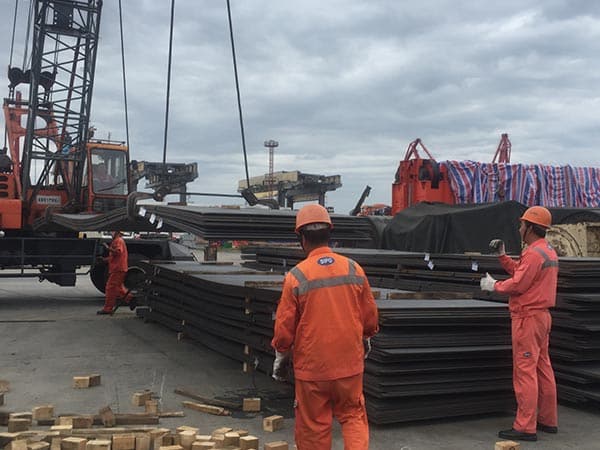
Understanding EN 10149-2 and Its Global Equivalents
EN 10149-2 specifies the technical delivery conditions for hot-rolled high yield strength steels for cold forming. These steels are thermomechanically rolled, a process that meticulously controls the temperature and deformation during rolling to achieve a fine-grained microstructure. This results in an exceptional combination of high strength, excellent weldability, and superior cold formability. When searching for ASTM equivalents, engineers frequently look toward ASTM A656 or ASTM A1011/A1018. For instance, the popular S700MC grade finds its counterpart in ASTM A656 Grade 80, while S355MC aligns closely with ASTM A1011 HSLAS Grade 50.
The transition from standard structural steels to these high-performance grades is driven by the need for weight reduction without compromising structural integrity. Medium and heavy plates in these categories (typically ranging from 3mm to over 20mm in thickness) require specialized cutting and processing techniques to maintain their metallurgical properties. The use of these materials is not merely a choice of convenience but a strategic engineering decision to enhance payload capacity and energy efficiency across various heavy-duty sectors.
Mechanical Superiority and Material Integrity
The primary allure of EN 10149-2 steels like S500MC, S550MC, and S700MC lies in their yield strength. Unlike traditional carbon steels, these thermomechanically rolled plates offer a much higher strength-to-weight ratio. This allows for the design of thinner components that can withstand the same or higher loads than thicker, heavier conventional steel parts. Mechanical properties such as elongation and impact toughness are also optimized, ensuring that the material can absorb energy during impact without brittle failure, even at low temperatures.
The chemical composition is characterized by low carbon content (often below 0.12%) and micro-alloying elements such as niobium, vanadium, and titanium. These elements facilitate grain refinement and precipitation hardening. From a processing perspective, the low carbon equivalent (CEV) makes these steels exceptionally easy to weld using standard methods like MIG/MAG or submerged arc welding, provided that heat input is controlled to prevent excessive grain growth in the heat-affected zone (HAZ).
Precision Cutting Technologies for Heavy Plates
Processing medium and heavy EN 10149-2 plates requires an understanding of how different cutting methods affect the material's edge. Because these steels rely on a specific microstructure for their strength, excessive heat can potentially soften the edges. The following methods are standard in the industry:
- Laser Cutting: Ideal for medium thicknesses (up to 25mm). Fiber lasers provide high precision and a very narrow HAZ, which is critical for maintaining the yield strength of S700MC components.
- Plasma Cutting: High-definition plasma is the workhorse for heavy plates. It offers a balance between speed and precision, suitable for large structural parts where a slightly wider tolerance is acceptable.
- Waterjet Cutting: Used when zero thermal impact is required. While slower and more expensive, it preserves the original thermomechanical properties of the steel perfectly.
- Oxy-fuel Cutting: Reserved for very thick plates (above 30mm). Special care must be taken with EN 10149-2 grades to manage the significant heat input, often requiring post-cut edge grinding to remove the softened layer.
Automotive and Heavy Transportation Infrastructure
The automotive industry, particularly the heavy truck and trailer segment, is one of the largest consumers of EN 10149-2 equivalent steels. The demand for lighter vehicles to meet stringent emission standards and increase fuel efficiency has made S700MC and ASTM A656 Grade 80 indispensable. These steels are used to manufacture chassis frames, cross members, and longitudinal beams.
By utilizing high-strength medium plates, manufacturers can reduce the dead weight of a trailer by hundreds of kilograms. This weight saving translates directly into increased payload capacity for the operator. Furthermore, the excellent cold formability of these grades allows for complex frame geometries that optimize stress distribution, leading to longer service lives for commercial vehicles operating under grueling conditions.
Lifting and Construction Machinery Applications
In the world of construction machinery, strength and reach are paramount. Mobile cranes, tower cranes, and concrete pumps rely heavily on the high yield strength of EN 10149-2 plates. The telescopic booms of cranes, for instance, are often fabricated from S700MC or even higher grades like S960 (though S700MC is the mainstay for many medium-heavy applications). These materials allow the boom to be lighter, which in turn permits a longer reach and higher lifting capacity at greater radii.
Earthmoving equipment, such as excavators and loaders, utilizes these steels for structural components that must endure high cyclic loading. The fatigue resistance of thermomechanically rolled steel is superior to that of standard hot-rolled plates, making it ideal for the articulated joints and main frames of heavy machinery. The ability to cut these plates into complex shapes using CNC plasma or laser systems ensures that structural reinforcements can be placed exactly where they are needed most.
Agricultural and Mining Equipment Durability
Agricultural machinery operates in diverse and often abrasive environments. Equipment such as large-scale plows, harvesters, and seeders requires components that are both strong and tough. EN 10149-2 equivalents are used for the main structural frames of these machines. The high yield strength ensures that the frames do not deform when the equipment hits obstacles in the soil, while the material's toughness prevents cracking under vibration.
In the mining sector, the focus shifts to massive scale and extreme durability. Conveyor systems, mineral processing equipment, and heavy-duty dump truck bodies utilize heavy EN 10149-2 plates. The environmental adaptability of these steels is crucial here; they must perform reliably in sub-zero temperatures found in northern mining sites and the intense heat of desert operations. The consistent grain structure provided by thermomechanical rolling ensures predictable performance across these temperature extremes.
Energy and Infrastructure Sector Integration
The renewable energy sector, particularly wind power, utilizes EN 10149-2 equivalents for internal structural components of wind towers and nacelles. While the main tower shell might use S355J2+N, the internal platforms, brackets, and support structures often leverage the higher strength-to-weight ratio of S420MC or S500MC to reduce the overall weight of the nacelle assembly. This reduction in top-head mass allows for more efficient tower designs and easier installation.
In general infrastructure, these steels are found in bridge components, modular building frames, and specialized storage racking systems. The ability to cut and weld these plates with high precision allows for the pre-fabrication of large modules, which can then be assembled quickly on-site, reducing construction timelines and labor costs.
Technical Specifications and Standard Mapping
To assist in material selection, the following table provides a comparison between common EN 10149-2 grades and their typical ASTM equivalents used in cutting and fabrication:
| EN 10149-2 Grade | ASTM Equivalent (Approx.) | Min. Yield Strength (MPa) | Typical Applications |
|---|---|---|---|
| S315MC | ASTM A1011 HSLAS Gr 45 | 315 | Light structural parts, brackets |
| S355MC | ASTM A1011 HSLAS Gr 50 / A656 Gr 50 | 355 | Truck frames, agricultural tools |
| S420MC | ASTM A1011 HSLAS Gr 60 / A656 Gr 60 | 420 | Construction machinery, crane parts |
| S500MC | ASTM A656 Grade 70 | 500 | Heavy-duty trailers, lifting equipment |
| S700MC | ASTM A656 Grade 80 | 700 | High-reach booms, chassis longitudinals |
When specifying these materials for cutting, it is essential to provide the fabricator with the specific grade and any requirements for impact testing (e.g., S700MC tested at -20°C or -40°C). This ensures that the resulting parts meet the safety and performance standards required for their specific industrial application. The versatility of medium and heavy EN 10149-2 plates continues to drive innovation in design, enabling the next generation of lighter, stronger, and more efficient industrial machinery.
Leave a message