
What are the top eight s355ms hot rolled plates mills in South Africa
Explore the leading sources and technical specifications of S355MS hot rolled plates in South Africa. This guide covers mechanical properties, chemical composition, and the top industrial suppliers.
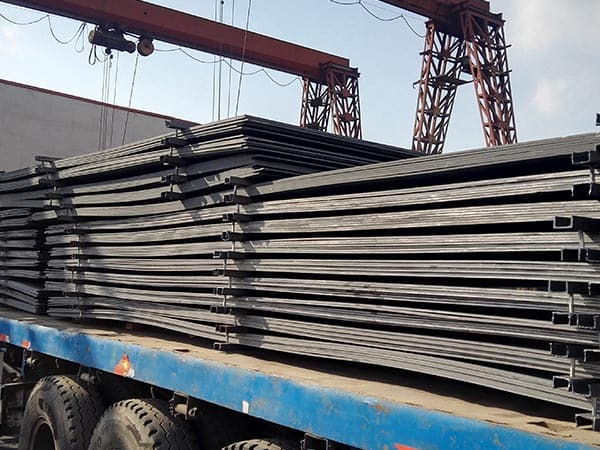
The Technical Superiority of S355MS Hot Rolled Plates
S355MS is a thermomechanically rolled weldable fine-grain structural steel that adheres to the EN 10025-4 standard. Unlike standard structural steels, the 'M' designation signifies its delivery condition—thermomechanically rolled—while the 'S' indicates that the material has undergone specific impact testing at temperatures as low as -50°C. This makes it an indispensable material for the demanding environments found across the African continent, particularly in heavy mining and offshore infrastructure.
The thermomechanical rolling process (TMCP) is a sophisticated metallurgical technique that involves strict control of the temperature and deformation during rolling. This results in a fine-grained microstructure that offers a unique combination of high yield strength and exceptional toughness, even at sub-zero temperatures. For engineers and fabricators in South Africa, S355MS provides a distinct advantage: it allows for weight reduction in structural designs without compromising safety or durability.
Core Chemical Composition and Weldability Factors
The chemical composition of S355MS is meticulously balanced to ensure superior weldability. One of the primary benefits of TMCP steel is its low Carbon Equivalent Value (CEV). A lower CEV significantly reduces the risk of cold cracking in the heat-affected zone (HAZ) during welding, often eliminating the need for expensive and time-consuming pre-heating processes.
| Element | Max % (Ladle Analysis) |
|---|---|
| Carbon (C) | 0.14 |
| Silicon (Si) | 0.50 |
| Manganese (Mn) | 1.60 |
| Phosphorus (P) | 0.030 |
| Sulfur (S) | 0.025 |
| Niobium (Nb) | 0.05 |
| Vanadium (V) | 0.10 |
By maintaining low levels of sulfur and phosphorus, S355MS exhibits excellent internal cleanliness. This cleanliness is vital for preventing lamellar tearing in T-joints and corner joints, which are common in heavy-duty structural steelwork. The addition of micro-alloying elements like Niobium and Vanadium facilitates the fine-grain structure, providing the necessary strength without the brittleness associated with higher carbon content.
Mechanical Properties and Environmental Adaptability
In the South African context, where infrastructure must withstand both the intense heat of the interior and the corrosive, humid conditions of the coastal regions, the mechanical stability of S355MS is paramount. The yield strength of 355 MPa (for thicknesses ≤ 16mm) remains consistent, providing a reliable baseline for structural calculations.
| Property | Value (Thickness ≤ 16mm) |
|---|---|
| Minimum Yield Strength (ReH) | 355 MPa |
| Tensile Strength (Rm) | 470 - 630 MPa |
| Minimum Elongation (A%) | 22% |
| Impact Energy (-50°C) | Min 27 Joules |
The impact energy requirement of 27J at -50°C ensures that the steel will not undergo brittle fracture in extreme conditions. While South Africa rarely experiences -50°C, this specification serves as a proxy for the material's overall toughness and resistance to crack propagation, which is critical for equipment subjected to dynamic loading, such as mining excavators and heavy-duty cranes.
Top Eight S355MS Supply Sources and Mills in South Africa
The South African steel market is unique; while there is one primary integrated producer of hot rolled plates, the ecosystem relies heavily on tier-1 service centers and distributors that provide mill-certified S355MS. These entities act as the primary supply nodes for the industry.
- 1. ArcelorMittal South Africa (AMSA): As the largest steel producer on the continent, AMSA’s Vanderbijlpark Works is the primary source for hot rolled structural plates. They produce a wide range of EN 10025 grades, including thermomechanically rolled variants that meet S355 specifications.
- 2. Macsteel Service Centres SA: Macsteel is the dominant distributor in the region. They maintain extensive stock of S355MS and provide advanced processing services like laser cutting, plasma cutting, and bending, functioning as a vital link between the mill and the end-user.
- 3. NJR Steel: With a massive footprint across South Africa, NJR Steel is a key supplier for structural projects. They focus on high-volume availability of S355 grades, ensuring that regional construction and mining projects have immediate access to certified plate.
- 4. Allied Steelrode: Known for their high-tech processing capabilities, Allied Steelrode offers stretcher-leveled plates. This is particularly important for S355MS, as it ensures the plate remains flat after laser cutting, which is a common requirement for precision engineering.
- 5. Trident Steel: Part of the wider industrial supply chain, Trident Steel specializes in high-quality plate products for the automotive and heavy engineering sectors, often stocking specialized grades like S355MS for demanding applications.
- 6. Stewarts & Lloyds: A household name in the South African engineering sector, they provide a comprehensive range of structural steels. Their distribution network is essential for reaching smaller-scale fabricators who require S355MS for specialized components.
- 7. Garsan Steel: This player focuses on the heavy structural market, providing large-format plates and specialized cutting services. They are a go-to source for the heavy-duty mining equipment sector in the Gauteng region.
- 8. BSI Steel: Operating across the SADC region, BSI Steel provides critical supply chain support for S355MS plates. Their expertise in logistics makes them a primary partner for infrastructure projects outside of the major metropolitan hubs.
Strategic Applications in the South African Industry
The adoption of S355MS in South Africa is driven by the need for high-performance materials in the mining sector. Equipment such as draglines, conveyor systems, and underground support structures benefit from the high strength-to-weight ratio. By using S355MS, manufacturers can design lighter components that carry higher payloads, directly impacting the operational efficiency of mines.
In the renewable energy sector, specifically wind tower construction, S355MS is highly valued. The base sections of wind towers require thick plates with excellent weldability and fatigue resistance. The TMCP process ensures that these massive structures can withstand the constant dynamic stresses of wind loads over a 20-to-25-year lifespan.
The maritime and offshore industry along the coastlines of Cape Town and Durban also utilizes S355MS for ship repair and offshore platform components. The low-temperature toughness is a safety requirement for vessels operating in the Southern Ocean, where cold water and harsh weather conditions are the norm.
Fabrication and Processing Insights
Processing S355MS requires an understanding of its metallurgical history. Because it is a TMCP steel, it should not be heated above certain temperatures (typically 580°C) for extended periods, as this can lead to a loss of strength and toughness. For this reason, hot forming is generally not recommended; instead, cold forming should be utilized.
When it comes to cutting, S355MS responds exceptionally well to modern thermal cutting techniques. Laser cutting and high-definition plasma cutting produce clean edges with a minimal heat-affected zone. Because of the low carbon content, the edges do not harden significantly, making subsequent machining or welding much easier compared to standard carbon steels.
Welding S355MS is straightforward using standard processes like GMAW (MIG/MAG), GTAW (TIG), or SAW (Submerged Arc Welding). The use of low-hydrogen consumables is recommended to maintain the integrity of the fine-grain structure. Since the material is designed for high toughness, the choice of filler metal should match or exceed the impact properties of the base metal to ensure the entire structure performs uniformly under load.
Optimizing Longevity Through Surface Treatment
While S355MS provides structural integrity, environmental factors in South Africa—such as high UV exposure and salt-laden air—necessitate robust surface protection. Hot-dip galvanizing is a popular choice for S355MS structural members. The silicon content in S355MS is typically controlled to ensure a high-quality galvanized coating that adheres well and provides decades of corrosion resistance.
For machinery and equipment, high-performance epoxy coating systems are often applied. The fine-grain surface of S355MS, when properly grit-blasted to a Sa 2.5 finish, provides an excellent profile for coating adhesion. This synergy between metallurgical quality and surface protection ensures that the steel remains functional throughout its intended service life, even in the most aggressive industrial environments.
Leave a message