
s355mc material properties material spec
Explore the in-depth S355MC material properties, including chemical composition, mechanical strength, and cold-forming capabilities. This guide covers EN 10149-2 specifications for industrial applications.
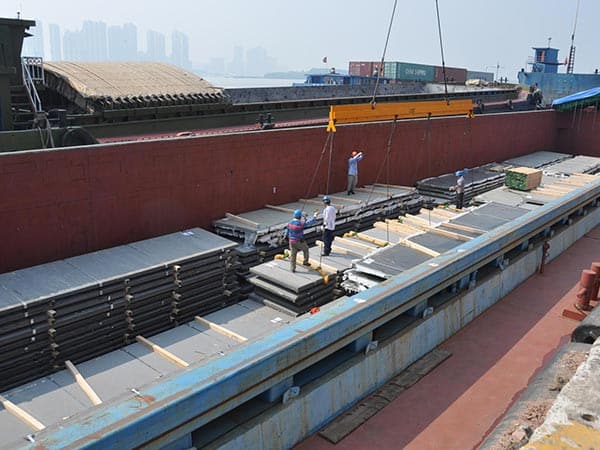
Introduction to S355MC High-Strength Steel
S355MC is a high-yield-strength, hot-rolled steel specifically designed for cold-forming applications. Governed by the EN 10149-2 standard, this material belongs to the family of high-strength low-alloy (HSLA) steels. The 'S' denotes structural steel, '355' represents the minimum yield strength in megapascals (MPa), and 'MC' indicates that the material is thermomechanically rolled (M) and suitable for cold forming (C).
Engineers and manufacturers favor S355MC because it offers a unique balance of high strength, excellent weldability, and superior formability. Unlike traditional structural steels, S355MC undergoes a specialized thermomechanical rolling process that refines its grain structure, resulting in enhanced toughness and weight-saving potential for complex structural components.
Chemical Composition and Metallurgical Design
The performance of S355MC is rooted in its precise chemical makeup. By maintaining low carbon levels and utilizing micro-alloying elements, the material achieves high strength without sacrificing ductility or weldability. Elements like Niobium (Nb), Vanadium (V), and Titanium (Ti) are strategically added to facilitate grain refinement during the rolling process.
| Element | Maximum Content (%) |
|---|---|
| Carbon (C) | 0.12 |
| Manganese (Mn) | 1.50 |
| Silicon (Si) | 0.50 |
| Phosphorus (P) | 0.025 |
| Sulfur (S) | 0.020 |
| Aluminum (Al) | 0.015 |
| Niobium (Nb) | 0.09 |
| Vanadium (V) | 0.20 |
| Titanium (Ti) | 0.15 |
The low carbon equivalent (CEV) is a critical factor for S355MC. It ensures that the steel remains highly weldable using standard industrial methods without the need for extensive preheating. The addition of micro-alloys creates a fine-grained ferritic-pearlitic microstructure, which is the secret behind its high yield-to-tensile ratio.
Mechanical Properties and Strength Metrics
The mechanical properties of S355MC are defined by its ability to withstand significant loads while remaining flexible enough for bending and folding. The thermomechanical rolling process (TMCP) ensures that these properties are consistent throughout the entire coil or plate.
| Property | Value (Thickness ≤ 16mm) |
|---|---|
| Yield Strength (ReH) | Min. 355 MPa |
| Tensile Strength (Rm) | 430 - 550 MPa |
| Elongation (A80mm) | Min. 19% (thickness < 3mm) |
| Elongation (A5) | Min. 23% (thickness ≥ 3mm) |
One of the standout features of S355MC is its impact toughness. While the EN 10149-2 standard does not always mandate impact testing for all sub-grades, S355MC is typically capable of maintaining its integrity at low temperatures, making it suitable for equipment operating in diverse climates. The high yield strength allows designers to use thinner sections of steel compared to standard S235 or S355J2 grades, leading to significant weight reduction in the final product.
Cold Forming and Fabrication Excellence
S355MC is engineered for the workshop. Its 'C' designation highlights its suitability for cold-forming processes such as bending, flanging, and cold-rolling. Because the steel is so ductile, it can be bent to tight radii without cracking, provided the correct tooling and techniques are applied.
- Bending Radius: For a 90-degree bend, the minimum recommended internal bending radius is typically 0.5 to 1.5 times the material thickness, depending on the orientation (transverse vs. longitudinal).
- Laser Cutting: The low impurity levels and consistent surface finish make S355MC an ideal candidate for high-speed laser and plasma cutting. It produces clean edges with minimal dross.
- Weldability: S355MC can be welded using all conventional methods, including MIG/MAG, TIG, and submerged arc welding. The low carbon content prevents the formation of brittle martensite in the heat-affected zone (HAZ).
Manufacturers often choose S355MC for complex chassis components or structural brackets where intricate shapes are required. The material flows well in stamping dies, reducing wear on the tooling compared to harder, more abrasive alloys.
S355MC vs. S355J2: Key Differences
A common point of confusion is the difference between S355MC and S355J2 (EN 10025-2). While both share a minimum yield strength of 355 MPa, they are intended for different manufacturing paths. S355J2 is a standard structural steel often used in heavy plates and sections where welding and toughness are primary concerns, but cold formability is secondary.
S355MC, however, is produced via thermomechanical rolling, which results in a much finer grain structure than the normalized or as-rolled S355J2. This makes S355MC significantly better for cold forming and bending. Additionally, S355MC is generally available in thinner gauges (coils and sheets), whereas S355J2 is the standard for heavy structural beams and thick plates.
Environmental Adaptation and Durability
While S355MC is not a specialized weathering steel like Corten, its chemical purity provides a reliable base for various protective coatings. In environments where corrosion is a concern, S355MC responds exceptionally well to hot-dip galvanizing and industrial painting systems.
The fine-grained structure also provides better resistance to fatigue compared to coarser-grained steels. This is vital for components subjected to cyclic loading, such as truck frames, crane arms, and agricultural machinery. The material's ability to absorb energy during impact makes it a preferred choice for safety-critical components in the automotive and transport sectors.
Strategic Applications Across Industries
The versatility of S355MC makes it a staple in modern engineering. Its high strength-to-weight ratio is a key driver for its adoption in sectors looking to improve efficiency and reduce carbon footprints through lightweighting.
- Automotive and Transport: Used extensively for truck chassis, cross members, and suspension parts where weight reduction directly impacts fuel efficiency and payload capacity.
- Construction and Infrastructure: Ideal for cold-formed sections, purlins, and structural brackets that require high load-bearing capacity without excessive bulk.
- Lifting and Handling: Telescopic booms for cranes and forklift components benefit from the material's high yield strength and reliable weldability.
- Agriculture: Plow frames, trailer chassis, and harvesting equipment utilize S355MC for its durability in harsh, abrasive environments.
By integrating S355MC into their designs, companies can reduce material costs by using thinner sheets while maintaining or even increasing the structural integrity of their products. This efficiency is why S355MC remains one of the most widely specified HSLA steels in the global market.
Technical Summary for Specifiers
When specifying S355MC, it is essential to reference the EN 10149-2 standard to ensure the material meets the required chemical and mechanical benchmarks. Proper storage is also recommended to prevent surface oxidation, as the material is typically supplied in a pickled and oiled or dry condition. Understanding the grain direction is crucial for bending operations, as bending transverse to the rolling direction generally allows for tighter radii.
Choosing S355MC is a strategic decision that prioritizes manufacturing efficiency and product longevity. Its consistent performance under the press and in the welding booth ensures that production lines remain productive and that the end-users receive a robust, high-performance product.
Leave a message