
What is the BBNSteel S315MC cold forming autobobile steel for boom inventory
Explore the comprehensive properties of BBNSteel S315MC steel. Learn about its mechanical strength, chemical composition, cold forming capabilities, and its critical role in automotive boom inventory and structural engineering.
Understanding the Essence of BBNSteel S315MC in Modern Engineering
BBNSteel S315MC is a high-yield strength, thermomechanically rolled steel specifically engineered for cold forming applications. Governed by the EN 10149-2 standard, this material represents a significant leap from traditional carbon steels, offering a unique combination of strength, ductility, and weldability. The "S" prefix denotes its classification as a structural steel, while "315" indicates its minimum yield strength of 315 MPa. The "MC" suffix highlights its production process—thermomechanical rolling (M) and its suitability for cold forming (C). This steel grade has become a cornerstone in the automotive and heavy machinery industries, particularly where weight reduction and structural reliability are paramount.
The demand for S315MC in boom inventory arises from the need for materials that can withstand significant stress while remaining light enough to enhance the efficiency of mobile equipment. Unlike standard structural steels, S315MC undergoes a controlled rolling process that refines its grain structure, resulting in superior toughness and fatigue resistance. This makes it an ideal candidate for components that experience cyclic loading and harsh operational environments.
Chemical Composition: The Science of Micro-Alloying
The exceptional performance of BBNSteel S315MC is rooted in its precise chemical makeup. By utilizing micro-alloying elements, manufacturers can achieve high strength without the brittleness often associated with high-carbon steels. The carbon content is kept strictly low, typically below 0.12%, which is the primary factor behind its excellent weldability and cold-forming properties.
| Element | Maximum Content (%) |
|---|---|
| Carbon (C) | 0.12 |
| Manganese (Mn) | 1.30 |
| Silicon (Si) | 0.50 |
| Phosphorus (P) | 0.025 |
| Sulfur (S) | 0.020 |
| Aluminium (Al) | 0.015 (min) |
| Niobium (Nb) | 0.09 |
| Vanadium (V) | 0.20 |
| Titanium (Ti) | 0.15 |
The inclusion of Niobium (Nb), Vanadium (V), and Titanium (Ti) facilitates grain refinement during the thermomechanical rolling process. These elements form fine precipitates that pin grain boundaries, preventing grain growth and ensuring a fine-grained ferritic-pearlitic structure. This microscopic architecture is what allows S315MC to maintain high yield strength while remaining highly formable.
Mechanical Properties and Structural Integrity
The mechanical profile of S315MC is optimized for structural efficiency. With a minimum yield strength of 315 MPa and a tensile strength ranging between 390 and 510 MPa, it provides a robust framework for automotive chassis, truck frames, and boom structures. One of its most critical attributes is its elongation capacity, which typically exceeds 20% (for thicknesses less than 3mm), ensuring that the material can absorb energy and deform plastically before failure.
- Yield Strength: Min 315 MPa, providing a high safety margin for load-bearing structures.
- Tensile Strength: 390-510 MPa, ensuring the material can withstand high stress during operation.
- Elongation: High ductility allows for complex shapes to be formed without cracking.
- Impact Toughness: Excellent performance even at lower temperatures, making it suitable for global logistics and outdoor operations.
These properties allow engineers to use thinner sections of S315MC compared to traditional S235 or S275 steels without compromising the structural integrity of the final product. This "down-gauging" is essential for reducing the overall weight of vehicles, which directly translates to improved fuel efficiency and increased payload capacity.
Cold Forming and Processing Capabilities
The "C" in S315MC signifies its exceptional suitability for cold forming. This includes processes such as bending, flanging, and cold drawing. Because of its fine grain structure and low carbon content, the steel exhibits minimal springback and a high resistance to edge cracking during intense forming operations. This is particularly important for boom inventory, where complex geometries and tight radii are often required to optimize the mechanical advantage of the lifting arm.
When processing BBNSteel S315MC, it is vital to consider the minimum bending radius. For a plate thickness (t), the recommended inner bending radius is typically 0.25t to 0.5t for longitudinal bending and slightly higher for transverse bending. This flexibility allows manufacturers to design more aerodynamic and ergonomically efficient components for the automotive sector. Furthermore, the steel's surface quality is maintained during forming, reducing the need for extensive post-processing or grinding.
Weldability and Joining Technologies
In the construction of booms and automotive frames, welding is the primary joining method. S315MC is designed to be easily weldable using all standard methods, including MIG/MAG, TIG, and submerged arc welding. Its low carbon equivalent (CEV) ensures that the heat-affected zone (HAZ) does not become excessively brittle, which is a common failure point in higher-carbon structural steels.
To maintain the integrity of the thermomechanically rolled structure, it is recommended to control the heat input during welding. Excessive heat can lead to grain coarsening in the HAZ, slightly reducing the local yield strength. However, when following standard welding procedures, the joints produced with S315MC exhibit excellent fatigue resistance and load-bearing capacity, matching the performance of the base metal. This reliability is why S315MC is a preferred choice for boom inventory that requires long-term durability under dynamic stress.
Applications in Boom Inventory and Heavy Transport
The term "boom inventory" refers to the stock of materials used for the telescopic or articulated arms of cranes, concrete pumps, and aerial work platforms. While ultra-high-strength steels like S700MC are used for the most extreme lifting requirements, S315MC serves as the vital structural backbone for lighter-duty booms, support structures, and cross-members. Its balance of cost and performance makes it indispensable for high-volume automotive production.
In the automotive sector, S315MC is extensively used for:
- Chassis Frames: Providing the necessary stiffness while allowing for energy absorption during impacts.
- Cross Members: Linking main frame rails to provide torsional rigidity.
- Cold Pressed Parts: Such as brackets, hinges, and reinforcements that require high precision and strength.
- Lifting Equipment: Small-scale hydraulic booms and stabilizers for utility vehicles.
Environmental Adaptation and Sustainability
Modern engineering is increasingly focused on the environmental footprint of materials. BBNSteel S315MC contributes to sustainability through weight reduction. By enabling the design of lighter vehicles, it helps reduce CO2 emissions and fuel consumption throughout the vehicle's lifecycle. Additionally, as a micro-alloyed steel, it is fully recyclable. At the end of its service life, S315MC components can be melted down and repurposed without loss of quality, supporting a circular economy in the steel and automotive industries.
The material's resistance to atmospheric corrosion can be further enhanced through modern coating technologies. Whether it is galvanizing, powder coating, or specialized painting, the surface of S315MC provides an excellent substrate for protective layers, ensuring that boom structures remain operational for decades even in corrosive coastal or industrial environments.
Optimizing Inventory Management for S315MC
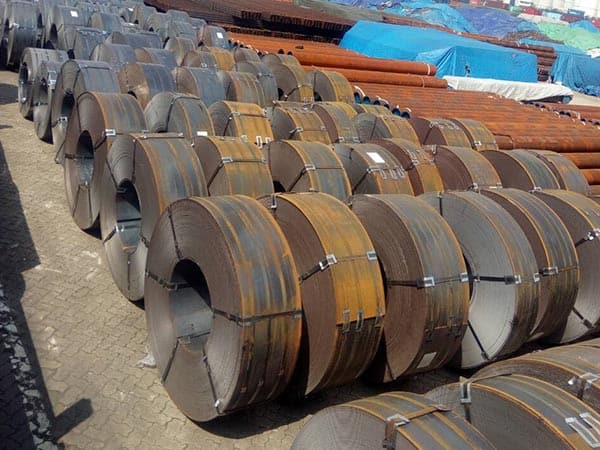
Maintaining a consistent inventory of S315MC requires an understanding of its shelf life and storage requirements. Although it is a robust material, it should be stored in a dry environment to prevent surface oxidation (rust), which can interfere with subsequent welding or painting processes. BBNSteel ensures that S315MC is delivered with precise dimensional tolerances and superior flatness, which simplifies automated processing in modern smart factories.
For manufacturers, having S315MC in their boom inventory means they have a versatile material that can be adapted to various designs without the need for specialized tooling. Its predictable behavior during forming and welding reduces scrap rates and increases production throughput, making it a commercially viable choice for competitive global markets.
Leave a message