
What are the requirements for welding thick carbon plate S355MC for auto frame
Explore the technical requirements for welding thick S355MC carbon plates in automotive frames, covering material properties, welding processes, and quality control.
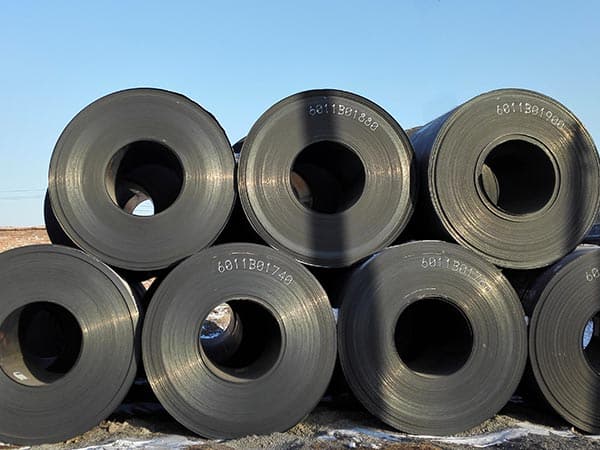
Technical Profile of S355MC High-Strength Low-Alloy Steel
S355MC is a thermomechanically rolled high-strength low-alloy (HSLA) steel specifically designed for cold forming. Governed by the EN 10149-2 standard, this material is a staple in the automotive industry, particularly for manufacturing truck chassis, longitudinal beams, and complex structural components. Its popularity stems from a delicate balance between high yield strength and exceptional ductility. When dealing with thick plates—typically defined as those exceeding 6mm in the context of automotive framing—the welding requirements become significantly more stringent to ensure structural integrity under dynamic loading conditions.
The 'MC' suffix indicates that the steel is thermomechanically treated, which results in a fine-grained microstructure. This microstructural refinement is achieved through controlled rolling and cooling processes at the mill. Unlike traditional carbon steels, S355MC relies on micro-alloying elements like niobium (Nb), vanadium (V), and titanium (Ti) rather than high carbon content to achieve its strength. This characteristic is the cornerstone of its superior weldability, as it maintains a low Carbon Equivalent Value (CEV), reducing the risk of cold cracking.
Chemical Composition and Carbon Equivalent Considerations
Understanding the chemistry of S355MC is vital for establishing a successful welding procedure specification (WPS). The low carbon content is intentionally maintained to enhance weldability and formability. Below is the typical chemical composition for S355MC according to EN 10149-2:
| Element | Max % (by mass) |
|---|---|
| Carbon (C) | 0.12 |
| Manganese (Mn) | 1.50 |
| Silicon (Si) | 0.50 |
| Phosphorus (P) | 0.025 |
| Sulfur (S) | 0.020 |
| Aluminum (Al) | 0.015 |
For thick plates, the Carbon Equivalent Value (CEV) is a critical metric. It is calculated using the formula: CEV = C + Mn/6 + (Cr+Mo+V)/5 + (Ni+Cu)/15. For S355MC, the CEV is usually below 0.35. This low value suggests that preheating is often unnecessary for thinner sections; however, for thick plates (e.g., 8mm to 12mm used in heavy-duty frames), a modest preheat might be required to manage the cooling rate and prevent hydrogen-induced cracking, especially in high-restraint joints.
Mechanical Properties and Impact on Structural Integrity
The mechanical performance of S355MC ensures that the automotive frame can withstand both static loads and the fatigue stresses encountered during vehicle operation. The welding process must be carefully managed to ensure that the weld metal and the heat-affected zone (HAZ) do not fall below the base metal's minimum specifications.
| Property | Requirement (Thickness ≤ 16mm) |
|---|---|
| Yield Strength (ReH) | Min 355 MPa |
| Tensile Strength (Rm) | 430 - 550 MPa |
| Elongation (A5) | Min 19% |
One of the primary challenges when welding thick S355MC plates is HAZ softening. Because the strength of S355MC is derived from thermomechanical processing and micro-alloying, excessive heat input during welding can cause grain growth in the HAZ, leading to a localized reduction in yield strength. To mitigate this, welding parameters must be optimized to keep the heat input within a specific range, typically between 0.5 kJ/mm and 1.5 kJ/mm, depending on the thickness and joint geometry.
Welding Process Selection for Automotive Frames
The choice of welding process significantly influences the quality of the joint in thick S355MC plates. In modern automotive manufacturing, productivity must be balanced with metallurgical precision.
- Gas Metal Arc Welding (GMAW/MAG): This is the most common process for S355MC. Using an Ar-CO2 shielding gas mixture (e.g., M21) provides a stable arc and good penetration. For thick plates, pulsed-arc or spray-transfer modes are preferred to ensure deep fusion and minimize spatter.
- Laser-Hybrid Welding: For high-volume production, laser-hybrid welding combines the deep penetration of a laser with the gap-bridging capability of MAG. This process results in a very narrow HAZ, which is ideal for maintaining the mechanical properties of HSLA steels like S355MC.
- Submerged Arc Welding (SAW): Occasionally used for long, straight longitudinal beams in heavy truck frames. SAW offers high deposition rates but requires careful control of heat input to prevent excessive grain coarsening in thick sections.
Filler Metal Requirements and Compatibility
Selecting the correct filler metal is essential to ensure the weld is "matching" or "slightly over-matching" the base metal's strength. For S355MC, filler metals classified under AWS A5.18 ER70S-6 or EN ISO 14341-A G 38/G 42 are standard choices. These consumables provide a yield strength exceeding 400 MPa, ensuring the joint is not the weakest link in the frame.
When welding thick plates, the diffusion of hydrogen into the weld pool must be minimized. Using high-quality, clean welding wires and ensuring the shielding gas is free of moisture is paramount. If using flux-cored wires (FCAW), basic-type fluxes are often preferred for thick sections due to their superior toughness and low hydrogen potential.
Critical Requirements for Joint Preparation and Fit-up
Thick plates require meticulous edge preparation to ensure full penetration and to avoid defects like lack of fusion or slag inclusions. For S355MC plates thicker than 6mm, a single-V or double-V groove preparation is typically employed. The included angle should be between 60° and 70° to allow for proper torch manipulation.
Cleanliness: The welding edges must be cleaned of mill scale, oil, rust, and moisture. Since S355MC is often used in a "black" (as-rolled) condition, the mill scale—which is a thick layer of iron oxide—can interfere with arc stability and lead to porosity. Mechanical grinding of the edges to a bright metal finish is a non-negotiable requirement for high-quality automotive welds.
Tack Welding: Tack welds should be performed by qualified welders using the same consumables as the final weld. In thick plates, tack welds must be of sufficient length and thickness to resist the thermal stresses of the main welding pass. They should be inspected for cracks and either ground to a taper or completely removed if they show any signs of defects.
Thermal Management: Preheating and Interpass Temperature
While S355MC is resistant to cold cracking, the thickness of the plate acts as a heat sink, increasing the cooling rate (t8/5 time). If the cooling rate is too fast, the formation of hard martensite in the HAZ can occur, leading to embrittlement. Conversely, if the cooling rate is too slow (due to high interpass temperatures), grain growth will soften the HAZ.
For thick S355MC plates (above 10mm), a preheat of 50°C to 100°C is often recommended to remove moisture and slow the initial cooling rate. The interpass temperature should be strictly controlled and generally kept below 200°C to preserve the fine-grained structure of the thermomechanically rolled steel. Monitoring these temperatures with infrared thermometers or Tempilstiks is a standard quality control requirement.
Quality Control and Non-Destructive Testing (NDT)
Automotive frames are safety-critical components, necessitating rigorous post-weld inspection. The requirements for S355MC thick plate welds usually include:
- Visual Inspection (VT): Checking for surface defects such as undercut, porosity, and weld profile irregularities.
- Magnetic Particle Inspection (MPI): Highly effective for detecting surface and near-surface cracks that might be invisible to the naked eye.
- Ultrasonic Testing (UT): Essential for thick plates to ensure full penetration and to detect internal flaws like slag inclusions or lack of side-wall fusion.
- Macro-etch Testing: During the welding procedure qualification (WPQ), cross-sections of the weld are etched to examine the grain structure, HAZ width, and penetration depth.
Adhering to these requirements ensures that S355MC, despite its high-strength characteristics, performs reliably in the demanding environment of automotive chassis and frames. The integration of proper material handling, precise thermal control, and rigorous inspection protocols forms the foundation of modern automotive welding excellence.
Leave a message