
steel for truck chassis assemblies yield reached the leading level in China
Explore the breakthrough in China's high-strength truck chassis steel, featuring yield strengths reaching leading global levels. Learn about mechanical properties, processing, and applications.
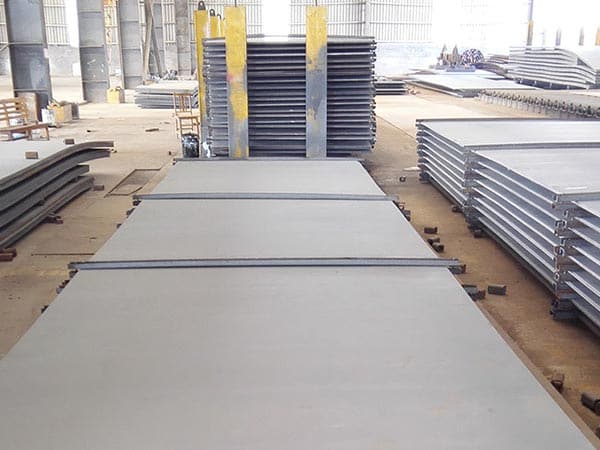
The Paradigm Shift in Truck Chassis Engineering and Material Selection
The global logistics and transportation sector is currently navigating a period of intense structural optimization. For heavy-duty trucks, the chassis serves as the backbone, bearing the weight of the cargo, the engine, and the cabin while enduring dynamic stresses from uneven road surfaces. Traditionally, the industry relied on standard structural steels, but the demand for higher payloads and reduced fuel consumption has catalyzed the development of advanced high-strength steels (AHSS). China's steel industry has successfully bridged the gap, producing chassis steel with yield strengths that rival and often exceed international benchmarks.
The transition from conventional Q345B grades to high-performance materials like S700MC and even S900MC represents a significant leap in metallurgical engineering. This shift is not merely about increasing the hardness of the metal; it involves a sophisticated balance of yield strength, ductility, and fatigue resistance. By reaching the leading level in China, these materials allow manufacturers to reduce the thickness of chassis rails by up to 30% without compromising structural integrity, a process commonly referred to as lightweighting.
Mechanical Superiority: Beyond the Yield Strength Metric
While yield strength is the headline figure, the true value of modern truck chassis steel lies in its comprehensive mechanical profile. Leading Chinese manufacturers now produce steel with yield strengths ranging from 700 MPa to 1100 MPa. However, a high yield point is useless if the material is brittle. The latest generation of chassis steel maintains an elongation rate of over 12-15%, ensuring that the frame can absorb energy during impacts or extreme loading conditions without catastrophic failure.
Fatigue life is another critical attribute. A truck chassis is subjected to millions of cyclic loads over its lifespan. Modern Chinese chassis steel undergoes rigorous fatigue testing, demonstrating superior resistance to crack initiation and propagation. This is achieved through refined grain structures and the elimination of non-metallic inclusions during the vacuum degassing and continuous casting processes. The result is a material that ensures the vehicle remains operational for over a million kilometers under harsh conditions.
| Steel Grade | Yield Strength (MPa) | Tensile Strength (MPa) | Elongation (%) | Typical Application |
|---|---|---|---|---|
| QSTE500TM | ≥ 500 | 550 - 700 | ≥ 14 | Light-duty truck frames |
| S700MC | ≥ 700 | 750 - 950 | ≥ 12 | Heavy-duty longitudinal beams |
| S900MC | ≥ 900 | 930 - 1200 | ≥ 10 | Specialized heavy haulers |
Metallurgical Innovation and Micro-Alloying Techniques
The achievement of leading yield levels in China is rooted in advanced Thermo-Mechanical Controlled Processing (TMCP). This technique involves precise control over the heating, rolling, and cooling cycles. By carefully managing the temperature at which the steel is deformed, engineers can produce an extremely fine grain size, often in the sub-micron range. Fine-grain strengthening is the only mechanism that increases both strength and toughness simultaneously.
Micro-alloying plays a pivotal role. The addition of trace amounts of Niobium (Nb), Vanadium (V), and Titanium (Ti) facilitates the formation of carbonitride precipitates. These precipitates pin the grain boundaries during the rolling process, preventing grain growth and ensuring a uniform microstructure across the entire width and length of the steel coil. Furthermore, the low carbon equivalent (Ceq) of these steels ensures that they remain weldable, a crucial factor for mass production in automotive assembly lines.
Processing Performance: Weldability and Cold Formability
High-strength steel is notoriously difficult to process due to its inherent stiffness and tendency for springback. However, the leading chassis steels developed in China are optimized for cold forming. They exhibit excellent bendability, allowing for the complex shapes required for modern chassis cross-members and brackets. Manufacturers can achieve tight bending radii without the risk of surface cracking, thanks to the high purity and uniform texture of the steel.
Welding is the primary joining method in chassis assembly. High-strength steels often suffer from softening in the Heat-Affected Zone (HAZ). To combat this, Chinese steel experts have optimized the chemical composition to minimize the loss of strength during welding. Whether using Metal Active Gas (MAG) welding or advanced laser welding techniques, the resulting joints maintain a high percentage of the base metal's strength, ensuring the overall safety of the truck frame.
- Minimized Springback: Advanced leveling and tensioning during production ensure flat sheets that behave predictably during stamping.
- Superior Surface Quality: Pickled and oiled (P&O) finishes provide a clean surface for high-quality welding and painting.
- Consistent Hardness: Narrow tolerances in hardness across the coil prevent tool wear and ensure uniform part dimensions.
Environmental Adaptability and Corrosion Resistance
Trucks operate in diverse environments, from the humid coastal regions to the freezing temperatures of northern climates. The environmental adaptability of chassis steel is therefore paramount. Modern Chinese grades are designed with enhanced low-temperature toughness, often tested at -40°C or even -60°C to ensure they do not become brittle in arctic conditions. This is vital for the safety of vehicles operating in high-latitude regions.
Corrosion is the silent enemy of the truck chassis. While most frames are painted or galvanized, the base metal must also offer some inherent resistance. The inclusion of copper or chromium in specific weather-resistant grades (Corten-style) provides an additional layer of protection. Furthermore, the smooth surface finish of high-strength steel reduces the number of sites where moisture and road salts can accumulate, thereby extending the service life of the protective coatings and the steel itself.
Expanding Industry Applications and Future Trends
The reach of high-strength chassis steel extends beyond the standard long-haul truck. We are seeing increased adoption in the specialized vehicle market, including concrete mixers, dump trucks, and tankers. In these applications, the weight savings achieved through high-yield steel directly translate into increased payload capacity, providing a clear economic advantage for fleet operators. For instance, a dump truck using S700MC can often carry an additional ton of material compared to a traditional steel counterpart.
Looking forward, the push for electric trucks (EVs) is creating new challenges. Battery packs add significant weight to the vehicle, making lightweight chassis even more critical to maintain a viable range. The next frontier in China's steel development involves the commercialization of 1100 MPa and 1200 MPa grades that maintain the ductility required for automotive safety standards. These ultra-high-strength steels will likely incorporate even more sophisticated quenching and partitioning (Q&P) processes to push the boundaries of what is metallurgically possible.
The strategic focus on high-performance materials has positioned Chinese steel as a cornerstone of the global automotive supply chain. By mastering the balance between extreme strength and practical processability, these steels are not just meeting current demands but are actively shaping the future of sustainable and efficient transportation. The integration of digital manufacturing and real-time quality monitoring further ensures that every batch of steel meets the stringent requirements of the modern truck assembly line.
Leave a message