
What is the DD14 steel for cold forming automobile available size
Explore the comprehensive guide on DD14 steel for automotive cold forming. Learn about its mechanical properties, chemical composition, and available size ranges for manufacturing.
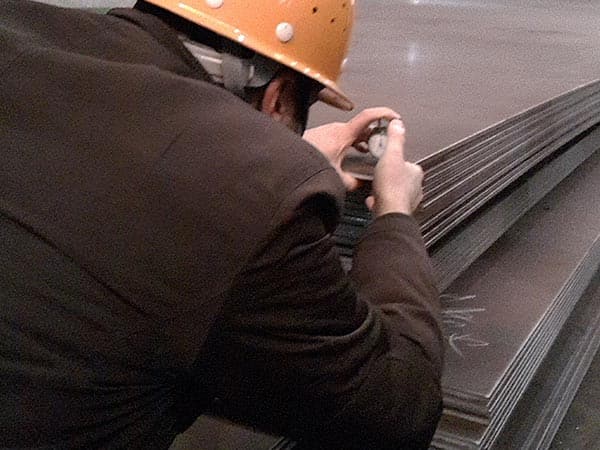
Understanding the Fundamentals of DD14 Steel in Automotive Engineering
DD14 steel represents the highest grade of hot-rolled low-carbon steel specifically designed for cold forming and deep drawing according to the EN 10111 standard. Unlike standard structural steels, DD14 is engineered with a focus on extreme ductility and consistent mechanical behavior, making it an indispensable material for complex automotive components. The "DD" prefix signifies its suitability for drawing, while the number "14" indicates its superior forming capabilities compared to its predecessors like DD11, DD12, and DD13. For automotive manufacturers, selecting DD14 is often a strategic decision to reduce scrap rates during high-speed stamping processes.
The Chemical Composition and Its Impact on Formability
The exceptional performance of DD14 is rooted in its precise chemical makeup. To achieve the necessary level of softness and elongation, the carbon content is kept strictly low. Typically, DD14 contains a maximum of 0.08% carbon, which minimizes the formation of hard carbides that could impede the flow of the metal during deep drawing. Manganese levels are balanced to ensure sufficient strength without sacrificing ductility, while phosphorus and sulfur are minimized to prevent brittleness and improve surface quality. This chemical purity allows the material to undergo severe deformation without cracking, which is critical for safety-related automotive parts.
| Element | Maximum Content (%) |
|---|---|
| Carbon (C) | 0.08 |
| Manganese (Mn) | 0.35 |
| Phosphorus (P) | 0.025 |
| Sulfur (S) | 0.020 |
Mechanical Properties: The Backbone of Cold Forming
The primary reason DD14 is favored for automotive applications is its low yield strength and high elongation. For thicknesses less than 2mm, the yield strength typically ranges between 170 and 290 MPa, ensuring that the material begins to deform permanently under relatively low pressure, reducing tool wear. The tensile strength is maintained between 270 and 350 MPa. However, the most impressive metric is the elongation (A80mm), which can exceed 38% for certain gauges. This high percentage of stretchability allows for the creation of intricate shapes like oil pans, seat frames, and complex chassis reinforcements without the risk of necking or failure.
Available Size Ranges for DD14 Steel Products
Automotive supply chains require a diverse array of dimensions to accommodate different stamping press capacities and part designs. DD14 is primarily supplied in hot-rolled coils, slit strips, and cut-to-length sheets. The thickness range is particularly broad, typically spanning from 1.0mm to 12.0mm. While the thinner gauges (1.2mm to 3.0mm) are most common for interior structural parts, thicker plates are utilized for heavy-duty brackets and suspension components. Widths generally range from 900mm to 1500mm, though specialized mills can produce widths up to 2000mm for large-scale body-in-white components. Tolerance levels usually adhere to EN 10051, ensuring that the thickness consistency remains within microns across the entire coil length.
Surface Quality and Pickled & Oiled (P&O) Options
Because DD14 is a hot-rolled product, it naturally develops a mill scale during the cooling process. For automotive applications where surface finish or subsequent welding is critical, DD14 is almost always supplied in a Pickled and Oiled (P&O) condition. The pickling process uses acid to remove the dark oxide layer, leaving a clean, silver-grey surface. The application of oil prevents flash rusting during transport and storage. This surface treatment is vital for automated welding lines and ensures that the stamping dies are not damaged by abrasive scale particles, thereby extending the lifecycle of expensive tooling.
Expanding Applications: Beyond Basic Stamping
While often associated with deep drawing, the versatility of DD14 extends to various advanced manufacturing techniques. In the production of pulleys and gear housings, DD14 exhibits excellent weldability due to its low carbon equivalent. It can be joined using MIG, TIG, or laser welding without the need for pre-heating. Furthermore, its uniform microstructure makes it an ideal candidate for fine blanking and roll forming. Automotive designers utilize DD14 for components that require a high degree of energy absorption during a collision, as its high ductility allows the part to deform and dissipate kinetic energy effectively, enhancing passenger safety.
Environmental Adaptability and Processing Performance
DD14 steel demonstrates remarkable stability across various processing environments. It is not prone to significant aging effects, meaning its mechanical properties remain stable even if the material is stored for several months before use. This is a significant advantage over some cold-rolled grades that might experience nitrogen-induced hardening. Additionally, the material's response to surface coatings such as zinc plating or e-coating is excellent. The clean surface of the P&O variant ensures strong adhesion of protective layers, which is essential for parts exposed to the under-car environment where road salt and moisture are prevalent.
Strategic Procurement: Choosing the Right Specifications
When sourcing DD14, it is imperative to specify the required edge condition—either mill edge or slit edge—as this impacts the nesting efficiency during the blanking stage. Furthermore, for high-precision automotive lines, requesting restricted thickness tolerances can significantly improve the consistency of the final part geometry. Understanding the relationship between the rolling direction and the primary strain direction of the part can also optimize the use of DD14's anisotropic properties. By aligning the maximum stretch with the material's optimal elongation axis, manufacturers can push the boundaries of what is possible in cold forming technology.
- Grade: DD14 (EN 10111)
- Thickness: 1.0mm - 12.0mm
- Width: 600mm - 2000mm
- Condition: Black, Pickled & Oiled
- Form: Coils, Sheets, Slit Strips
Leave a message