
What is the automotive industry used steel S355MC available size
Explore the comprehensive guide on S355MC steel available sizes, mechanical properties, and automotive applications. Learn why this thermomechanically rolled steel is essential for vehicle lightweighting and structural integrity.
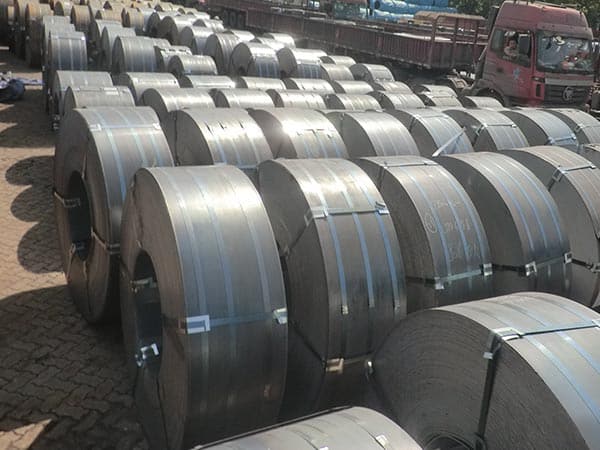
Understanding S355MC in the Modern Automotive Landscape
S355MC is a high-yield strength, thermomechanically rolled steel specifically designed for cold forming. Governed by the EN 10149-2 standard, this material has become a cornerstone in the automotive industry due to its exceptional balance of weight reduction and structural durability. Unlike traditional hot-rolled steels, S355MC undergoes a controlled rolling process that refines its grain structure, providing superior toughness and weldability. For automotive engineers, the primary question often revolves around the S355MC available size and how these dimensions can be integrated into complex vehicle architectures such as chassis frames, longitudinal beams, and suspension components.
Comprehensive S355MC Available Size and Dimensional Range
The versatility of S355MC is reflected in its broad range of available dimensions. Manufacturers typically supply this grade in hot-rolled strips, which are then processed into coils or cut-to-length sheets. The available size varies depending on the mill's capabilities, but the industry standard generally follows the parameters below:
| Product Form | Thickness Range (mm) | Width Range (mm) | Length Range (mm) |
|---|---|---|---|
| Hot Rolled Coils | 1.5 – 20.0 | 900 – 2000 | N/A (Coil form) |
| Cut-to-Length Sheets | 2.0 – 15.0 | 1000 – 1800 | 2000 – 12000 |
| Slit Strips | 1.5 – 12.0 | 20 – 900 | N/A (Coil form) |
For specialized automotive applications, such as heavy-duty truck frames, thicknesses of 6mm, 8mm, and 10mm are most common. Conversely, for lighter passenger vehicle components like seat frames or bumper reinforcements, thicknesses between 2mm and 4mm are frequently utilized. It is important to note that the width availability often peaks at 1500mm for most standard mills, though specialized producers can reach up to 2000mm to accommodate large-scale structural pressings.
Chemical Composition and Grain Refinement
The exceptional performance of S355MC is rooted in its chemical makeup. By utilizing micro-alloying elements such as Niobium (Nb), Titanium (Ti), and Vanadium (V), the steel achieves high strength without the need for excessive carbon. This low carbon content is critical for maintaining excellent weldability and preventing brittleness in the heat-affected zone (HAZ).
- Carbon (C): Max 0.12% – Ensures superior weldability and ductility.
- Manganese (Mn): Max 1.50% – Increases strength and hardness.
- Silicon (Si): Max 0.50% – Acts as a deoxidizer and improves yield strength.
- Phosphorus (P) & Sulfur (S): Kept at extremely low levels (Max 0.025% and 0.020%) to ensure internal purity and prevent cracking.
- Aluminium (Al): Min 0.015% – Used for grain size control.
Mechanical Properties and Cold Forming Capabilities
The "MC" designation in S355MC stands for Thermomechanically Rolled (M) and Cold Forming (C). This indicates that the steel is specifically optimized for bending, flanging, and folding. In the automotive sector, where components often feature complex geometries, the minimum yield strength of 355 MPa provides the necessary safety margins while allowing for thinner gauges compared to standard S235 or S275 grades.
| Property | Value (Thickness ≤ 16mm) |
|---|---|
| Yield Strength (ReH) | Min 355 MPa |
| Tensile Strength (Rm) | 430 – 550 MPa |
| Elongation (A80mm) | Min 19% (for t < 3mm) |
| Elongation (A5) | Min 23% (for t ≥ 3mm) |
One of the most critical aspects for automotive manufacturers is the bending radius. S355MC allows for very tight bends without surface cracking. For thicknesses less than 3mm, the recommended internal bending radius is 0.5 times the thickness (0.5t). For thicknesses between 3mm and 6mm, a radius of 1.0t is typically sufficient. This high degree of formability allows for the creation of lightweight, rigid structures that can absorb energy effectively during a collision.
Processing Advantages: Laser Cutting and Welding
Beyond its physical dimensions, the processing behavior of S355MC makes it a favorite in automated production lines. The thermomechanical rolling process results in low internal stresses. When laser cutting S355MC sheets, the material remains flat and stable, which is vital for high-precision automotive parts. Traditional hot-rolled plates often suffer from warping during thermal cutting, but S355MC maintains its dimensional integrity.
From a welding perspective, the low carbon equivalent (CEV) of S355MC permits the use of standard welding techniques such as MAG (Metal Active Gas), MIG (Metal Inert Gas), and Laser Beam Welding. No preheating is required for standard thicknesses, significantly reducing production cycle times. The fine-grained structure ensures that the welded joints retain high fatigue resistance, a mandatory requirement for chassis components subjected to constant vibration and cyclic loading.
Expanding Automotive Industry Applications
The strategic use of S355MC extends across various vehicle segments. In the commercial vehicle sector, it is the primary material for truck chassis side rails and cross members. The high strength-to-weight ratio allows truck manufacturers to increase payload capacity by reducing the dead weight of the vehicle frame. In passenger cars, S355MC is found in hidden structural elements where high energy absorption is required, such as bumper brackets, door reinforcements, and seat rails.
Furthermore, the agricultural and construction machinery industries—often considered extensions of the automotive manufacturing ecosystem—rely on S355MC for crane arms, trailer frames, and telescopic booms. The material's ability to withstand low temperatures (often tested for impact strength at -20°C or -40°C upon request) makes it suitable for vehicles operating in harsh environments.
Environmental Adaptability and Sustainability
As the automotive industry shifts toward electrification and stricter emission standards, weight reduction has become a top priority. Using S355MC instead of conventional structural steel allows for a thickness reduction of approximately 15-25% while maintaining the same load-bearing capacity. This directly translates to lower fuel consumption in internal combustion engines and extended range for electric vehicles (EVs). Additionally, S355MC is fully recyclable, fitting perfectly into the circular economy models adopted by modern OEMs.
Strategic Procurement: Ensuring Quality and Tolerance
When sourcing S355MC, understanding dimensional tolerances is as important as the available size. Most automotive grades are supplied according to EN 10051, which specifies tight tolerances on thickness, width, and flatness. For automated stamping and robotic welding, precision is non-negotiable. Procurement teams should also specify the surface condition; S355MC is typically supplied in a pickled and oiled (P&O) state to remove mill scale, providing a clean surface for subsequent painting or galvanizing.
Selecting the right size and specification requires a deep understanding of the final application's stress points. By leveraging the high yield strength and excellent cold-forming properties of S355MC, engineers can push the boundaries of vehicle design, ensuring safety, efficiency, and performance in an increasingly demanding global market.
Leave a message