
How long will automobile frame steel S355MC last not rust outside?
Detailed analysis of S355MC steel corrosion resistance in outdoor environments, covering mechanical properties, environmental factors, and protection methods for automobile frames.
The Nature of S355MC Steel in Outdoor Environments
When discussing the longevity of automobile frames, S355MC steel stands out as a primary material choice due to its high yield strength and excellent cold-forming properties. However, a critical question for engineers and fleet managers remains: how long can this material withstand the elements before rust begins to compromise its structural integrity? To answer this, we must first understand that S355MC, governed by the EN 10149-2 standard, is a thermomechanically rolled low-alloy steel. Unlike stainless steel or weathering steel (like Corten), S355MC is designed for strength and formability rather than inherent corrosion resistance.
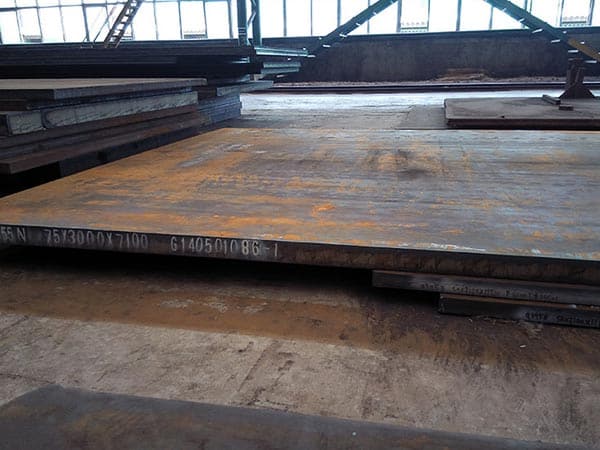
Without any surface treatment, S355MC steel exposed to an outdoor environment will begin to show signs of surface oxidation—commonly known as flash rust—within a matter of days or even hours if the humidity is high. The lack of significant alloying elements like chromium or nickel means that the iron in the steel reacts readily with oxygen and moisture to form iron oxide. This process is progressive; once the initial layer of rust forms, it is porous and tends to trap moisture, which accelerates the corrosion of the underlying metal.
Chemical Composition and Its Impact on Oxidation
The chemical makeup of S355MC is optimized for weldability and toughness. By examining its typical composition, we can see why it behaves the way it does in the open air.
| Element | Maximum Content (%) | Influence on Corrosion |
|---|---|---|
| Carbon (C) | 0.12 | Maintains weldability but offers no rust protection. |
| Manganese (Mn) | 1.50 | Increases strength; neutral impact on atmospheric corrosion. |
| Silicon (Si) | 0.50 | Deoxidizer; minimal impact on rust prevention. |
| Phosphorus (P) | 0.025 | Low levels prevent brittleness but don't stop oxidation. |
| Sulfur (S) | 0.020 | Kept low to ensure toughness and surface quality. |
As shown, the alloy focuses on structural performance. The low carbon content is excellent for preventing cracks during the complex bending required for truck chassis and frames, but it leaves the iron matrix vulnerable to atmospheric attack. In a dry, indoor warehouse, S355MC might remain clean for several months. However, once moved to an outdoor yard, the "no-rust" period drops significantly.
Mechanical Integrity vs. Surface Appearance
It is important to distinguish between aesthetic rust and structural failure. S355MC is prized for its minimum yield strength of 355 MPa. In the early stages of outdoor exposure, the rust is merely a surface phenomenon. This reddish-brown layer does not immediately reduce the load-bearing capacity of an automobile frame. For a typical frame thickness of 4mm to 8mm, surface rust might take several years to penetrate deep enough to cause a measurable loss in tensile strength.
However, for the automotive industry, surface rust is unacceptable. It can hide fatigue cracks, interfere with moving parts, and create a negative perception of quality. More importantly, in the presence of road salts (chlorides), the corrosion rate of S355MC increases exponentially. Chlorides act as catalysts, breaking down any semi-protective oxide layers and leading to pitting corrosion, which can create localized weak points in the frame.
Environmental Variables Affecting S355MC Longevity
The lifespan of an unprotected S355MC frame varies wildly based on geography:
- Arid/Desert Climates: In environments with less than 30% relative humidity, S355MC can remain relatively rust-free for weeks or months. The lack of an electrolyte (water) prevents the electrochemical reaction of rusting.
- Industrial Areas: Presence of sulfur dioxide (SO2) from factories combines with rain to form mild acids, which strip away the steel's surface and accelerate metal loss.
- Coastal Regions: Salt spray is the greatest enemy of S355MC. The high concentration of sodium chloride can cause visible rust within 24 to 48 hours of exposure.
- Tropical/Humid Climates: Constant moisture ensures that the steel surface is always wet, leading to a continuous corrosion cycle.
Processing Performance and Corrosion Resistance
S355MC is frequently chosen for its cold-forming capabilities. When a sheet of S355MC is bent to form a U-shaped truck side rail, the outer radius of the bend undergoes significant tensile stress. This stress can create micro-fissures in the mill scale (the dark oxide layer formed during rolling). These fissures are often the first sites where rust begins to take hold. Similarly, welding zones are highly susceptible. The heat-affected zone (HAZ) alters the microstructure slightly, and if the welding slag is not properly removed, it can trap moisture and accelerate localized rotting.
Extending the Life of S355MC Frames
Since S355MC will rust quickly when left bare, the industry employs several strategies to ensure the frame lasts the 15 to 20-year expected lifespan of a commercial vehicle. The duration it lasts "not rusting" is effectively the duration of its coating's integrity.
- Cathodic Electrodeposition (KTL/E-coat): This is the gold standard for automobile frames. The frame is submerged in a paint bath, and an electric current ensures 100% coverage, even in recessed areas. An E-coated S355MC frame can withstand hundreds of hours of salt spray testing.
- Hot-Dip Galvanizing: For heavy-duty trailers or specialized vehicles, S355MC is often galvanized. The zinc layer provides sacrificial protection; even if the coating is scratched, the zinc corrodes instead of the steel. This can extend the rust-free life to 30+ years.
- Powder Coating: Provides a thick, durable barrier against physical abrasion and moisture, though it can be prone to under-film corrosion if the surface wasn't pre-treated with zinc phosphate.
- Wax and Underbody Sprays: Often used as a secondary defense, these petroleum-based products displace water and provide a renewable barrier for S355MC components.
Technical Specifications for Reference
To provide a clear picture of the material's strength profile, which must be protected from corrosion, see the table below:
| Property | Value (Metric) | Importance for Frames |
|---|---|---|
| Yield Strength (ReH) | Min 355 MPa | Ensures the frame returns to shape after loading. |
| Tensile Strength (Rm) | 430 - 550 MPa | The ultimate breaking point of the material. |
| Elongation (A5) | Min 19% (t < 3mm) | Allows for complex stamping without cracking. |
| Impact Strength | 27J at -20°C (Optional) | Critical for cold-weather durability and safety. |
While S355MC offers the mechanical muscle needed for modern transport, its chemical simplicity means it relies entirely on external protection to fight rust. If left outside in a raw state, you can expect a change in color within days and a change in surface texture within months. For any application where the steel must remain pristine, immediate post-processing treatment is not just recommended; it is a structural necessity.
Engineers must consider the synergy between the steel grade and the coating system. Choosing S355MC allows for a lighter, stronger frame, but that weight saving is only valuable if the frame is not thinned by oxidation over time. By utilizing advanced painting and galvanizing techniques, the excellent properties of S355MC can be preserved for the entire service life of the vehicle, regardless of the harshness of the outdoor environment.
Leave a message