
Whether s355ms hot rolled automotive steel need preheating
A technical guide on the preheating requirements of S355MS hot rolled automotive steel, covering chemical composition, mechanical properties, and welding best practices.
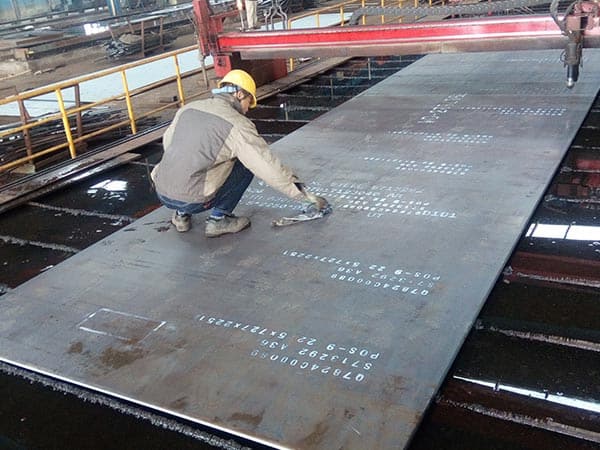
Understanding S355MS: The Metallurgy of Thermomechanically Rolled Steel
S355MS is a high-strength, low-alloy (HSLA) structural steel specifically designed for demanding environments, particularly within the automotive and heavy machinery sectors. The designation "S" identifies it as a structural steel, "355" refers to its minimum yield strength of 355 MPa, and "M" signifies that the steel has been thermomechanically rolled. The "S" at the end indicates its specific impact testing at -20°C. Unlike traditional normalized steels, S355MS achieves its superior mechanical properties through a precise combination of chemical composition and controlled rolling temperatures. This process results in a fine-grained microstructure that offers an exceptional balance of strength, toughness, and weldability.
In the context of automotive engineering, where weight reduction and structural integrity are paramount, S355MS is a preferred choice for chassis components, longitudinal beams, and cross members. However, a recurring question among fabrication engineers is whether this material requires preheating during the welding process. To answer this, we must examine the carbon equivalent (CEV) and the specific metallurgical response of thermomechanically rolled steels to thermal cycles.
Chemical Composition and Carbon Equivalent (CEV)
The weldability of any steel grade is primarily dictated by its chemical makeup. S355MS is characterized by a very low carbon content and the strategic addition of micro-alloying elements like Niobium (Nb), Vanadium (V), and Titanium (Ti). These elements facilitate grain refinement without significantly increasing the hardness of the heat-affected zone (HAZ).
| Element | C (max %) | Si (max %) | Mn (max %) | P (max %) | S (max %) | Al (min %) | CEV (typ %) |
|---|---|---|---|---|---|---|---|
| S355MS Value | 0.14 | 0.50 | 1.60 | 0.025 | 0.020 | 0.020 | 0.34 - 0.38 |
The Carbon Equivalent (CEV) is the standard metric used to assess the risk of cold cracking (hydrogen-induced cracking). For S355MS, the CEV typically ranges between 0.34% and 0.38%. Generally, steels with a CEV below 0.40% are considered to have excellent weldability and rarely require preheating under standard workshop conditions. This low CEV is a direct result of the thermomechanical rolling process, which allows the steel to reach high strength levels without the high carbon content found in older steel grades.
Mechanical Properties and Their Impact on Processing
The mechanical performance of S355MS is not just about strength; it is about how the material behaves under stress and during fabrication. The fine-grain structure ensures that the steel remains ductile even at low temperatures, which is critical for automotive safety components.
| Property | Yield Strength (MPa) | Tensile Strength (MPa) | Elongation (%) | Impact Energy (-20°C) |
|---|---|---|---|---|
| S355MS Specification | ≥ 355 | 470 - 630 | ≥ 22 | ≥ 40J |
Because S355MS maintains high ductility, the internal stresses generated during welding are less likely to lead to immediate fracture. However, the high yield strength means that the material can store significant elastic energy, which must be managed through proper welding sequences to prevent distortion.
Does S355MS Need Preheating? The Technical Verdict
The short answer is: Under most standard automotive manufacturing conditions, S355MS does not require preheating. However, this is not a universal rule. The necessity for preheating is determined by a combination of factors: material thickness, ambient temperature, hydrogen content of the welding consumables, and the degree of structural restraint.
- Material Thickness: For S355MS plates or sections with a thickness of less than 20mm, preheating is almost never required if the ambient temperature is above 5°C. For thicknesses between 20mm and 40mm, preheating might only be necessary if the joint is under extreme restraint or if low-hydrogen practices are not strictly followed.
- Ambient Temperature: If the fabrication occurs in an environment where the steel temperature is below 5°C, a modest preheat (around 50°C to 80°C) is recommended. This is not to change the metallurgy, but rather to drive off surface moisture which could introduce hydrogen into the weld pool.
- Hydrogen Control: The use of low-hydrogen welding processes (such as GMAW/MIG or submerged arc welding with high-quality flux) significantly reduces the risk of cold cracking. If these processes are used, the need for preheating S355MS is virtually eliminated.
- Heat Input: Since S355MS is a thermomechanically rolled steel, excessive heat input can actually be detrimental. High heat input can lead to grain growth in the HAZ, reducing the toughness and yield strength of the joint. Therefore, maintaining a moderate interpass temperature (usually below 200°C) is more critical than preheating.
Welding Performance and Best Practices
When welding S355MS for automotive applications, the focus should be on maintaining the integrity of the fine-grained structure. Metal Active Gas (MAG) welding is the most common process used. It offers a good balance of productivity and control over heat input. Using a shielding gas mixture of Argon and CO2 helps in achieving stable arc characteristics and deep penetration without overheating the base metal.
One specific advantage of S355MS is its resistance to hardening in the HAZ. Even without preheating, the peak hardness in the HAZ typically remains well below 350 HV, which is the standard threshold for avoiding brittle structures. This makes it an exceptionally forgiving material for high-speed automated welding lines used in truck frame assembly.
Cold Forming and Environmental Adaptability
Beyond welding, S355MS is prized for its cold-forming capabilities. Automotive manufacturers often need to bend and shape thick plates into complex chassis geometries. The thermomechanical rolling process ensures that the steel has uniform properties in both the longitudinal and transverse directions. This isotropy allows for tight bending radii without the risk of surface cracking or delamination.
In terms of environmental adaptability, the "S" rating for impact toughness at -20°C ensures that automotive structures remain safe in cold climates. Unlike standard s355jr steel, which is only rated for room temperature impact, S355MS provides a safety buffer against brittle fracture in winter conditions. This makes it ideal for global vehicle platforms that operate in diverse geographical regions.
Industry Applications and Engineering Value
The application of S355MS extends beyond simple structural frames. It is increasingly found in the manufacturing of mobile cranes, transport trailers, and agricultural equipment. In these industries, the ability to weld without extensive preheating protocols translates directly into lower energy costs and faster production cycles.
For automotive designers, using S355MS allows for the optimization of section thickness. By utilizing the 355 MPa yield strength effectively, engineers can reduce the weight of a vehicle's structural skeleton by 15-20% compared to traditional S235 grades, directly contributing to fuel efficiency and increased payload capacity. The lack of a preheating requirement further simplifies the assembly line, allowing for seamless integration into robotic welding cells.
Managing the Heat-Affected Zone (HAZ)
While preheating is often unnecessary, monitoring the cooling rate (often expressed as the t8/5 time) is vital. If the weld cools too slowly due to excessive heat input, the fine grains in the HAZ may coalesce, leading to a localized drop in strength. Conversely, if the weld cools too quickly (which might happen on very thick plates without preheat), there is a slight risk of martensite formation, though the low carbon content of S355MS makes this risk much lower than in traditional carbon steels.
Practitioners should aim for a cooling time (t8/5) between 5 and 25 seconds. This range ensures that the HAZ retains a microstructure that closely matches the parent metal's toughness and strength. In most automotive applications involving 4mm to 12mm thickness, this cooling rate is achieved naturally without any special thermal intervention.
Final Technical Considerations
When evaluating S355MS for a new project, always consult the material test report (MTR) to verify the actual CEV of the heat. While the standard allows up to 0.39% for thicker sections, many modern mills produce S355MS with a CEV as low as 0.32%. At these levels, the steel is essentially immune to cold cracking under normal conditions. Ensuring that the steel surface is free from oil, rust, and moisture remains the most effective way to guarantee weld quality, far outweighing the benefits of unnecessary preheating.
By focusing on controlled heat input and high-quality consumables, manufacturers can fully leverage the benefits of S355MS, producing lightweight, durable, and safe automotive components with maximum efficiency. The metallurgical sophistication of thermomechanically rolled steel effectively removes the traditional barriers associated with high-strength steel fabrication.
Leave a message