
China s355mc steel us equivalent prices continue to decline
A detailed technical guide on S355MC steel and its US equivalents like ASTM A1011. Explore mechanical properties, processing advantages, and the reasons behind the current price decline.
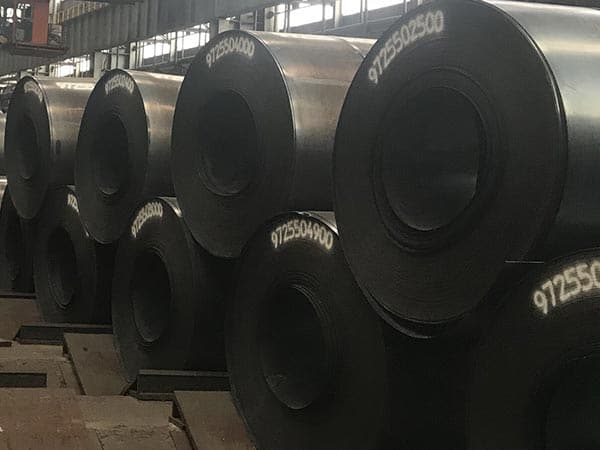
Decoding the S355MC Specification and Its Global Equivalents
The global steel market is currently witnessing a significant shift in the pricing structure of high-strength low-alloy (HSLA) steels. Specifically, China S355MC steel US equivalent prices have shown a persistent downward trend. To understand this movement, one must first grasp what S355MC represents. Defined under the European standard EN 10149-2, S355MC is a hot-rolled, high-yield-strength steel designed for cold forming. The 'S' denotes structural steel, '355' refers to the minimum yield strength of 355 MPa, and 'MC' indicates that the material is thermomechanically rolled (M) and suitable for cold forming (C).
In the United States, engineers and procurement specialists often look for equivalents under the ASTM or SAE frameworks. The most common US equivalent is ASTM A1011 HSLAS Grade 50 Class 1 or ASTM A1018 for thicker sections. Another comparable grade is SAE J1392 050XL. While these standards are not identical, they share the common goal of providing high strength with excellent ductility, allowing for significant weight reduction in structural components without compromising safety.
The Chemistry of Performance: Micro-alloying Elements
The superior properties of S355MC and its US counterparts are not accidental. They are the result of precise chemical engineering. Unlike traditional carbon steels, S355MC utilizes thermomechanical control processing (TMCP) combined with micro-alloying. Elements such as Niobium (Nb), Vanadium (V), and Titanium (Ti) are added in minute quantities to refine the grain structure.
Fine-grain refinement is the only strengthening mechanism that simultaneously improves both strength and toughness. By preventing grain growth during the rolling process, manufacturers ensure that the steel remains ductile even at low temperatures. This is a critical factor for the North American market, where equipment often operates in sub-zero environments. The low carbon content (typically below 0.12%) ensures that the material maintains exceptional weldability, a primary concern for automotive and heavy machinery fabricators.
| Element | S355MC (EN 10149-2) Max % | ASTM A1011 HSLAS-F Gr 50 Max % |
|---|---|---|
| Carbon (C) | 0.12 | 0.15 |
| Manganese (Mn) | 1.50 | 1.35 |
| Silicon (Si) | 0.50 | - |
| Phosphorus (P) | 0.025 | 0.020 |
| Sulfur (S) | 0.020 | 0.020 |
| Niobium (Nb) | 0.09 | 0.005 min |
Mechanical Properties and Cold Forming Capabilities
The hallmark of S355MC is its balance between yield strength and elongation. For structural components that require bending or flanging, the cold-forming properties are paramount. S355MC allows for tight bend radii, which is essential for manufacturing complex chassis parts and crane booms. The minimum yield strength of 355 MPa (approx. 51.5 ksi) provides a substantial upgrade over standard A36 or S235JR steels, allowing designers to use thinner gauges to achieve the same structural integrity.
When comparing this to the US equivalent, ASTM A1011 Grade 50, the mechanical profiles are remarkably similar. However, S355MC often boasts tighter tolerances on thickness and flatness due to the advanced TMCP lines used by major Chinese mills. This consistency is a driving force for US importers who are looking to optimize their automated laser cutting and robotic welding lines. The declining prices of these Chinese imports make them an increasingly attractive proposition for high-volume manufacturers.
Why Prices are Declining: Market Dynamics and Supply Chain Factors
Several factors contribute to the current decline in China S355MC steel US equivalent prices. First, there is a global surplus in hot-rolled coil (HRC) production capacity. Chinese mills, having optimized their production efficiency, are producing high-quality HSLA steels at lower marginal costs. This increased supply, coupled with a cooling of the domestic Chinese construction sector, has pushed mills to seek export markets aggressively.
Secondly, fluctuations in raw material costs, particularly iron ore and coking coal, have provided some relief to production overheads. Furthermore, the strengthening of the US dollar against the Yuan has effectively lowered the landed cost for American buyers, even when accounting for logistics and potential tariffs. This price erosion is forcing domestic US mills to reconsider their pricing strategies for HSLAS Grade 50, creating a highly competitive environment that benefits the end-user.
Advanced Processing: Welding and Surface Treatment
From a fabrication perspective, S355MC is highly regarded for its weldability. Because the strength is derived from grain refinement rather than high carbon or alloy content, the carbon equivalent (CEV) remains low. This minimizes the risk of cold cracking in the heat-affected zone (HAZ). Whether using MIG, TIG, or submerged arc welding, S355MC performs predictably, requiring little to no pre-heating in standard thicknesses.
- Excellent Laser Cutting: The low silicon content and controlled surface scale make it ideal for high-speed fiber laser cutting, resulting in clean edges and minimal dross.
- Surface Quality: S355MC is often supplied in a pickled and oiled (P&O) condition, providing a clean surface that is ready for painting or galvanizing without extensive shot blasting.
- Fatigue Resistance: The fine-grained microstructure contributes to superior fatigue life, making it the preferred choice for dynamic loads in transport applications.
Expanding Industry Applications
The utility of S355MC and its equivalents extends far beyond basic construction. In the automotive sector, it is used for truck frames, cross members, and suspension parts where weight reduction is critical for fuel efficiency and payload capacity. The ability to form complex shapes without cracking allows for integrated designs that reduce the number of individual parts and welds.
In the renewable energy sector, specifically solar tracking systems, S355MC is becoming the standard. The high strength-to-weight ratio allows for longer spans of torque tubes and support rails, reducing the total amount of steel required per megawatt of installed capacity. Similarly, in the logistics and warehousing industry, high-strength racking systems utilize these grades to support heavier loads while maintaining a slim profile to maximize storage space. The current price decline is accelerating the adoption of S355MC in these burgeoning industries, as the cost-benefit analysis becomes increasingly lopsided in favor of high-strength steel over traditional mild steel.
Environmental Adaptability and Sustainability
Modern industrial standards demand materials that can withstand diverse environmental stresses. S355MC exhibits good atmospheric corrosion resistance compared to standard carbon steel, although it is not "weathering steel" like Corten. When galvanized, its chemistry promotes a uniform zinc coating, providing decades of protection in outdoor environments. Furthermore, the move toward S355MC is a move toward sustainability. By using higher-strength steel, companies can reduce the total mass of steel consumed in a project. This leads to lower CO2 emissions during both the manufacturing phase and the transportation of the finished goods.
Strategic Procurement in a Volatile Market
For businesses tracking China S355MC steel US equivalent prices, the current downward trend presents a strategic window. However, procurement is not just about the lowest price per ton. It involves verifying the Mill Test Certificate (MTC) to ensure compliance with EN 10149-2 or ASTM A1011 standards. Buyers should look for consistency in yield-to-tensile ratios and elongation values. As prices decline, the focus should shift toward securing long-term supply contracts with mills that demonstrate stable quality control and reliable shipping schedules. Understanding the technical parity between S355MC and US equivalents allows for more flexible sourcing strategies, ensuring that production lines remain efficient regardless of geopolitical shifts.
Leave a message