
Is s355mc what does mc stand for or Q235B steel stronger?
A detailed technical comparison between S355MC and Q235B steel. Discover what the MC suffix means, compare yield strengths, chemical compositions, and industrial applications.
The Core Question: Comparing the Strength of S355MC and Q235B
When evaluating structural materials for engineering projects, the choice between European standard high-strength steel like S355MC and Chinese standard carbon structural steel like Q235B is common. To answer the primary question: S355MC is significantly stronger than Q235B. The numerical value in the grade name represents the minimum yield strength in Megapascals (MPa). S355MC offers a minimum yield strength of 355 MPa, while Q235B provides 235 MPa. This represents a strength increase of approximately 51%, allowing for thinner sections to carry the same load, which is a critical factor in modern lightweight design.
However, strength is only one part of the equation. Understanding why S355MC is stronger requires a deep dive into its metallurgical processing and the specific meaning behind its nomenclature. While Q235B is a reliable workhorse for general construction, S355MC belongs to a class of high-strength low-alloy (HSLA) steels designed for more demanding mechanical environments.
Decoding the S355MC Nomenclature: What Does MC Stand For?
The designation S355MC follows the EN 10149-2 standard. Each character provides specific information about the steel's properties and manufacturing process:
- S: Stands for 'Structural', indicating the steel is intended for load-bearing applications.
- 355: Represents the minimum yield strength of 355 MPa for thicknesses less than or equal to 16mm.
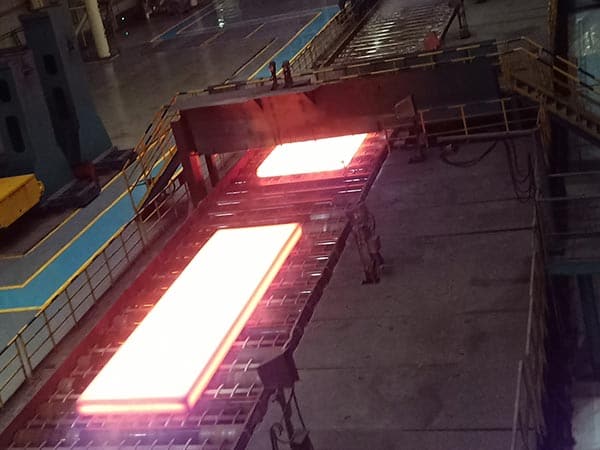
- M: Refers to Thermomechanically Rolled (TMCP). This is a specialized rolling process that involves precise temperature control and deformation rates. Unlike traditional hot rolling, TMCP refines the grain structure of the steel, significantly increasing both strength and toughness without the need for excessive alloying elements.
- C: Indicates that the steel is suitable for Cold Forming. This means the material can be bent, flanged, or folded at room temperature without developing cracks, making it ideal for complex structural components.
In contrast, Q235B follows the GB/T 700 standard. 'Q' stands for 'Qu' (Yield), '235' is the yield strength, and 'B' represents the quality grade, specifically indicating that the steel undergoes impact testing at 20°C. Q235B is typically hot-rolled and does not undergo the sophisticated grain refinement processes seen in S355MC.
Technical Data Comparison: Mechanical Properties
To visualize the gap between these two materials, consider the following comparison of their primary mechanical characteristics. The data highlights why S355MC is preferred for high-stress applications.
| Property | S355MC (EN 10149-2) | Q235B (GB/T 700) |
|---|---|---|
| Minimum Yield Strength (MPa) | 355 | 235 |
| Tensile Strength (MPa) | 430 - 550 | 370 - 500 |
| Elongation (%) | ≥ 19 (for t < 3mm) | ≥ 25 (for t ≤ 16mm) |
| Impact Energy (Charpy V-Notch) | 40J at -20°C (typical) | 27J at +20°C |
| Primary Manufacturing Process | Thermomechanical Rolling | Standard Hot Rolling |
The table clearly shows that S355MC not only provides higher yield and tensile strength but also maintains excellent performance at lower temperatures. The impact energy rating for S355MC is often specified at sub-zero temperatures, whereas Q235B is only guaranteed at room temperature (20°C).
Chemical Composition and Weldability
The strength of S355MC is achieved through a 'micro-alloying' strategy rather than high carbon content. By keeping the carbon content low and adding trace amounts of Niobium (Nb), Vanadium (V), or Titanium (Ti), manufacturers can achieve high strength while maintaining superb weldability. Q235B, being a simple carbon steel, relies more on carbon and manganese for its strength, which can lead to a higher Carbon Equivalent (CEV).
A lower CEV in S355MC means it is less prone to cold cracking during welding. This is a massive advantage in industrial fabrication, as it often eliminates the need for pre-heating, even when welding thicker plates. For automated welding processes used in automotive or heavy machinery manufacturing, the consistency of S355MC's chemical profile ensures repeatable, high-quality joints.
Processing Performance: Bending and Cold Forming
The 'C' in S355MC is not just a label; it represents a fundamental capability. Because of its fine-grained structure, S355MC can be bent to very tight radii. For a plate of thickness 't', S355MC can often be bent at a radius of 0.5t to 1.5t depending on the orientation and thickness. Q235B, while ductile, does not have the same level of grain refinement and may exhibit 'orange peel' effects or micro-cracking when subjected to extreme cold forming or tight-radius bending.
This makes S355MC the superior choice for components like U-beams, C-channels, and complex brackets used in vehicle chassis. The ability to form high-strength parts from a single sheet reduces the need for welding multiple components together, further enhancing structural integrity.
Economic Advantages of Using Higher Strength Steel
At first glance, Q235B may seem more cost-effective due to its lower price per ton. However, a professional engineering perspective considers the 'total cost of ownership' and 'weight-to-strength ratio'. Because S355MC is 50% stronger, engineers can reduce the thickness of structural members by 20% to 30% while maintaining the same safety factor.
Weight Reduction: In the transportation industry, using S355MC instead of Q235B reduces the deadweight of trailers and trucks. This leads to higher payloads and improved fuel efficiency. Material Savings: Using thinner plates means purchasing fewer tons of steel, which often offsets the higher price per ton of S355MC. Logistics and Fabrication: Thinner sections are easier to cut (laser or plasma), faster to weld, and cheaper to transport.
Application Scenarios for S355MC and Q235B
Choosing between these two grades depends on the specific requirements of the environment and the mechanical load. Q235B is perfectly adequate for general civil engineering, such as building frames, low-stress support structures, and simple hardware where weight is not a primary concern. It is the go-to material for projects where budget is the driving factor and the mechanical demands are relatively static.
S355MC is preferred in dynamic environments, including:
- Automotive Industry: Chassis frames, cross members, and structural reinforcements where high energy absorption and low weight are critical.
- Heavy Machinery: Crane booms, excavator arms, and agricultural equipment that face high cyclic loading and require fatigue resistance.
- Cold-Pressed Parts: Any component requiring complex geometry through pressing or folding.
- Cold Climates: Structures exposed to low temperatures where the brittleness of standard carbon steel could lead to catastrophic failure.
Environmental Adaptability and Fatigue Resistance
S355MC's thermomechanical processing creates a very homogeneous microstructure. This homogeneity is key to its superior fatigue resistance. In machinery that vibrates or undergoes repeated loading cycles, S355MC resists the initiation of fatigue cracks much better than the coarser-grained Q235B. Furthermore, the micro-alloying elements provide a slightly better atmospheric corrosion resistance compared to plain carbon steel, although both usually require coating or galvanizing for long-term outdoor exposure.
When considering the environmental impact, the use of S355MC contributes to sustainability. By enabling lightweight designs, it reduces the carbon footprint associated with the transport and operation of vehicles and machinery. The efficiency of the TMCP process also means that high strength is achieved with less energy than traditional quenching and tempering methods.
Making the Final Choice
If your project requires maximum strength, weight reduction, and the ability to perform complex cold forming, S355MC is the clear winner. Its 'MC' designation ensures a level of metallurgical sophistication that Q235B cannot match. However, for simple, stationary structures where weight is irrelevant and the budget is tight, Q235B remains a valid and widely available option. Understanding the technical nuances of the 'MC' suffix allows engineers to move beyond simple price-per-ton comparisons and make decisions based on performance, safety, and long-term value.
Leave a message