
Why s355mc vs s355j2 is not easy to rust
Explore the deep metallurgical differences between S355MC and S355J2, focusing on why their chemical composition, grain structure, and surface finish influence rust resistance and long-term durability in industrial applications.
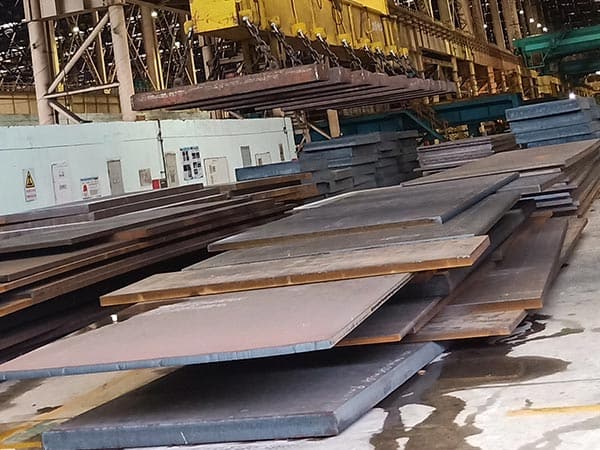
Understanding the Metallurgical Foundations of S355MC and S355J2
When engineers and procurement specialists evaluate structural steels, the comparison between S355MC and S355J2 often surfaces. While both share a minimum yield strength of 355 MPa, they belong to different European standards—EN 10149-2 and EN 10025-2, respectively. The question of which is 'not easy to rust' involves a complex interplay of chemical purity, thermomechanical processing, and surface topography. It is a common misconception that all carbon steels rust at the same rate; in reality, the micro-alloying elements and the rolling process significantly dictate the initial oxidation kinetics and the adherence of the oxide layer.
S355MC is a thermomechanically rolled, high-yield-strength steel designed for cold forming. Its 'MC' designation indicates its processing route, which results in an extremely fine grain size. On the other hand, S355J2 is a non-alloy structural steel where 'J2' signifies a specific impact toughness requirement at -20°C. These distinct manufacturing philosophies create variations in how the steels interact with moisture and oxygen in the atmosphere.
Chemical Composition and Its Role in Oxidation Resistance
The chemical blueprint of a steel grade is the primary determinant of its electrochemical potential. S355MC typically features a lower carbon content compared to S355J2. Lower carbon levels generally reduce the formation of large pearlite colonies, which can act as cathodic sites in a galvanic micro-cell on the steel surface, thereby slightly slowing the localized corrosion process.
Furthermore, S355MC is micro-alloyed with elements such as Niobium (Nb), Titanium (Ti), and Vanadium (V). These elements are not present in significant quantities in standard S355J2. While these are primarily added for grain refinement and precipitation hardening, they also influence the density of the steel's surface. A more compact atomic structure can hinder the diffusion of oxygen atoms into the substrate. S355J2, being a more traditional structural steel, relies more on Manganese and Silicon for its strength, which provides a different surface chemistry when exposed to the elements.
| Element (Max %) | S355MC (EN 10149-2) | S355J2 (EN 10025-2) |
|---|---|---|
| Carbon (C) | 0.12 | 0.20 - 0.22 |
| Manganese (Mn) | 1.50 | 1.60 |
| Silicon (Si) | 0.50 | 0.55 |
| Phosphorus (P) | 0.025 | 0.025 |
| Sulfur (S) | 0.020 | 0.025 |
| Alloying (Nb, Ti, V) | Present (Micro-alloyed) | Not specified |
The Impact of Thermomechanical Rolling on Surface Integrity
The 'MC' in S355MC stands for Thermomechanically Rolled. This process involves precise temperature control during the rolling stages, which prevents grain growth. The resulting fine-grained ferrite structure is not only tougher and stronger but also provides a more uniform surface for the formation of the initial oxide layer. When steel begins to oxidize, a uniform surface allows for a more continuous 'patina' or scale, which can act as a temporary barrier against further moisture penetration.
In contrast, S355J2 is often supplied in a 'as-rolled' or 'normalized' condition. The grain structure is typically coarser. Coarse-grained steels can exhibit more heterogeneous surface energy, leading to uneven oxidation or 'pitting' where rust takes hold in specific localized areas more aggressively. The mill scale on S355J2 is often thicker and more brittle than the scale found on S355MC. If this scale cracks or flakes off—which it often does during handling—it exposes fresh metal to the atmosphere, creating a differential aeration cell that accelerates rusting.
Surface Finish: Pickled and Oiled vs. Hot Rolled Scale
A critical practical reason why S355MC is often perceived as being 'not easy to rust' is the state in which it is delivered. Because S355MC is frequently used in the automotive and machinery sectors for complex cold-forming parts, it is very commonly supplied in a Pickled and Oiled (P&O) condition. Pickling removes the dark, porous mill scale, and the oil provides a temporary chemical barrier against oxidation during transport and storage.
S355J2 is more frequently used in heavy structural applications where the plates are thicker. These are often stored outdoors in stockyards with the heavy mill scale intact. While the mill scale initially protects the steel, it is naturally porous. Moisture can seep through micro-cracks in the scale, leading to 'under-scale' corrosion. This makes S355J2 appear to rust more quickly and unevenly compared to the clean, oiled surface of a typical S355MC sheet.
Environmental Adaptability and Atmospheric Performance
In humid or saline environments, neither steel is 'rust-proof' like stainless steel, but their behavior differs. The homogeneity of S355MC is its greatest asset. In an industrial atmosphere with sulfur dioxide (SO2) or coastal areas with chlorides, the impurities in the steel act as catalysts for corrosion. S355MC’s lower sulfur and phosphorus limits, combined with its refined microstructure, mean there are fewer inclusions (like Manganese Sulfides) that can act as initiation points for rust.
S355J2 is designed for robustness in structural loads. Its environmental adaptability is usually managed through secondary processes like hot-dip galvanizing or high-performance painting. Without these treatments, the structural integrity remains high due to the thickness of the material, but the aesthetic surface quality degrades faster than S355MC under similar light-duty exposure.
Mechanical Performance and Longevity
The longevity of a steel component is not just about the rate of rust but how that rust affects its structural performance. S355MC offers superior yield-to-tensile ratios and excellent elongation, making it ideal for parts that must withstand vibration and dynamic loads without cracking. If a part cracks, rust will penetrate the crack and cause internal structural failure. S355MC's high ductility prevents these micro-fissures.
S355J2 excels in low-temperature environments where brittle fracture is a risk. Its J2 rating ensures it can absorb 27 Joules of energy at -20°C. In heavy-duty construction, the 'rust' on S355J2 is often factored into the 'corrosion allowance' of the design. Because J2 is often used in thicker sections, a few millimeters of surface oxidation do not compromise the safety of a bridge or a building frame as significantly as it would a thin-walled S355MC automotive component.
Strategic Application Across Industries
The choice between these two grades is often dictated by the manufacturing process rather than just rust resistance. However, the resulting application highlights their environmental strengths:
- Automotive and Transport: S355MC is the standard for truck chassis, crane arms, and agricultural machinery. Its ability to be cold-formed into complex shapes without cracking, combined with its clean surface, makes it easier to coat and protect against road salt and moisture.
- Heavy Construction and Infrastructure: S355J2 is the backbone of steel buildings, bridges, and offshore structures. Its weldability in thick sections is unparalleled. In these scenarios, rust is managed through massive-scale protective coatings rather than the inherent properties of the steel itself.
- Renewable Energy: In wind turbine towers, S355J2 is preferred for its fatigue resistance and toughness, while S355MC might be used in the internal nacelle components where weight saving and precision forming are required.
Processing Performance: Welding and Coating
Both steels are considered highly weldable due to their low carbon equivalent (CEV) values. However, the weld-affected zone (HAZ) in S355MC must be managed carefully to avoid losing the strength gained from thermomechanical rolling. From a corrosion perspective, a clean weld is a rust-resistant weld. S355MC's lack of heavy scale makes the pre-welding preparation easier, leading to fewer weld defects where moisture could hide.
When it comes to powder coating or painting, S355MC provides a superior substrate. The fine grain structure results in a lower surface roughness (Ra) after pickling, which allows for better adhesion of the primer. S355J2, if not shot-blasted properly, can have a surface that is too irregular, leading to 'holidays' or pinholes in the coating that eventually become the birthplaces of rust spots.
Technical Comparison of Key Attributes
| Feature | S355MC | S355J2 |
|---|---|---|
| Standard | EN 10149-2 | EN 10025-2 |
| Primary Benefit | Cold forming & Weight reduction | Structural integrity & Toughness |
| Grain Structure | Ultra-fine (Thermomechanical) | Standard Ferrite-Pearlite |
| Rust Tendency | Lower (due to surface & purity) | Higher (if scale is damaged) | Excellent (low CEV) | Excellent (structural standard) |
Final Technical Assessment
Determining why S355MC vs S355J2 is not easy to rust requires looking beyond the basic grade name. S355MC's perceived resistance stems from its high purity, micro-alloyed grain refinement, and the fact that it is often used in a pickled and oiled state. These factors create a more stable and uniform surface that resists the early stages of atmospheric oxidation more effectively than the thicker, more heterogeneous surface of S355J2.
However, for long-term exposure in harsh environments, the inherent differences in rust rates are secondary to the protective measures taken. S355MC is easier to protect with thin-film coatings due to its superior surface quality, while S355J2 is built to endure through mass and heavy-duty barrier systems. Selecting the right grade involves balancing the need for formability and weight saving (S355MC) against the need for absolute structural toughness and thickness (S355J2), while always accounting for the specific environmental challenges the steel will face during its service life.
Leave a message