
en 10149-2 s355mc pdf for engineering and machine structural use
Explore the comprehensive technical specifications of EN 10149-2 S355MC steel. This guide details mechanical properties, chemical composition, cold forming capabilities, and industrial applications for high-performance engineering structures.
Technical Foundations of EN 10149-2 S355MC Steel
The engineering landscape demands materials that balance high strength with exceptional ductility. EN 10149-2 S355MC stands as a cornerstone in this regard, representing a thermomechanically rolled steel grade specifically designed for cold forming. Unlike traditional structural steels, S355MC is engineered to provide a minimum yield strength of 355 MPa while maintaining the flexibility required for complex bending and folding operations. The "MC" designation is critical: "M" signifies the thermomechanical rolling process, and "C" indicates its suitability for cold forming. This combination allows engineers to reduce the weight of components without compromising structural integrity, a vital factor in modern machine design and vehicle manufacturing.
Accessing the EN 10149-2 S355MC PDF documentation provides engineers with the precise tolerances and chemical limits necessary for rigorous design calculations. This standard replaces older national standards like DIN 17102, bringing a unified European approach to high-yield strength steels. The focus here is not just on the raw strength but on the consistency of the material across different batches, ensuring that automated manufacturing processes like CNC bending and laser cutting remain predictable and efficient.
Chemical Composition and Metallurgical Precision
The superior performance of S355MC is rooted in its sophisticated chemical makeup. By utilizing micro-alloying elements, manufacturers can achieve high strength without the high carbon content that typically makes steel brittle and difficult to weld. The carbon content is strictly controlled, usually kept below 0.12%, which is significantly lower than standard s355jr structural steel. This low carbon level is the primary reason for the material's excellent weldability and toughness.
Micro-alloying elements such as Niobium (Nb), Vanadium (V), and Titanium (Ti) are added in minute quantities. These elements facilitate grain refinement during the thermomechanical rolling process. Smaller grain sizes lead to a simultaneous increase in both strength and toughness, a phenomenon known as the Hall-Petch relationship. Furthermore, the sulfur content is kept extremely low to ensure the steel remains clean, reducing the risk of lamellar tearing during welding or cracking during tight-radius bending.
| Element | Max Content (%) |
|---|---|
| Carbon (C) | 0.12 |
| Manganese (Mn) | 1.50 |
| Silicon (Si) | 0.50 |
| Phosphorus (P) | 0.025 |
| Sulfur (S) | 0.020 |
| Aluminium (Al) | 0.015 (Min) |
| Nb + V + Ti | 0.22 (Combined) |
Mechanical Properties and Structural Performance
The mechanical profile of S355MC is defined by its yield strength, tensile strength, and elongation. For engineering applications, the yield strength is the most critical parameter as it defines the limit of elastic deformation. With a minimum yield of 355 MPa for thicknesses up to 16mm, this steel allows for thinner sections compared to standard mild steels, leading to significant weight savings in mobile machinery and transport equipment.
Tensile strength typically ranges between 430 and 550 MPa. However, the true value of S355MC lies in its elongation properties. Depending on the thickness, the minimum elongation can reach 19% to 23% (on a gauge length of 80mm or 5.65√So). This high ductility ensures that the material can absorb significant energy before failure, making it ideal for safety-critical components in the automotive and heavy equipment sectors.
- Yield Strength (ReH): Min 355 MPa
- Tensile Strength (Rm): 430 - 550 MPa
- Elongation (A80mm): Min 19% (for t < 3mm)
- Elongation (A5.65√So): Min 23% (for t ≥ 3mm)
The Advantages of Thermomechanical Rolling (TMCP)
The "M" in S355MC refers to Thermomechanically Controlled Processing (TMCP). This is not merely a heat treatment but a sophisticated rolling strategy where the final deformation is carried out in a specific temperature range, often near the recrystallization temperature. This process creates a fine-grained ferrite-pearlite or even acicular ferrite microstructure that cannot be achieved through traditional normalizing or annealing.
One of the standout benefits of TMCP steel is that it achieves its strength through grain refinement rather than high alloy content. This means the steel has a very low Carbon Equivalent (CEV), which directly translates to superior weldability. Engineers can often weld S355MC without the need for preheating, even in thicker sections, which significantly reduces fabrication time and costs. Additionally, TMCP steels exhibit better resistance to hydrogen-induced cracking compared to conventional structural steels of the same strength level.
Cold Forming and Bending Capabilities
For machine structural use, the ability to form complex shapes is paramount. S355MC is specifically tailored for cold forming operations. The standard EN 10149-2 provides clear guidelines on the minimum recommended inside bend radius to prevent cracking. Because of its high purity and fine grain structure, S355MC can be bent to much tighter radii than standard S355JR steel.
When performing bending operations, it is essential to consider the rolling direction. Bending transverse to the rolling direction generally allows for tighter radii than bending parallel to it. For S355MC, a typical minimum bend radius for a 90-degree bend is approximately 0.5 to 1.5 times the material thickness, depending on the specific equipment and lubrication used. This flexibility allows for the creation of lightweight, stiffened profiles and chassis components that would be impossible with more brittle materials.
Welding Integrity and Fabrication Excellence
In the construction of heavy machinery and engineering structures, welding is the primary joining method. S355MC excels in this area due to its low carbon and low alloy content. It is compatible with all standard welding processes, including MIG/MAG (GMAW), TIG (GTAW), Submerged Arc Welding (SAW), and Laser welding. The heat-affected zone (HAZ) in S355MC remains relatively tough, provided that the heat input is controlled to avoid excessive grain growth.
Because the strength of S355MC is derived from the TMCP process, it is important to note that high-temperature post-weld heat treatments (PWHT) or hot forming above 580°C can lead to a reduction in yield strength. If the material is heated into the austenite range, the effects of the thermomechanical rolling are lost, and the strength will drop to levels closer to standard normalized steel. Therefore, S355MC is strictly intended for cold processing and low-temperature welding applications.
Applications Across Diverse Engineering Sectors
The versatility of S355MC makes it a preferred choice across various high-stress environments. In the automotive industry, it is used extensively for truck chassis, cross members, and suspension components where weight reduction is essential for fuel efficiency and payload capacity. The high yield strength allows for the design of thinner-walled sections that still meet rigorous crash-test and durability requirements.
In the heavy machinery sector, S355MC is found in crane booms, agricultural equipment, and earthmoving machinery. These applications benefit from the material's fatigue resistance and its ability to withstand dynamic loads. The cold-forming capability is particularly useful for creating the telescopic sections of cranes and the complex frames of modern harvesters. Furthermore, the material's performance at low temperatures ensures that machinery can operate reliably in harsh climates, such as those found in mining or offshore environments.
Environmental Adaptability and Longevity
Beyond mechanical strength, S355MC offers reliable performance in varying environmental conditions. While it is not a "weathering steel" like Corten, its clean chemistry and fine microstructure provide a consistent surface for protective coatings. Whether it is hot-dip galvanizing, powder coating, or industrial painting, S355MC provides an excellent substrate that ensures long-term corrosion protection.
The fatigue life of S355MC is another critical factor for engineering structures. The fine grain structure inhibits the initiation and propagation of micro-cracks under cyclic loading. This makes it superior to coarser-grained steels in applications subject to vibration and repetitive stress. By utilizing the S355MC technical data, designers can perform accurate fatigue life assessments, ensuring that structures remain safe throughout their intended service life without premature failure.
Strategic Material Selection for Future-Proofing
Choosing EN 10149-2 S355MC is a strategic decision that balances cost, performance, and manufacturability. As industries move toward more sustainable practices, the ability to "lightweight" structures becomes a competitive advantage. By using S355MC, manufacturers can use less steel to achieve the same structural performance, reducing the carbon footprint of the final product from both a material production and a transportation perspective.
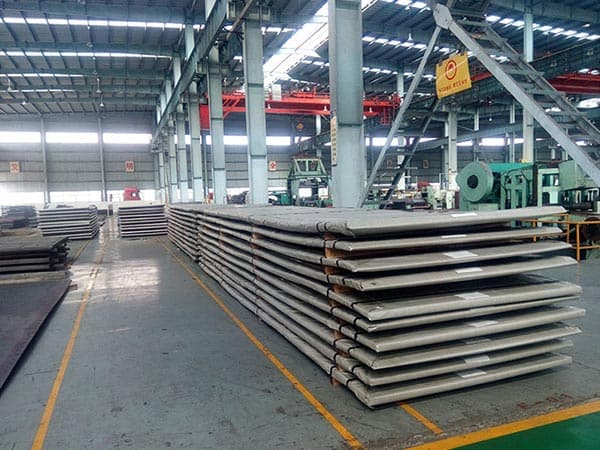
The availability of S355MC in various formats, including hot-rolled coils and cut-to-length sheets, ensures that it can be integrated into diverse production lines. Whether for high-volume automotive parts or bespoke engineering projects, S355MC provides the reliability and technical edge required to meet the challenges of modern structural engineering. Its proven track record in the most demanding sectors confirms its status as a premium material for those who refuse to compromise on quality and efficiency.
Leave a message