
What are rust removal and prevention measures for s355mc vs s355jr
Comprehensive guide comparing rust removal and prevention strategies for S355MC and S355JR steel. Discover surface characteristics, chemical treatments, and long-term protection methods.
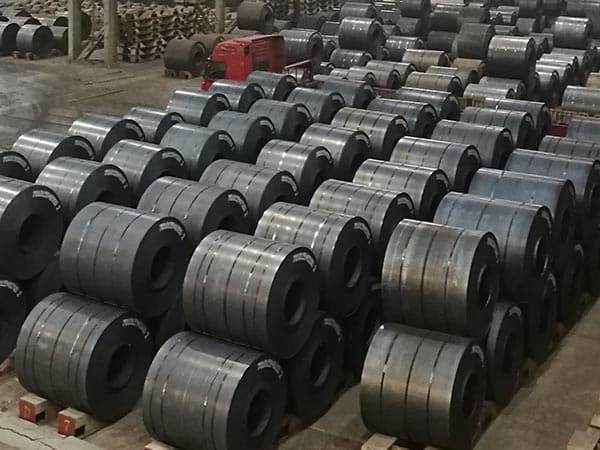
Understanding the Surface Dynamics of S355MC and s355jr
When comparing S355MC and S355JR, the first thing to recognize is that while they share a similar yield strength of 355 MPa, their manufacturing processes create vastly different surface conditions. S355MC is a thermomechanically rolled, fine-grained steel designed for cold forming, whereas S355JR is a standard hot-rolled structural steel. These metallurgical differences dictate how each grade reacts to oxygen and moisture, and more importantly, how they must be treated to ensure longevity.
S355MC typically features a thinner, more tenacious oxide layer due to the controlled cooling process. In contrast, S355JR often carries a thicker, more brittle mill scale. This scale on S355JR is notorious for being cathodic to the underlying steel; if moisture penetrates a crack in the scale, it accelerates localized pitting. Therefore, the approach to rust removal and subsequent prevention must be tailored to these specific surface morphologies to avoid compromising the material's structural integrity.
Effective Rust Removal Techniques for S355JR
For S355JR, the primary challenge is the removal of heavy mill scale and atmospheric rust. Because this grade is frequently used in heavy construction and infrastructure, the volume of material often necessitates aggressive mechanical methods.
- Abrasive Blast Cleaning: This is the industry standard for S355JR. Achieving a surface finish of Sa 2.5 (near-white metal) is critical. The kinetic energy of the grit removes the thick scale and provides a rough profile that is ideal for the mechanical bonding of heavy-duty primers.
- Power Tool Cleaning: In maintenance scenarios where blasting is impractical, tools like needle scalers or wire brushes are used. However, care must be taken not to polish the surface, as this reduces the adhesion of protective coatings.
- Acid Pickling: For smaller S355JR components, immersion in hydrochloric or sulfuric acid effectively dissolves the scale. This is a common precursor to hot-dip galvanizing.
Specialized Rust Removal for S355MC
S355MC requires a more nuanced approach. Since this steel is often used in automotive chassis and precision cold-formed profiles, maintaining the tight dimensional tolerances and the smooth surface finish is paramount. Aggressive shot blasting can sometimes induce unwanted surface stresses or work-hardening, which might affect the steel's superior ductility.
- Chemical Pickling with Inhibitors: Most S355MC is supplied in a "pickled and oiled" (P&O) state. If rust occurs post-processing, mild chemical pickling with added inhibitors is preferred. These inhibitors protect the base metal while only targeting the iron oxides, preserving the fine-grained surface structure.
- Laser Cleaning: For high-precision S355MC parts, laser ablation is becoming a preferred method. It removes rust and contaminants without mechanical contact or the use of water and chemicals, preventing any risk of hydrogen embrittlement.
- Ultrasonic Cleaning: Used primarily for complex S355MC geometries, this method ensures that even recessed areas are free of oxidation before final assembly or coating.
Corrosion Prevention Strategies: A Comparative Analysis
Preventing rust is not a one-size-fits-all operation. The choice between S355MC and S355JR often hinges on the final environment, which in turn dictates the prevention measure.
| Feature | S355JR Prevention Measures | S355MC Prevention Measures |
|---|---|---|
| Primary Coating | Hot-dip galvanizing is most common for long-term outdoor exposure. | Electro-galvanizing or thin-film zinc-rich primers to maintain tolerances. |
| Temporary Protection | Hard-film solvent-based rust preventatives for storage. | Light synthetic oils or VCI (Volatile Corrosion Inhibitors) packaging. |
| Painting | High-build epoxy systems for industrial environments. | Powder coating or KTL (Cathodic Dip Painting) for automotive parts. |
| Environmental Suitability | Excellent for bridges, offshore, and heavy machinery. | Ideal for vehicle frames, crane arms, and complex folded sections. |
Advanced Coating Technologies for S355MC
Because S355MC is frequently subjected to intense forming and welding, the rust prevention layer must be flexible. Traditional brittle coatings might crack during the bending of an S355MC bracket, leading to under-film corrosion. Cathodic E-coating (KTL) is highly effective here; it provides a uniform, thin, and highly adhesive layer that follows the contours of complex shapes without adding significant weight or thickness.
Furthermore, the use of Zinc-Magnesium (ZM) coatings is gaining traction for S355MC applications. These coatings offer superior "self-healing" properties on cut edges. When the steel is sheared or punched, the magnesium in the coating reacts to form a dense protective layer over the exposed S355MC edge, significantly outperforming standard galvanizing in salt spray tests.
Long-term Protection for S355JR in Harsh Environments
S355JR is the workhorse of the structural world, often facing marine or industrial atmospheres. The most robust prevention measure remains Hot-Dip Galvanizing (HDG). The silicon and phosphorus content in S355JR must be monitored (Sandelin curve) to ensure a high-quality zinc coating. A properly galvanized S355JR beam can remain maintenance-free for over 50 years in rural environments.
For aesthetic or additional protection, a Duplex System (painting over galvanizing) is utilized. This synergistic effect provides a barrier that lasts 1.5 to 2.5 times longer than the sum of the lifetimes of the two individual systems. This is particularly vital for S355JR structures where accessibility for future maintenance is limited.
Environmental Adaptability and Storage Best Practices
Both grades are susceptible to "white rust" or wet storage stain if not handled correctly. S355MC, being thinner and often stacked in coils or tight bundles, is prone to capillary action drawing in moisture. Storage in temperature-controlled warehouses with low humidity is essential for S355MC to prevent the need for re-pickling.
S355JR, while more rugged, should not be stored directly on the ground. Contact with soil introduces moisture and electrolytes that kickstart the corrosion cycle. Elevating the steel on dunnage and ensuring adequate airflow between sections helps maintain a dry surface oxide, which is easier to manage during the final fabrication stages.
Conclusion: Choosing the Right Protocol
The decision between S355MC and S355JR involves more than just mechanical specs; it requires a strategy for surface longevity. S355MC demands precision, favoring chemical cleaning and high-tech thin-film coatings to preserve its forming advantages. S355JR thrives with heavy-duty mechanical cleaning and thick barrier or sacrificial protections like galvanizing. By matching the rust removal and prevention measures to the specific grade and its intended application, engineers can ensure that the 355 MPa yield strength remains a reliable asset throughout the entire lifecycle of the structure or component.
Leave a message